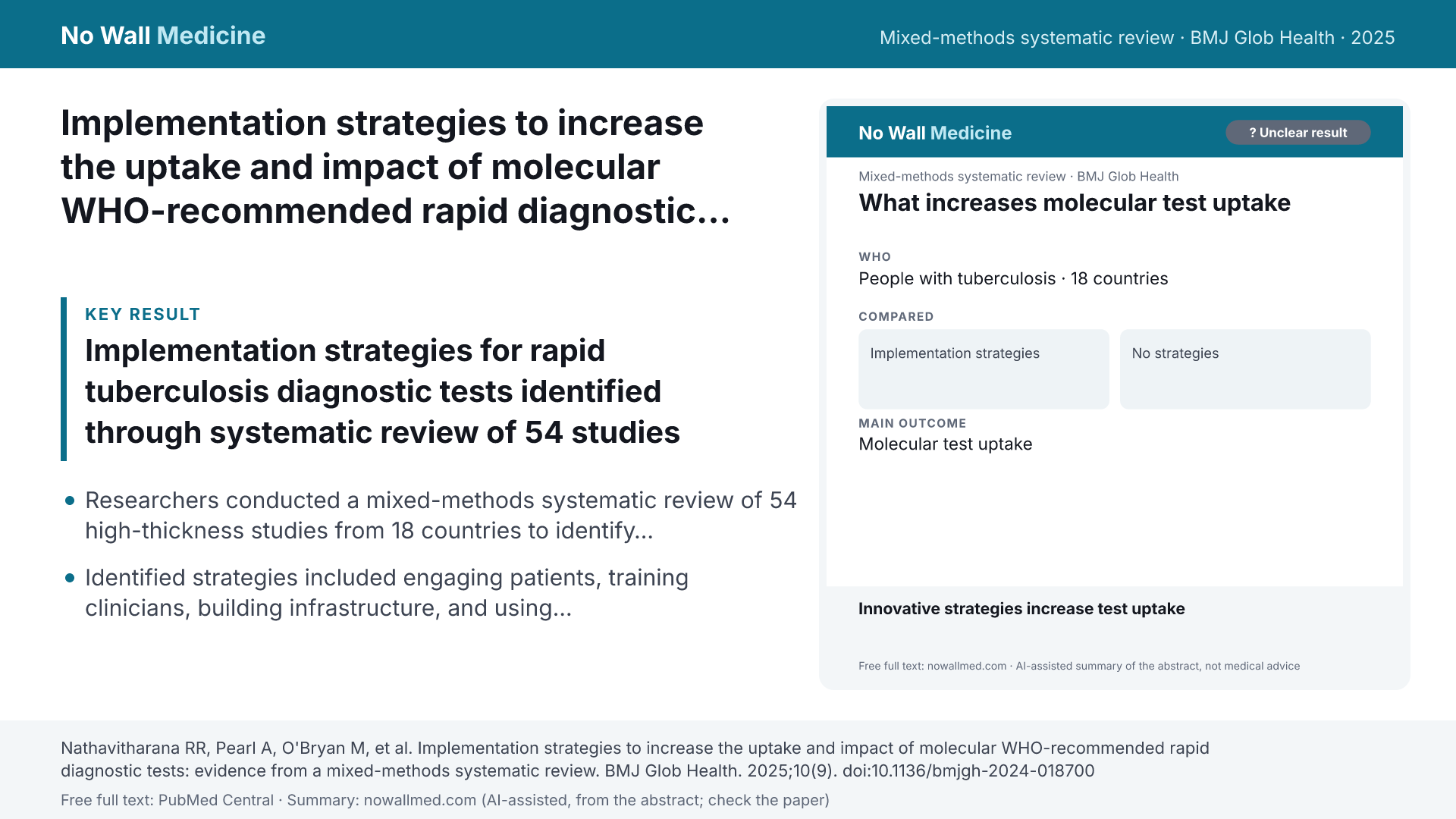
Implementation strategies for rapid tuberculosis diagnostic tests identified through systematic review of 54 studies
Implementation strategies to increase the uptake and impact of molecular WHO-recommended rapid diagnostic tests: evidence from a mixed-methods systematic review
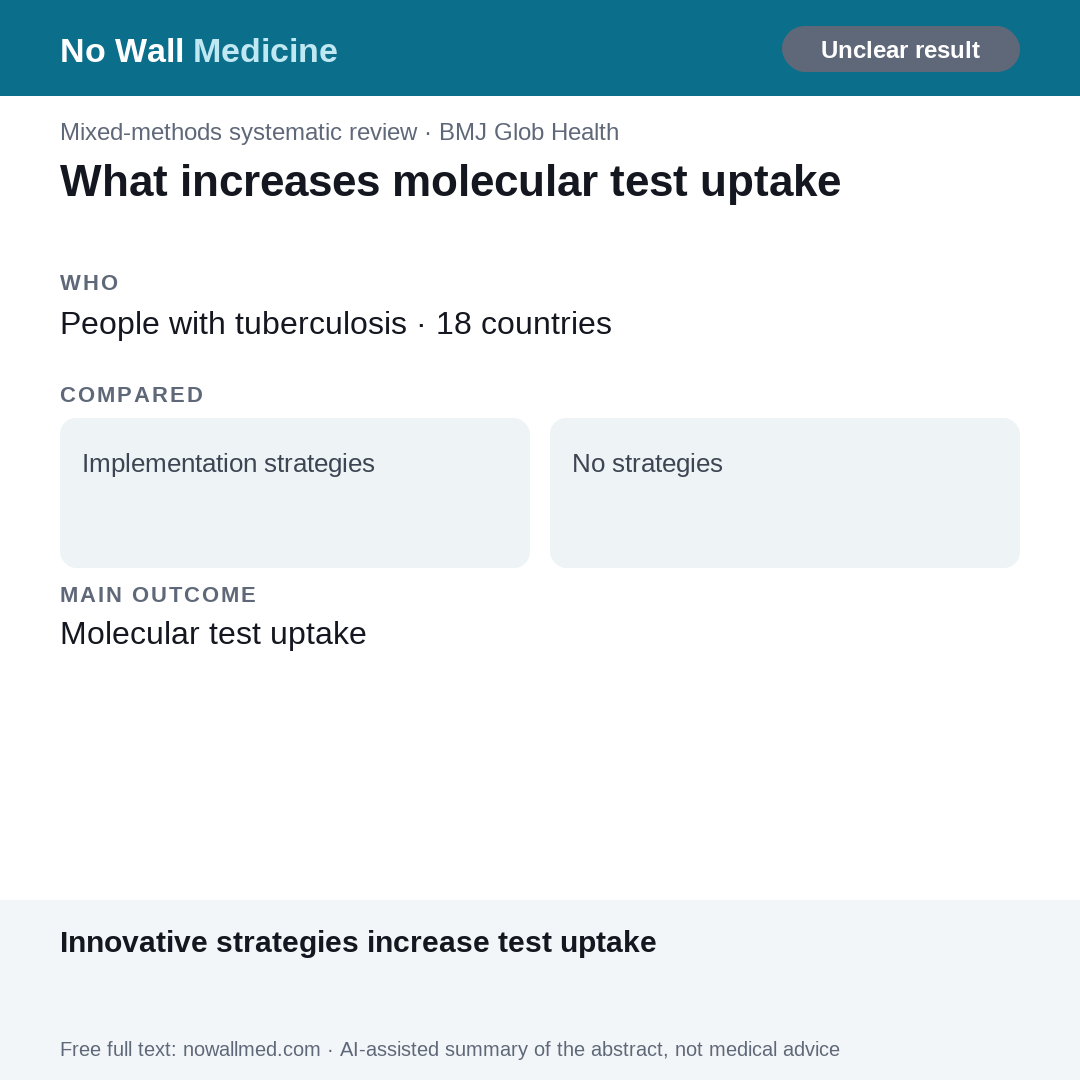
Mixed-methods systematic reviewUnclear result
What increases molecular test uptake
Who
People with tuberculosis · 18 countries
Compared
Implementation strategies
No strategies
Main outcome
Molecular test uptake
Bottom line: Innovative strategies increase test uptake
BMJ Glob Health · 2025-09-17Download image
Why it matters: Fewer than 50% of people with tuberculosis receive a molecular WHO-recommended rapid diagnostic test.
Key points
- Researchers conducted a mixed-methods systematic review of 54 high-thickness studies from 18 countries to identify barriers and enablers for molecular tuberculosis testing.
- Identified strategies included engaging patients, training clinicians, building infrastructure, and using multicomponent approaches such as remote outreach and performance feedback.
- The review found that multicomponent strategies focusing on equity and longitudinal health worker training across the diagnostic process should be prioritized.
Headline and key points written with AI from the paper’s abstract, with every number checked against it. Read the paper before relying on them.
Was this summary helpful?
Subject terms
Cite this article
Nathavitharana RR, Pearl A, O'Bryan M, Edwards M, van der Westhuizen HM, Voldman B. Implementation strategies to increase the uptake and impact of molecular WHO-recommended rapid diagnostic tests: evidence from a mixed-methods systematic review. BMJ Glob Health. 2025. doi:10.1136/bmjgh-2024-018700
Spotted a mistake? Suggest a correction
Top studies every Monday
The week’s key trials and guidelines in your specialties, plus any topics you follow. By email, free.
Get the weekly digest