Implementation strategies to increase the uptake and impact of molecular WHO-recommended rapid diagnostic tests: evidence from a mixed-methods systematic review
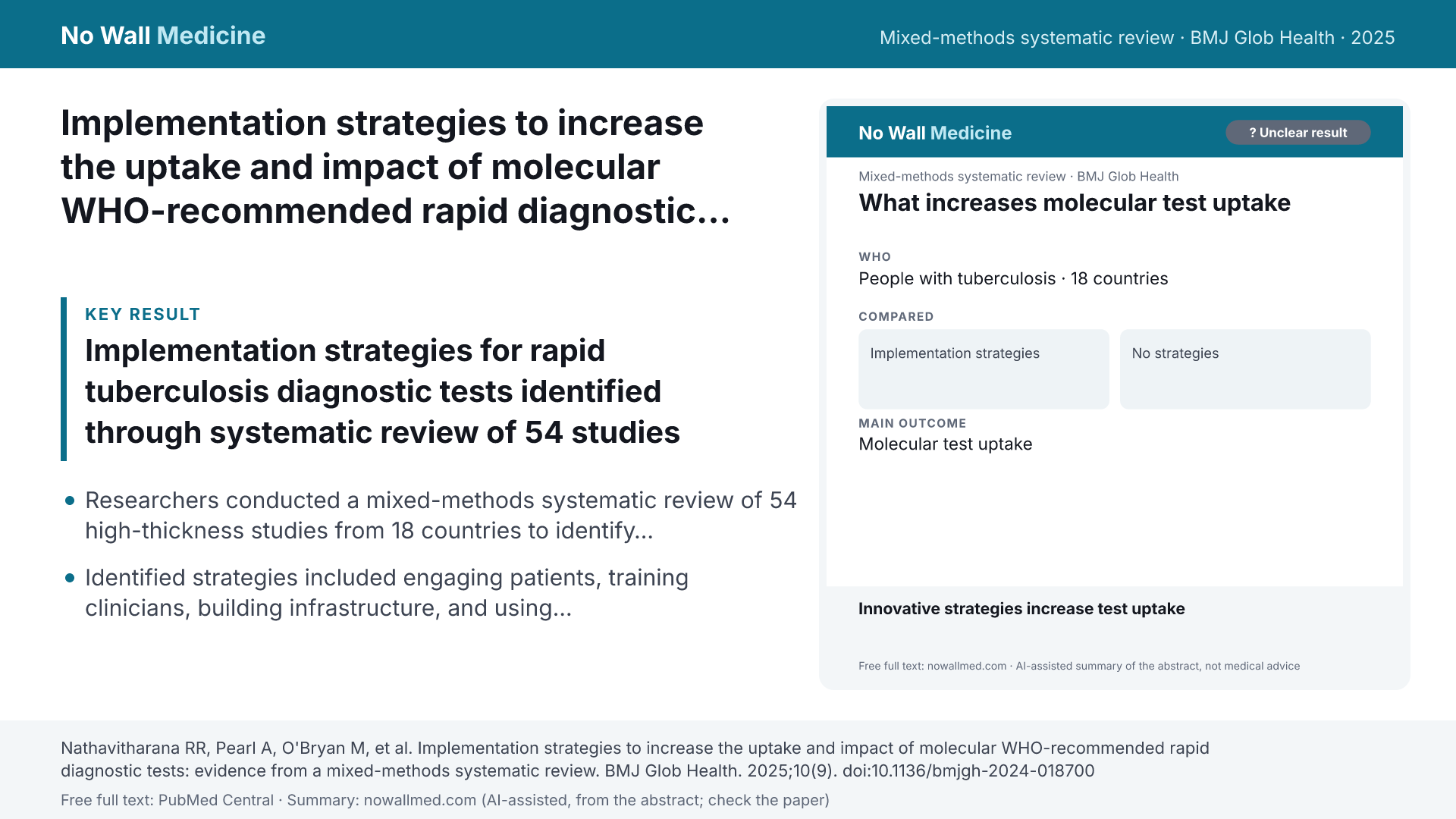
Key result: Implementation strategies for rapid tuberculosis diagnostic tests identified through systematic review of 54 studies
Mixed-methods systematic reviewUnclear result
What increases molecular test uptake
Who
People with tuberculosis · 18 countries
Compared
Implementation strategies
No strategies
Main outcome
Molecular test uptake
Bottom line: Innovative strategies increase test uptake
BMJ Glob Health · 2025-09-17
Key points
- Researchers conducted a mixed-methods systematic review of 54 high-thickness studies from 18 countries to identify barriers and enablers for molecular tuberculosis testing.
- Identified strategies included engaging patients, training clinicians, building infrastructure, and using multicomponent approaches such as remote outreach and performance feedback.
- The review found that multicomponent strategies focusing on equity and longitudinal health worker training across the diagnostic process should be prioritized.
Why it matters: Fewer than 50% of people with tuberculosis receive a molecular WHO-recommended rapid diagnostic test.
Discussion prompts
- Would these patients look like yours? Who was left out?
- Is the main outcome one that matters to patients?
- Is the difference large enough to change what you do?
Cite: Nathavitharana RR, Pearl A, O'Bryan M, et al. Implementation strategies to increase the uptake and impact of molecular WHO-recommended rapid diagnostic tests: evidence from a mixed-methods systematic review. BMJ Glob Health. 2025;10(9). doi:10.1136/bmjgh-2024-018700
Free full text: PubMed Central · Summary and visual abstract: nowallmed.com/a/implementation-strategies-to-increase-the-uptake-and-impact-of-u4c0ko/ (AI-assisted from the abstract; check the paper before relying on it).