Implications of reducing antibiotic treatment duration for antimicrobial resistance in hospital settings: A modelling study and meta-analysis
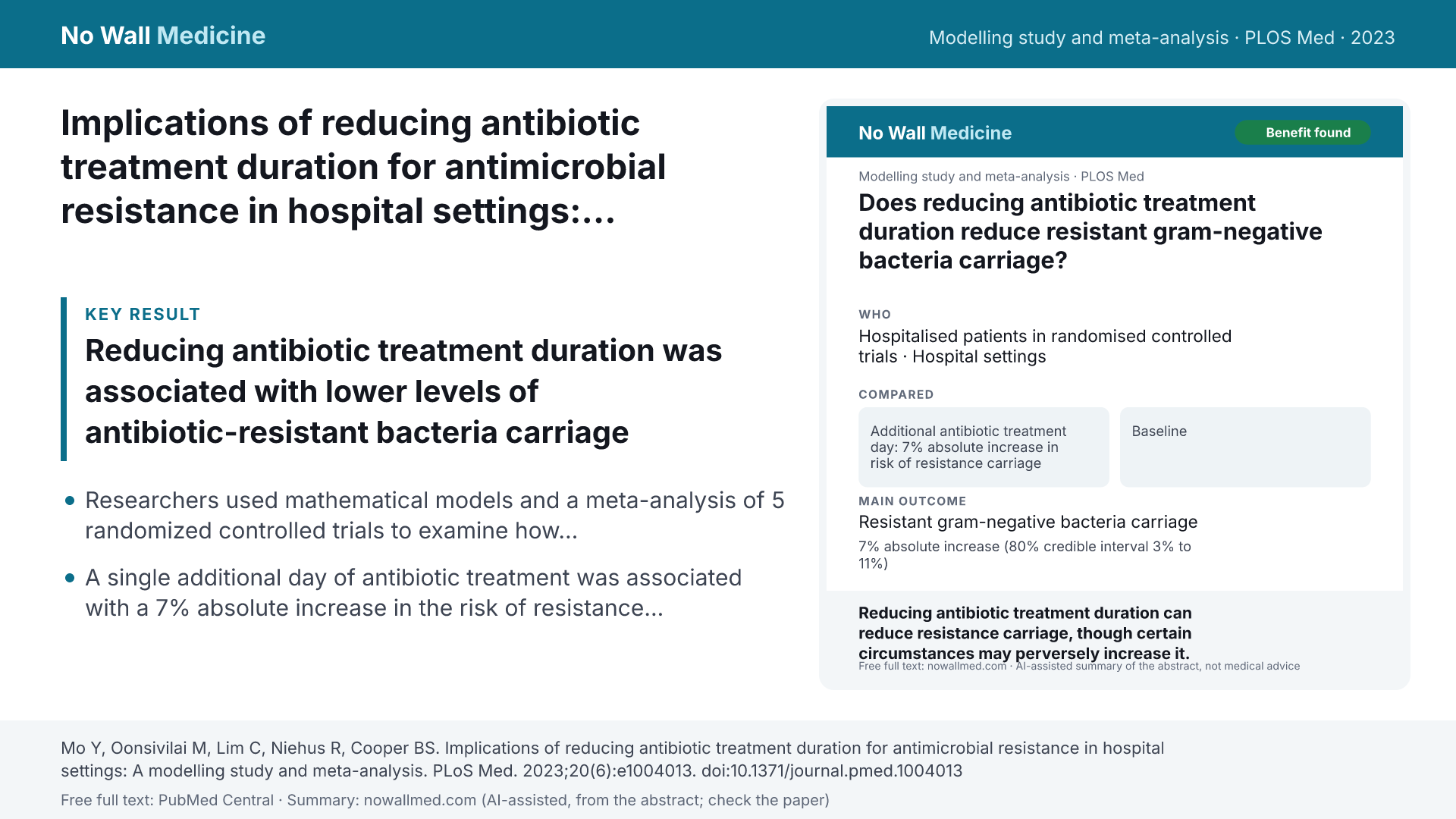
Key result: Reducing antibiotic treatment duration was associated with lower levels of antibiotic-resistant bacteria carriage
Key points
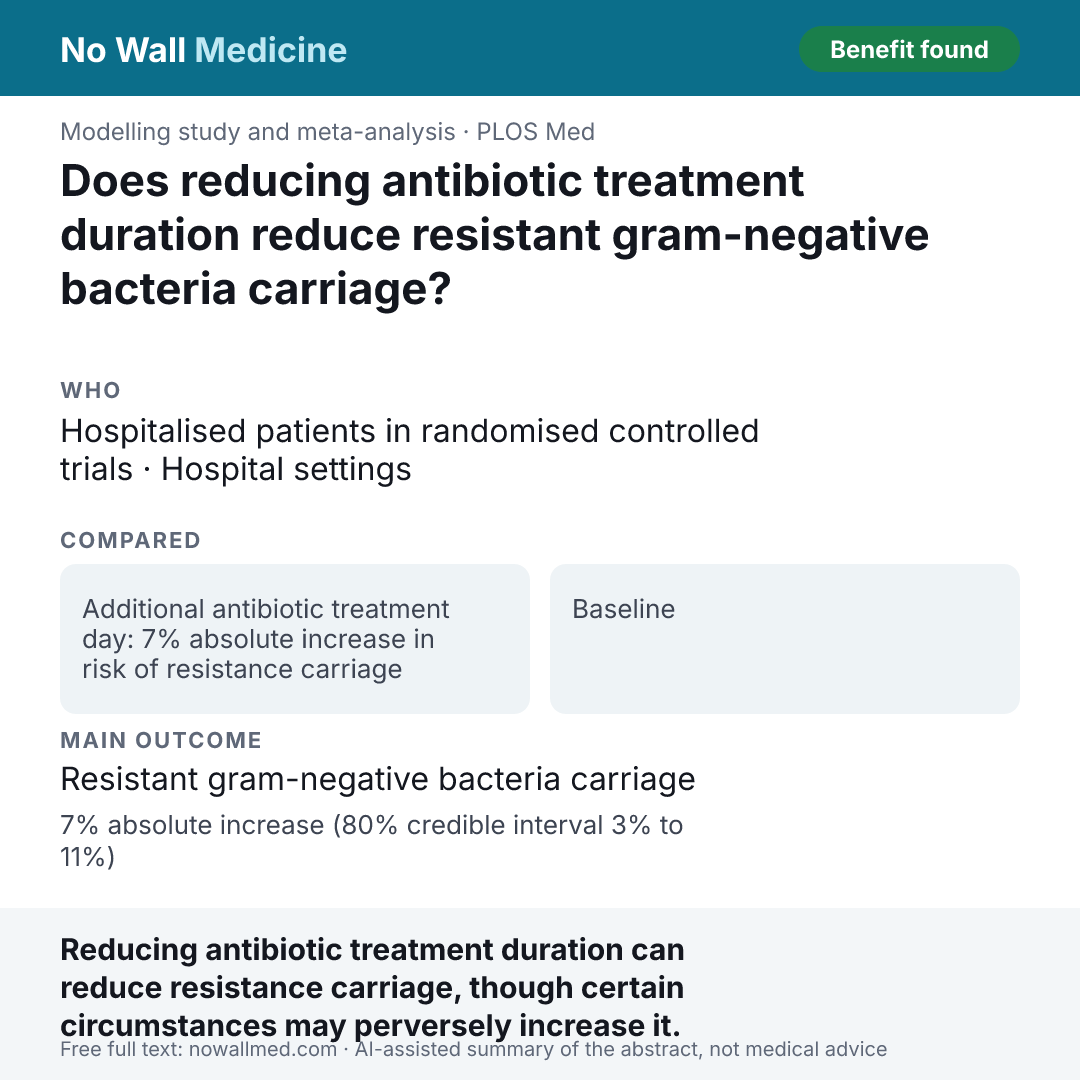
- Researchers used mathematical models and a meta-analysis of 5 randomized controlled trials to examine how antibiotic treatment length affects the presence of resistant gram-negative bacteria.
- A single additional day of antibiotic treatment was associated with a 7% absolute increase in the risk of resistance carriage (80% credible interval 3% to 11%).
- Shortening treatment was most effective in high transmission settings, but may increase resistance if the antibiotics are used to suppress colonizing bacteria.
Limitation the authors note: The estimates are limited by the low number of randomized controlled trials that monitored the carriage of resistant gram-negative bacteria as an outcome.
Discussion prompts
- Would these patients look like yours? Who was left out?
- Is the main outcome one that matters to patients?
- Is the difference large enough to change what you do?
Cite: Mo Y, Oonsivilai M, Lim C, Niehus R, Cooper BS. Implications of reducing antibiotic treatment duration for antimicrobial resistance in hospital settings: A modelling study and meta-analysis. PLoS Med. 2023;20(6):e1004013. doi:10.1371/journal.pmed.1004013
Free full text: PubMed Central · Summary and visual abstract: nowallmed.com/a/implications-of-reducing-antibiotic-treatment-duration-for-zqmamj/ (AI-assisted from the abstract; check the paper before relying on it).