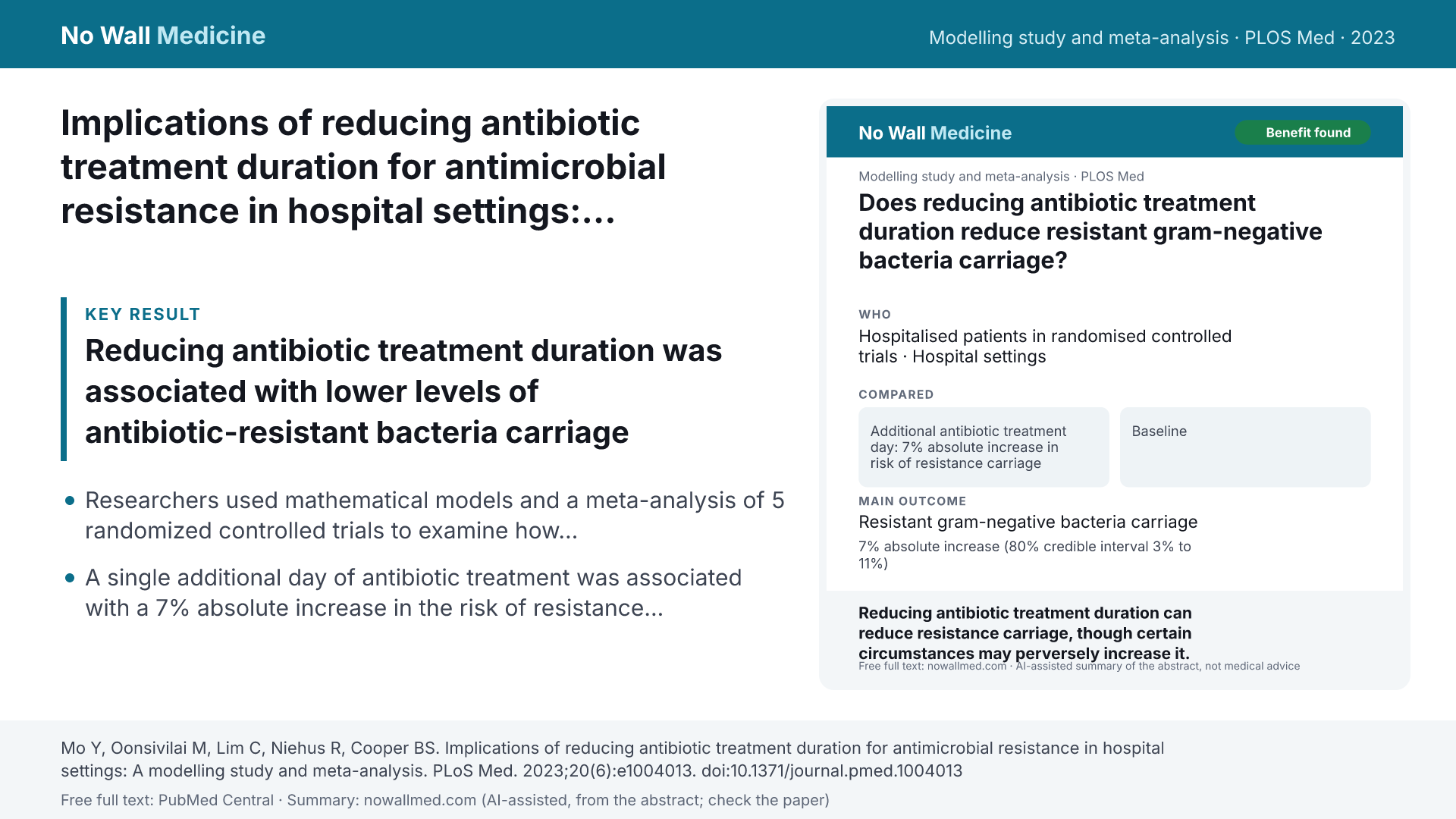
Reducing antibiotic treatment duration was associated with lower levels of antibiotic-resistant bacteria carriage
Implications of reducing antibiotic treatment duration for antimicrobial resistance in hospital settings: A modelling study and meta-analysis
Modelling study and meta-analysisBenefit found
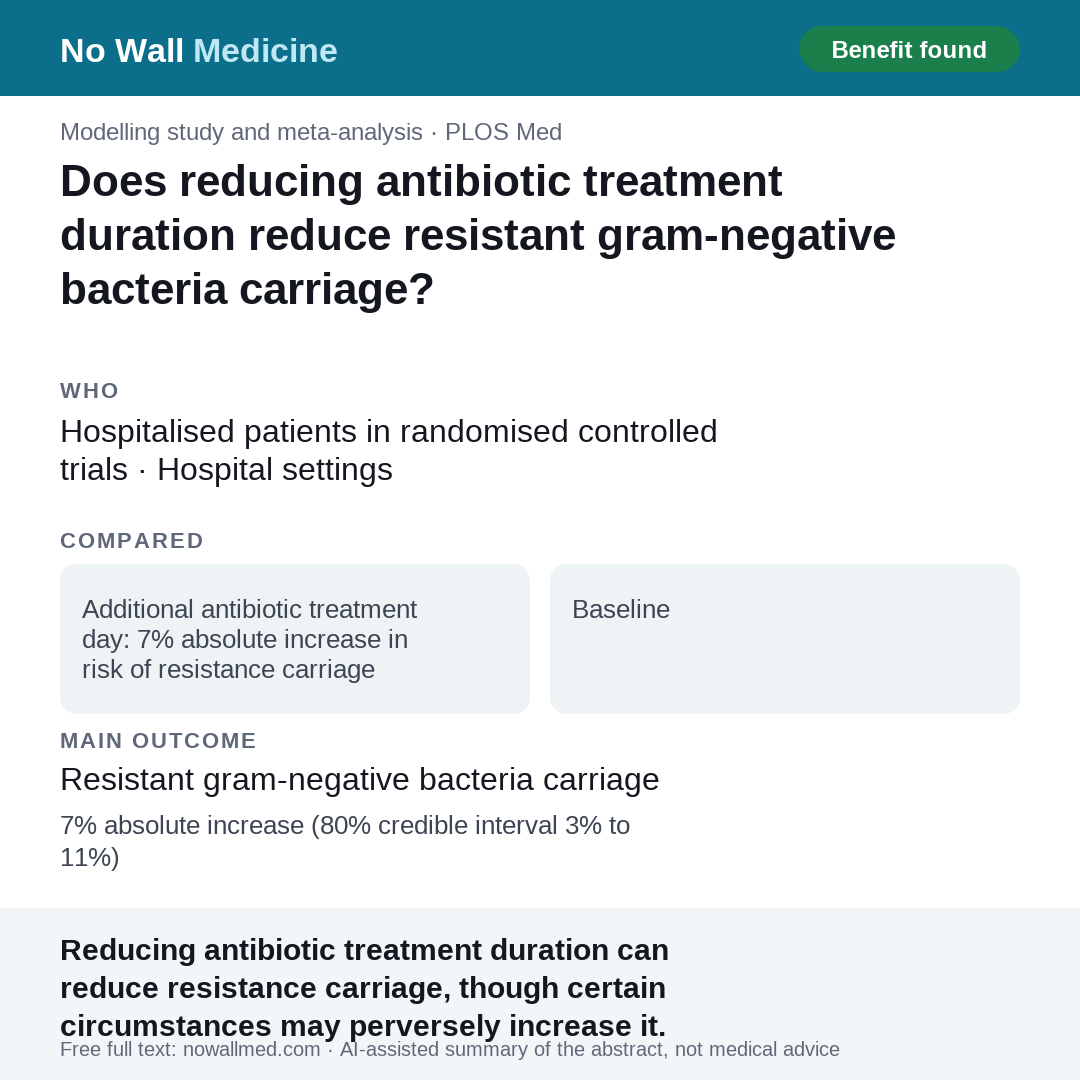
Does reducing antibiotic treatment duration reduce resistant gram-negative bacteria carriage?
Who
Hospitalised patients in randomised controlled trials · Hospital settings
Compared
Additional antibiotic treatment day: 7% absolute increase in risk of resistance carriage
Baseline
Main outcome
Resistant gram-negative bacteria carriage
Result: 7% absolute increase (80% credible interval 3% to 11%)
Bottom line: Reducing antibiotic treatment duration can reduce resistance carriage, though certain circumstances may perversely increase it.
Limitation: Low number of trials monitoring resistance carriage as an outcome contributing to a large credible interval.
PLOS Med · 2023-06-15Download image
Clinical question: Does reducing antibiotic treatment duration reduce resistant gram-negative bacteria carriage?
Why it matters: It was uncertain how changing the length of antibiotic treatment affects the prevalence of antibiotic-resistant bacteria in hospital settings.
Key points
- Researchers used mathematical models and a meta-analysis of 5 randomized controlled trials to examine how antibiotic treatment length affects the presence of resistant gram-negative bacteria.
- A single additional day of antibiotic treatment was associated with a 7% absolute increase in the risk of resistance carriage (80% credible interval 3% to 11%).
- Shortening treatment was most effective in high transmission settings, but may increase resistance if the antibiotics are used to suppress colonizing bacteria.
Limitation the authors note: The estimates are limited by the low number of randomized controlled trials that monitored the carriage of resistant gram-negative bacteria as an outcome.
Headline and key points written with AI from the paper’s abstract, with every number checked against it. Read the paper before relying on them.
Was this summary helpful?
Subject terms
Cite this article
Mo Y, Oonsivilai M, Lim C, Niehus R, Cooper BS. Implications of reducing antibiotic treatment duration for antimicrobial resistance in hospital settings: A modelling study and meta-analysis. PLOS Med. 2023. doi:10.1371/journal.pmed.1004013
Spotted a mistake? Suggest a correction
Top studies every Monday
The week’s key trials and guidelines in your specialties, plus any topics you follow. By email, free.
Get the weekly digest