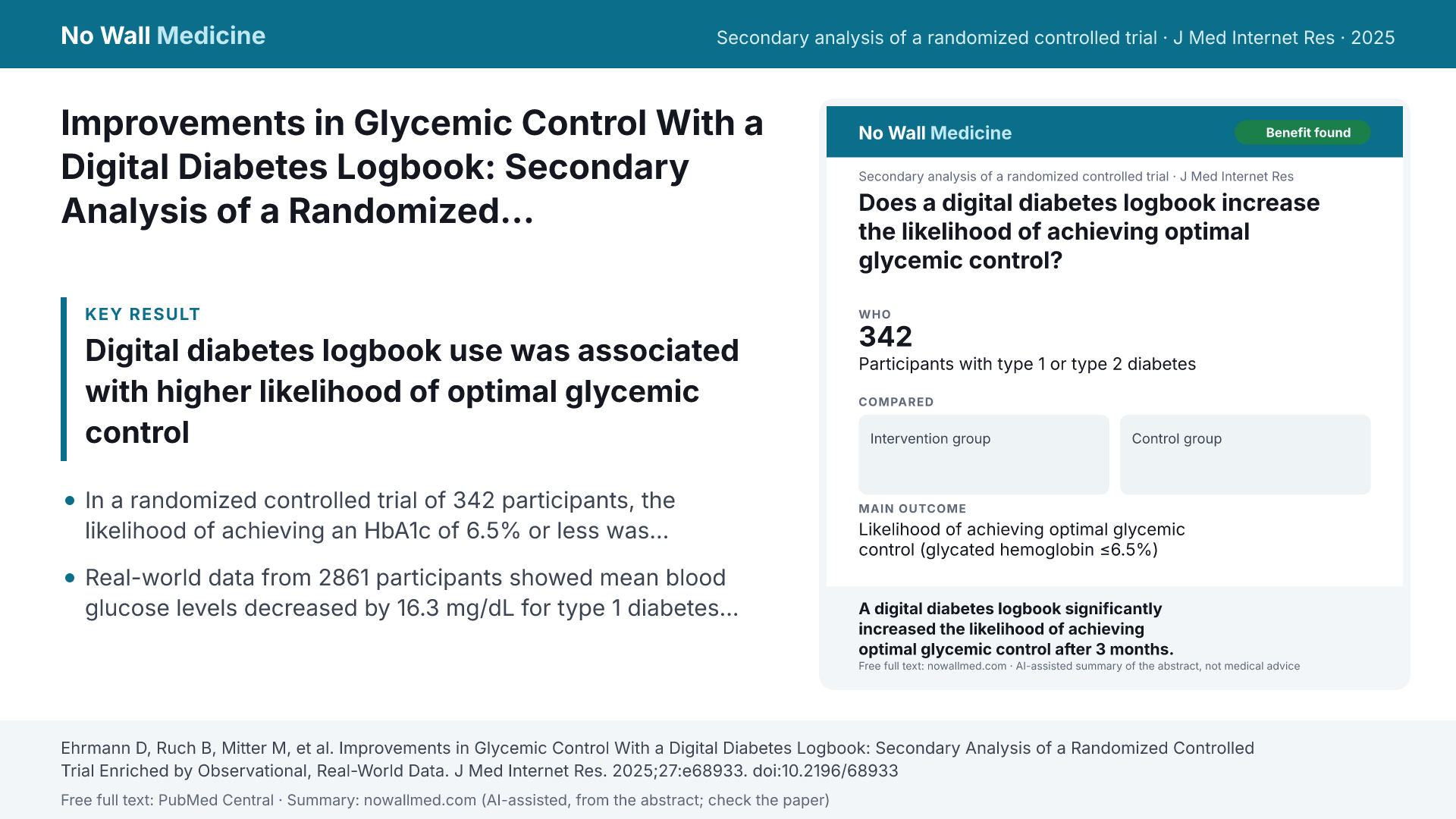
Improvements in Glycemic Control With a Digital Diabetes Logbook: Secondary Analysis of a Randomized Controlled Trial Enriched by Observational, Real-World Data
Key result: Digital diabetes logbook use was associated with higher likelihood of optimal glycemic control
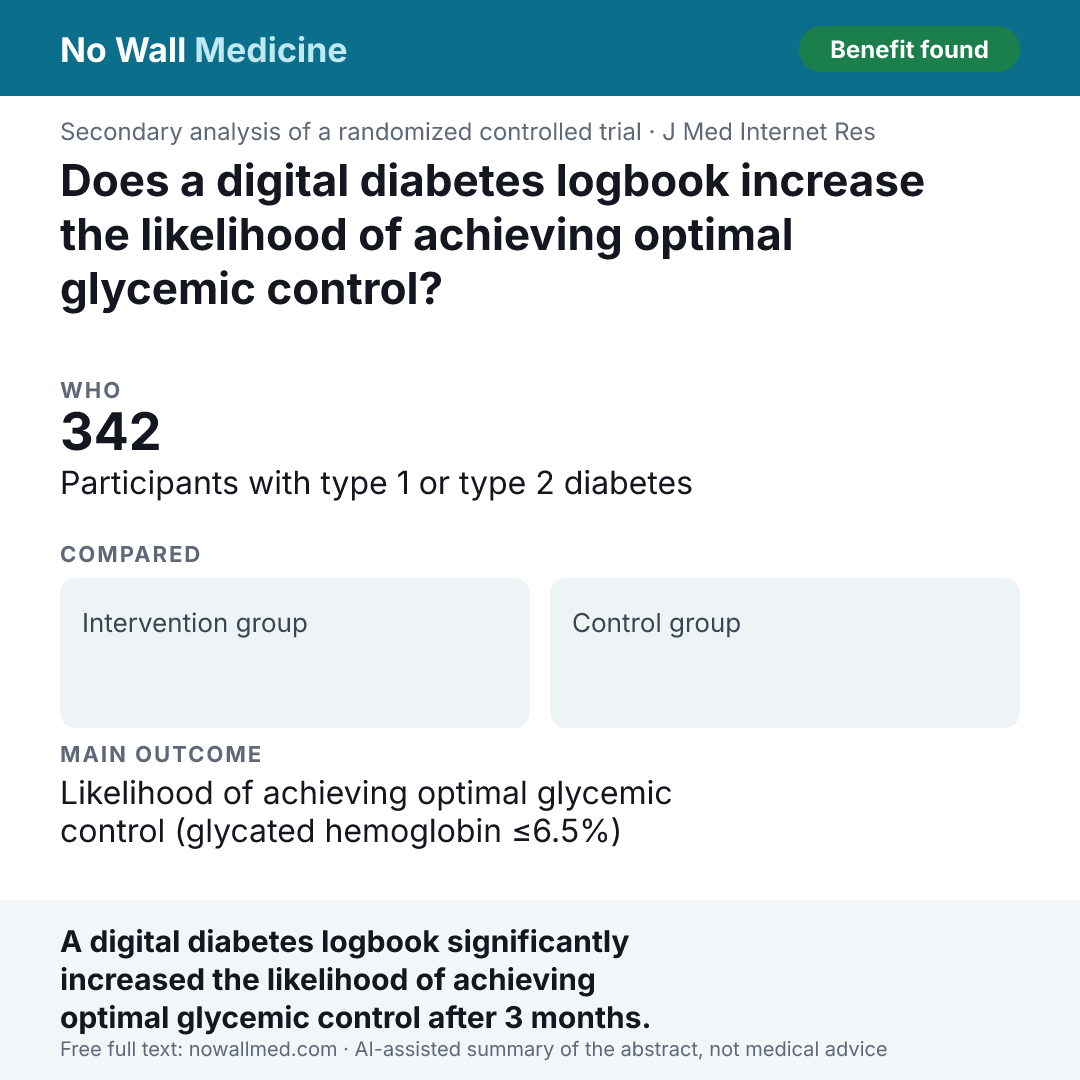
Secondary analysis of a randomized controlled trialBenefit found
Does a digital diabetes logbook increase the likelihood of achieving optimal glycemic control?
Who
342
Participants with type 1 or type 2 diabetes
Compared
Intervention group
Control group
Main outcome
Likelihood of achieving optimal glycemic control (glycated hemoglobin ≤6.5%)
Result: odds ratio 2.24 (95% CI 1.12-4.47)
Bottom line: A digital diabetes logbook significantly increased the likelihood of achieving optimal glycemic control after 3 months.
J Med Internet Res · 2025-06-30 · Save PNG
Key points
- In a randomized controlled trial of 342 participants, the likelihood of achieving an HbA1c of 6.5% or less was nearly doubled with the digital logbook compared to the control group.
- Real-world data from 2861 participants showed mean blood glucose levels decreased by 16.3 mg/dL for type 1 diabetes and 27.3 mg/dL for type 2 diabetes after 3 months.
- In the real-world sample, mean blood glucose levels showed a sustained decrease of 19.8 mg/dL after 12 months of using the digital logbook.
Discussion prompts
- Would these patients look like yours? Who was left out?
- Is the main outcome one that matters to patients?
- Is the difference large enough to change what you do?
Cite: Ehrmann D, Ruch B, Mitter M, et al. Improvements in Glycemic Control With a Digital Diabetes Logbook: Secondary Analysis of a Randomized Controlled Trial Enriched by Observational, Real-World Data. J Med Internet Res. 2025;27:e68933. doi:10.2196/68933
Free full text: PubMed Central · Summary and visual abstract: nowallmed.com/a/improvements-in-glycemic-control-with-a-digital-diabetes-logbook-11699jk/ (AI-assisted from the abstract; check the paper before relying on it).