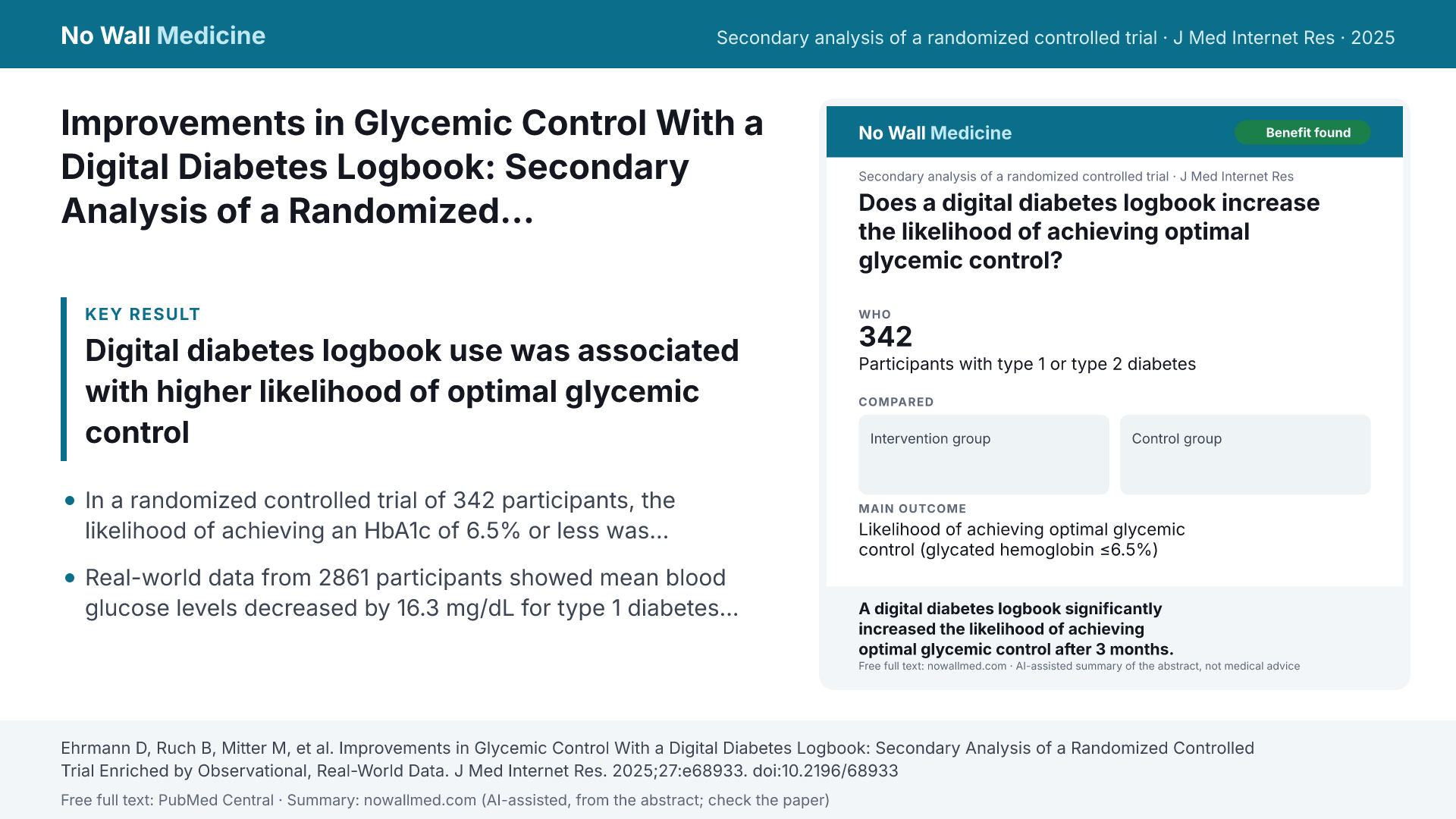
Digital diabetes logbook use was associated with higher likelihood of optimal glycemic control
Improvements in Glycemic Control With a Digital Diabetes Logbook: Secondary Analysis of a Randomized Controlled Trial Enriched by Observational, Real-World Data
Secondary analysis of a randomized controlled trialBenefit found
Does a digital diabetes logbook increase the likelihood of achieving optimal glycemic control?
Who
342
Participants with type 1 or type 2 diabetes
Compared
Intervention group
Control group
Main outcome
Likelihood of achieving optimal glycemic control (glycated hemoglobin ≤6.5%)
Result: odds ratio 2.24 (95% CI 1.12-4.47)
Bottom line: A digital diabetes logbook significantly increased the likelihood of achieving optimal glycemic control after 3 months.
J Med Internet Res · 2025-06-30Download image
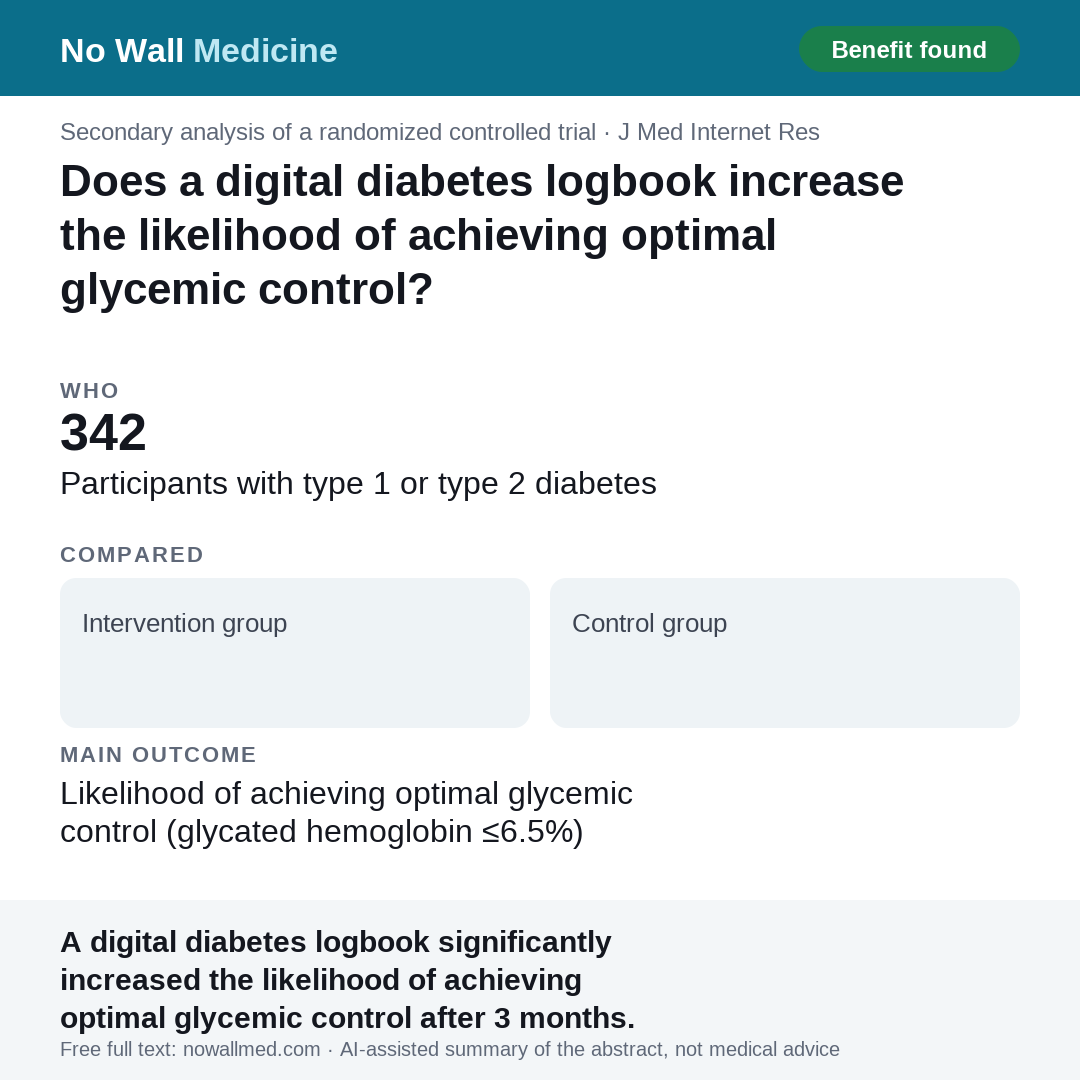
Clinical question: Does a digital diabetes logbook increase the likelihood of achieving optimal glycemic control?
Why it matters: It is unclear if digital tools can reduce the burden of self-management and improve glycemic control, which is the long-term average blood sugar level.
Key points
- In a randomized controlled trial of 342 participants, the likelihood of achieving an HbA1c of 6.5% or less was nearly doubled with the digital logbook compared to the control group.
- Real-world data from 2861 participants showed mean blood glucose levels decreased by 16.3 mg/dL for type 1 diabetes and 27.3 mg/dL for type 2 diabetes after 3 months.
- In the real-world sample, mean blood glucose levels showed a sustained decrease of 19.8 mg/dL after 12 months of using the digital logbook.
Headline and key points written with AI from the paper’s abstract, with every number checked against it. Read the paper before relying on them.
Was this summary helpful?
Subject terms
Cite this article
Ehrmann D, Ruch B, Mitter M, Kober J, Hermanns N, Schäfer V. Improvements in Glycemic Control With a Digital Diabetes Logbook: Secondary Analysis of a Randomized Controlled Trial Enriched by Observational, Real-World Data. J Med Internet Res. 2025. doi:10.2196/68933
Spotted a mistake? Suggest a correction
Top studies every Monday
The week’s key trials and guidelines in your specialties, plus any topics you follow. By email, free.
Get the weekly digest