In-Person vs Electronic Directly Observed Therapy for Tuberculosis Treatment Adherence: A Randomized Noninferiority Trial
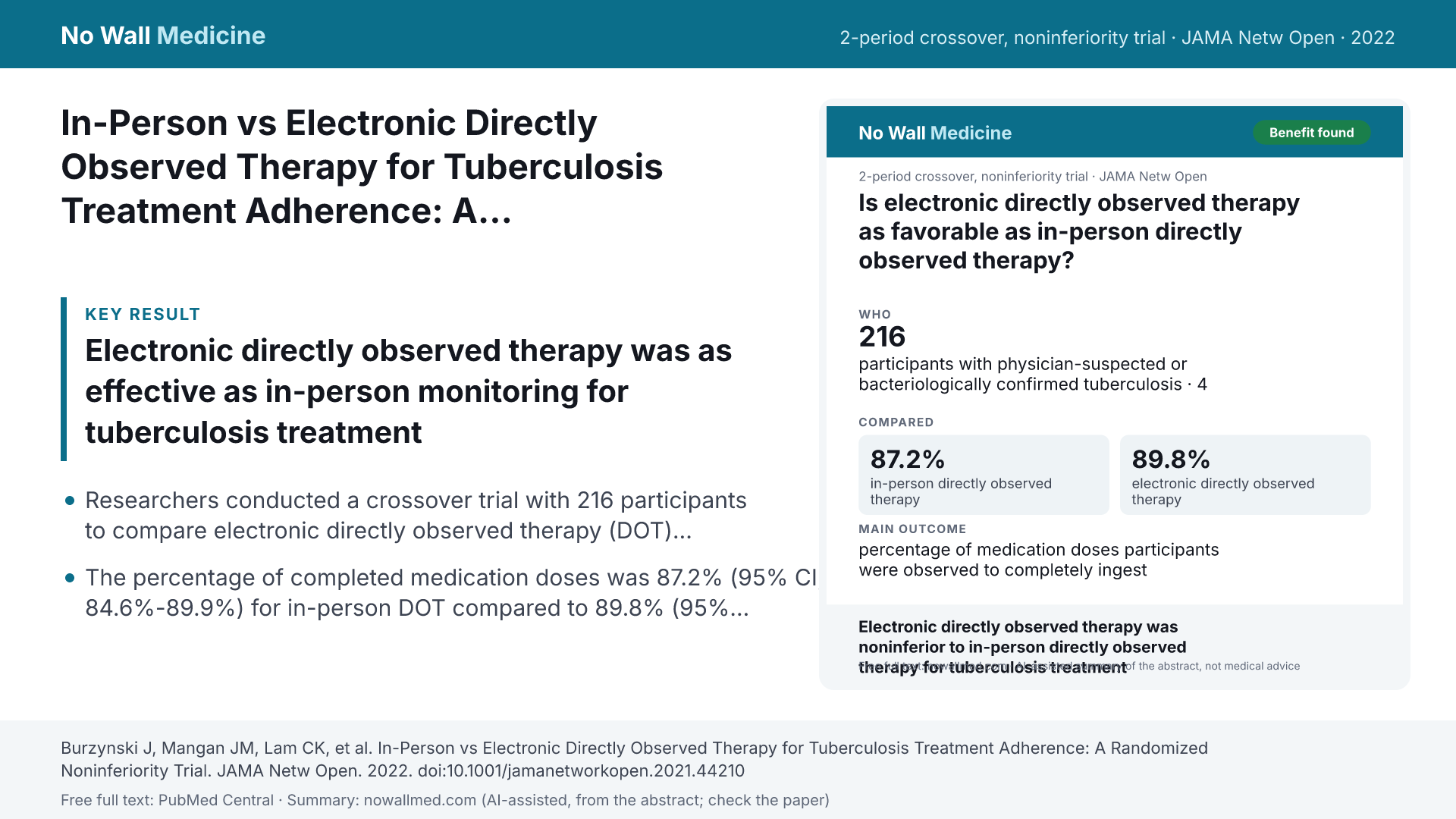
Key result: Electronic directly observed therapy was as effective as in-person monitoring for tuberculosis treatment

Key points
- Researchers conducted a crossover trial with 216 participants to compare electronic directly observed therapy (DOT) against in-person DOT for monitoring medication ingestion.
- The percentage of completed medication doses was 87.2% (95% CI, 84.6%-89.9%) for in-person DOT compared to 89.8% (95% CI, 87.5%-92.1%) for electronic DOT.
- The difference between the two methods was -2.6% (95% CI, -4.8% to -0.3%), which met the criteria for noninferiority.
Why it matters: Evidence is limited regarding whether electronic directly observed therapy can achieve a level of treatment observation as favorable as in-person methods.
Discussion prompts
- Would these patients look like yours? Who was left out?
- Is the main outcome one that matters to patients?
- Is the difference large enough to change what you do?
Cite: Burzynski J, Mangan JM, Lam CK, Macaraig M, Salerno MM, deCastro BR. In-Person vs Electronic Directly Observed Therapy for Tuberculosis Treatment Adherence: A Randomized Noninferiority Trial. JAMA Netw Open. 2022. doi:10.1001/jamanetworkopen.2021.44210
Free full text: PubMed Central · Summary and visual abstract: nowallmed.com/a/in-person-vs-electronic-directly-observed-therapy-for-tuberculosis-axncfk/ (AI-assisted from the abstract; check the paper before relying on it).