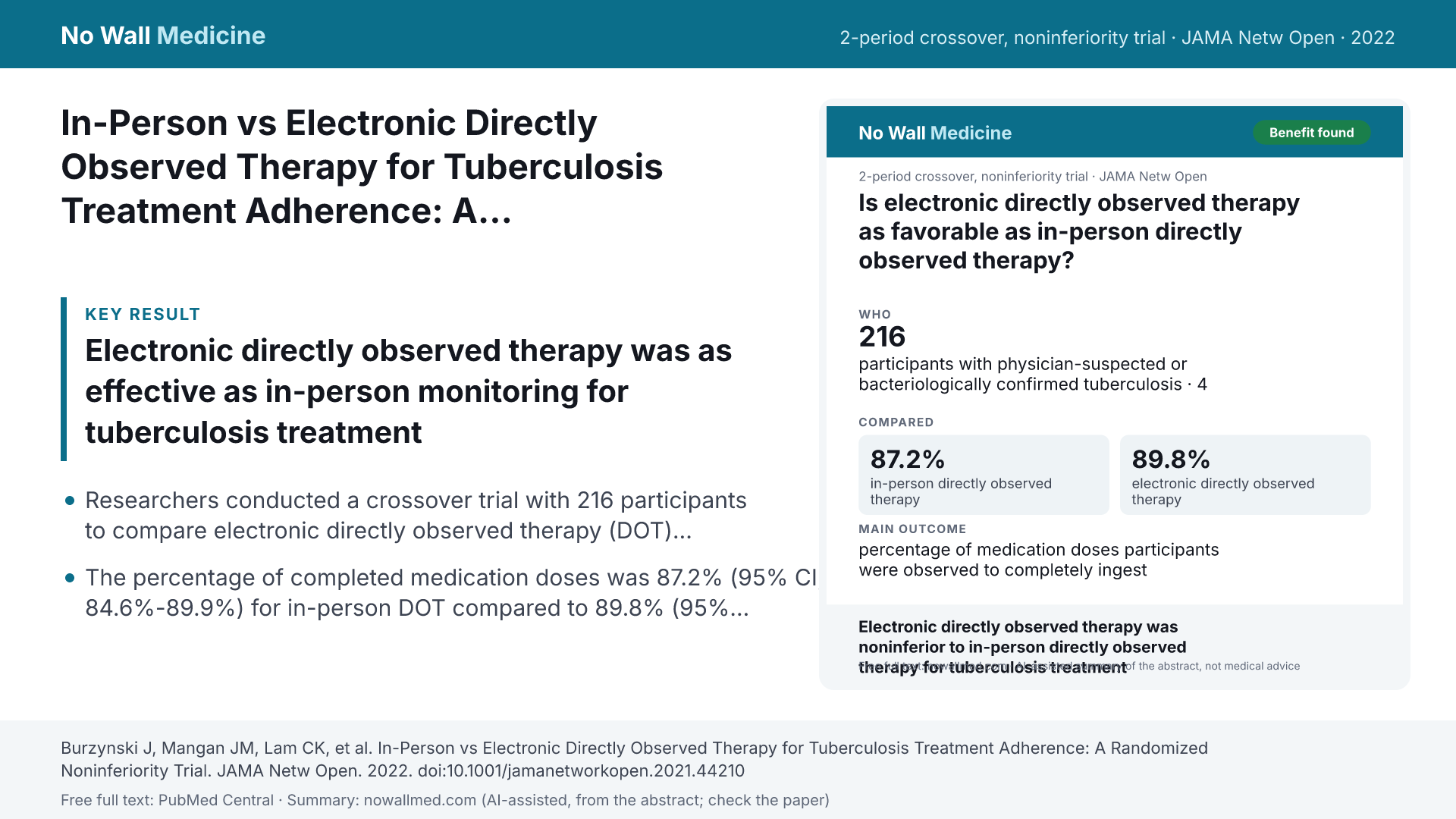
Electronic directly observed therapy was as effective as in-person monitoring for tuberculosis treatment
In-Person vs Electronic Directly Observed Therapy for Tuberculosis Treatment Adherence: A Randomized Noninferiority Trial
2-period crossover, noninferiority trialBenefit found
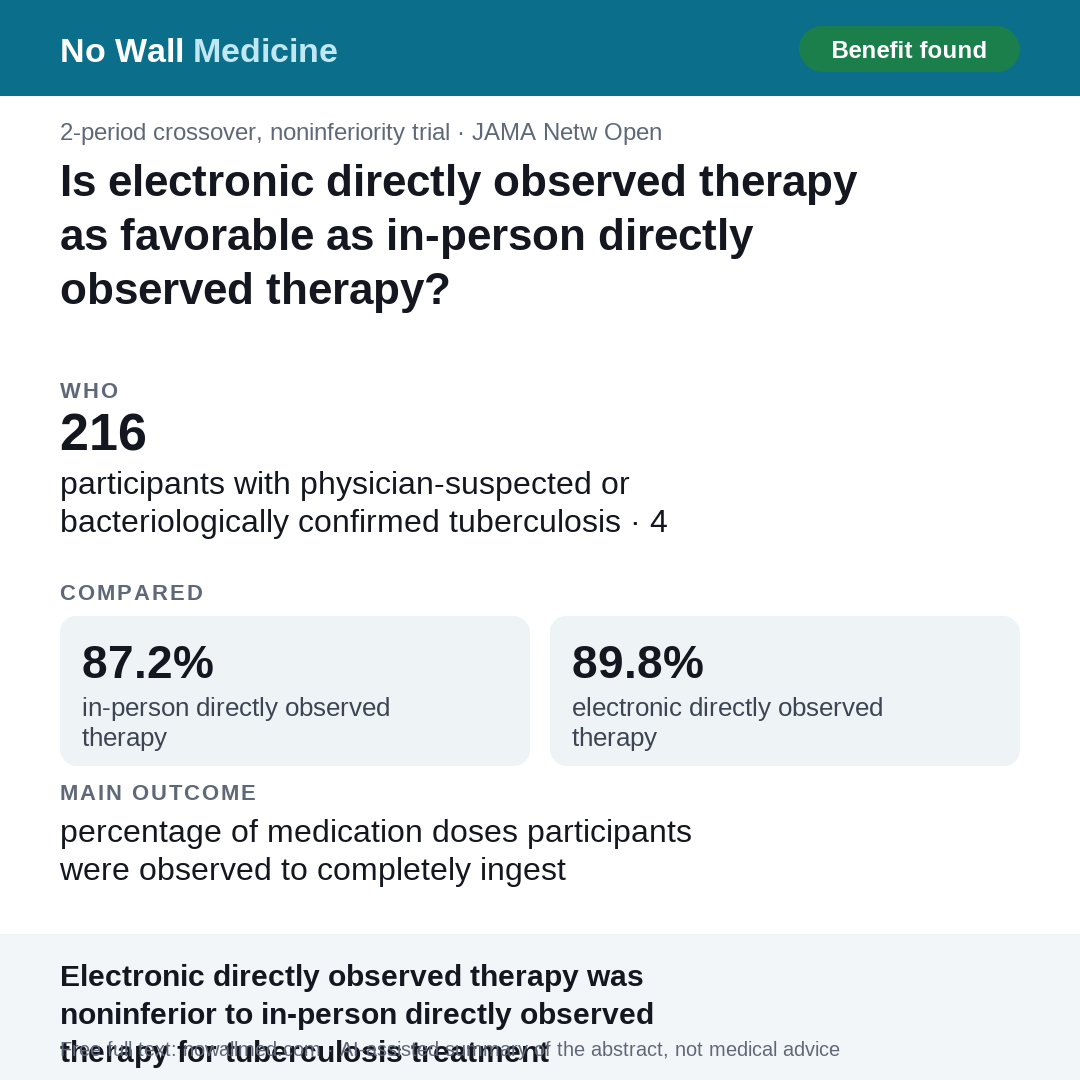
Is electronic directly observed therapy as favorable as in-person directly observed therapy?
Who
216
participants with physician-suspected or bacteriologically confirmed tuberculosis · 4 clinics operated by the New York City Health Department
Compared
87.2%in-person directly observed therapy (95% CI, 84.6%-89.9%)
89.8%electronic directly observed therapy (95% CI, 87.5%-92.1%)
Main outcome
percentage of medication doses participants were observed to completely ingest
Result: -2.6% (95% CI, -4.8% to -0.3%)
Bottom line: Electronic directly observed therapy was noninferior to in-person directly observed therapy for tuberculosis treatment adherence.
JAMA Netw Open · 2022-01-04Download image
Clinical question: Is electronic directly observed therapy as favorable as in-person directly observed therapy?
Why it matters: Evidence is limited regarding whether electronic directly observed therapy can achieve a level of treatment observation as favorable as in-person methods.
Key points
- Researchers conducted a crossover trial with 216 participants to compare electronic directly observed therapy (DOT) against in-person DOT for monitoring medication ingestion.
- The percentage of completed medication doses was 87.2% (95% CI, 84.6%-89.9%) for in-person DOT compared to 89.8% (95% CI, 87.5%-92.1%) for electronic DOT.
- The difference between the two methods was -2.6% (95% CI, -4.8% to -0.3%), which met the criteria for noninferiority.
Headline and key points written with AI from the paper’s abstract, with every number checked against it. Read the paper before relying on them.
Was this summary helpful?
Subject terms
Cite this article
Burzynski J, Mangan JM, Lam CK, Macaraig M, Salerno MM, deCastro BR. In-Person vs Electronic Directly Observed Therapy for Tuberculosis Treatment Adherence: A Randomized Noninferiority Trial. JAMA Netw Open. 2022. doi:10.1001/jamanetworkopen.2021.44210
Spotted a mistake? Suggest a correction
Top studies every Monday
The week’s key trials and guidelines in your specialties, plus any topics you follow. By email, free.
Get the weekly digest