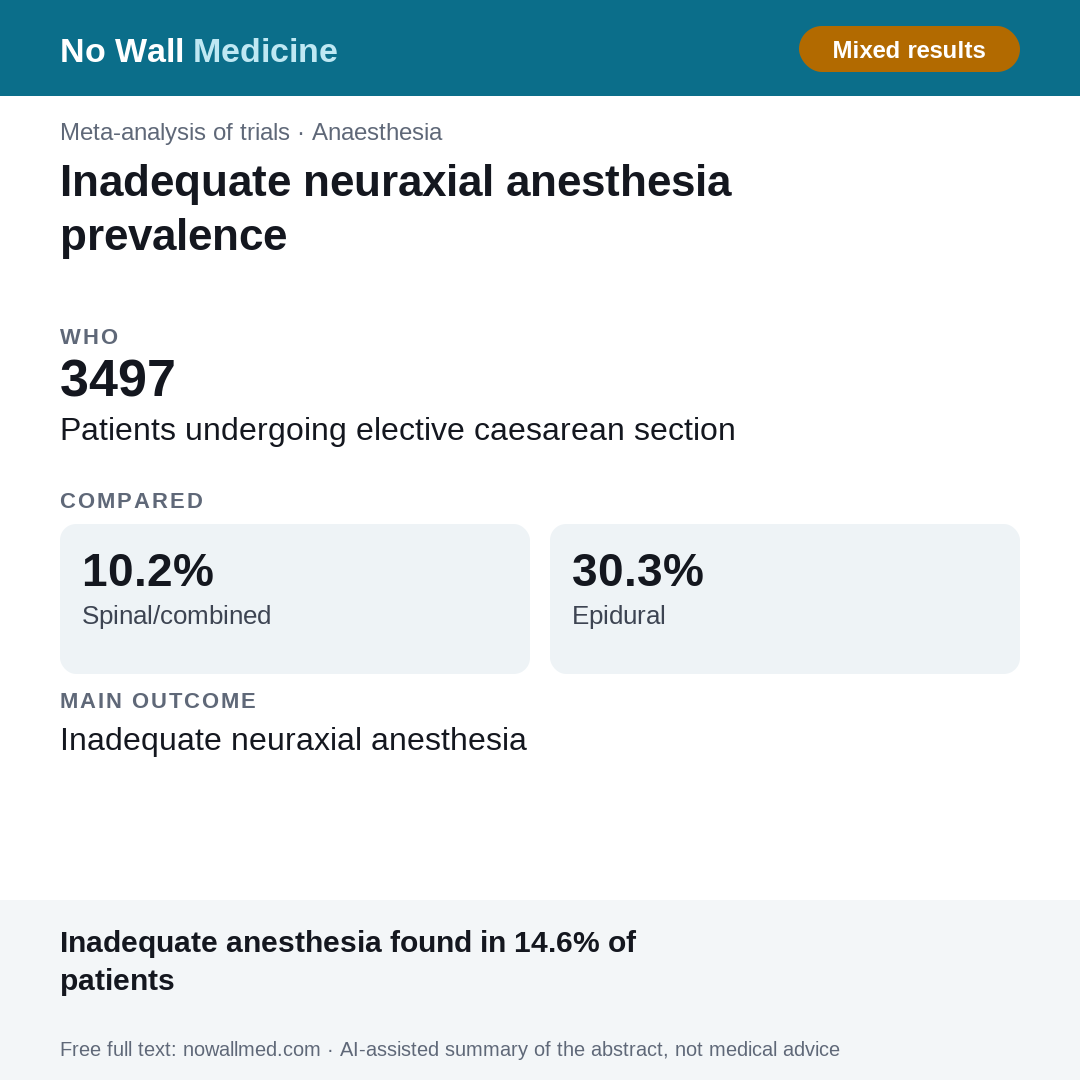
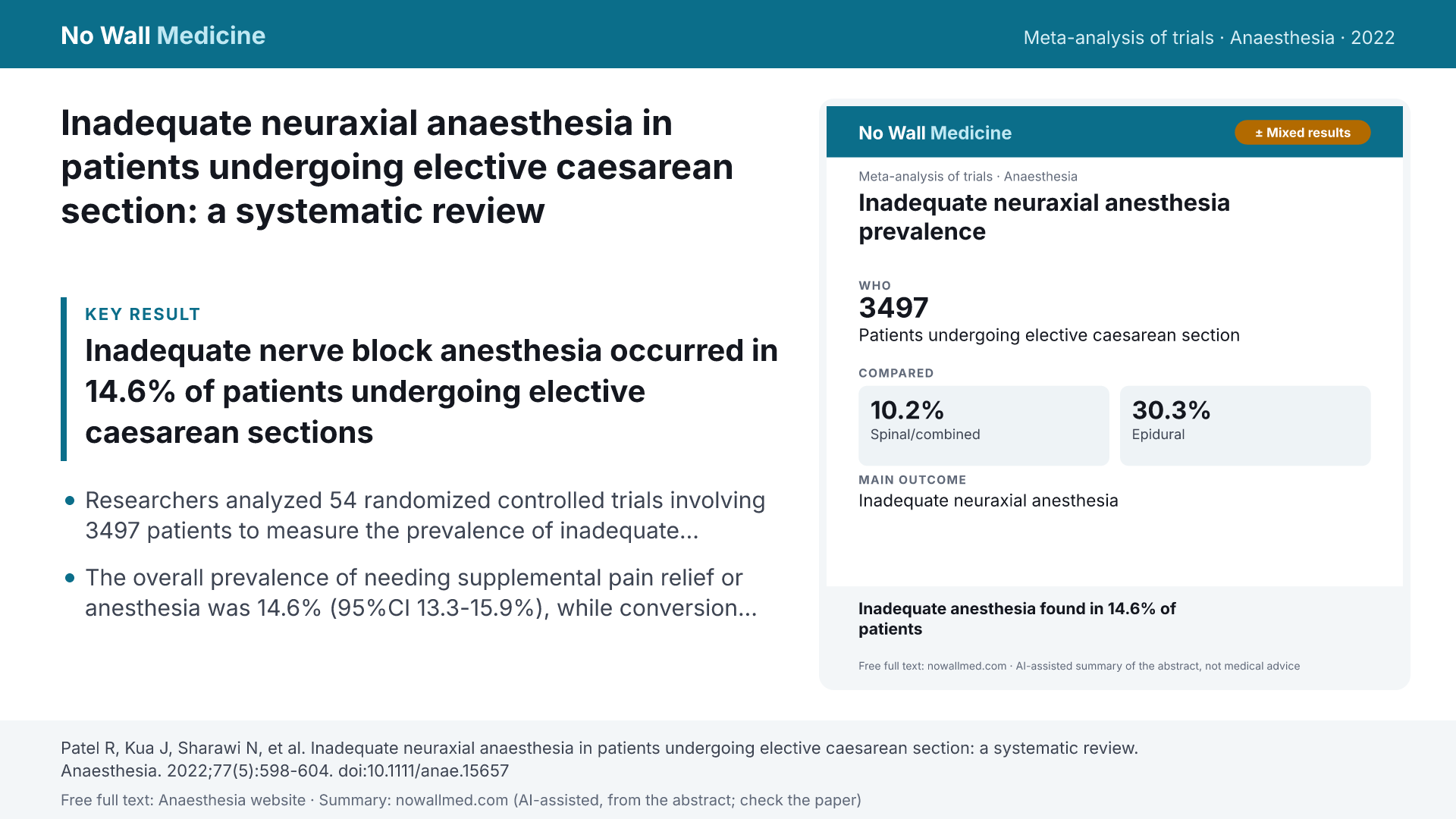
Inadequate nerve block anesthesia occurred in 14.6% of patients undergoing elective caesarean sections
Inadequate neuraxial anaesthesia in patients undergoing elective caesarean section: a systematic review
Meta-analysis of trialsMixed results
Inadequate neuraxial anesthesia prevalence
Who
3497
Patients undergoing elective caesarean section
Compared
10.2%Spinal/combined (278/2732)
30.3%Epidural (232/765)
Main outcome
Inadequate neuraxial anesthesia
Bottom line: Inadequate anesthesia found in 14.6% of patients
Anaesthesia · 2022-01-22Download image
Why it matters: The prevalence of inadequate neuraxial anesthesia and the rate of conversion to general anesthesia during elective caesarean sections were unclear.
Key points
- Researchers analyzed 54 randomized controlled trials involving 3497 patients to measure the prevalence of inadequate neuraxial anesthesia, which is numbing medicine injected near the spine.
- The overall prevalence of needing supplemental pain relief or anesthesia was 14.6% (95%CI 13.3-15.9%), while conversion to general anesthesia occurred in 2 out of 3497 patients (0.06% (95%CI 0.0-0.2%)).
- Spinal or combined spinal-epidural anesthesia was associated with a lower prevalence of inadequate anesthesia (10.2% (95%CI 9.0-11.4%)) compared to epidural anesthesia (30.3% (95%CI 26.5-34.5%)).
Headline and key points written with AI from the paper’s abstract, with every number checked against it. Read the paper before relying on them.
Was this summary helpful?
Subject terms
Cite this article
Patel R, Kua J, Sharawi N, et al. Inadequate neuraxial anaesthesia in patients undergoing elective caesarean section: a systematic review. Anaesthesia. 2022. doi:10.1111/anae.15657
Spotted a mistake? Suggest a correction