Inadequate neuraxial anaesthesia in patients undergoing elective caesarean section: a systematic review
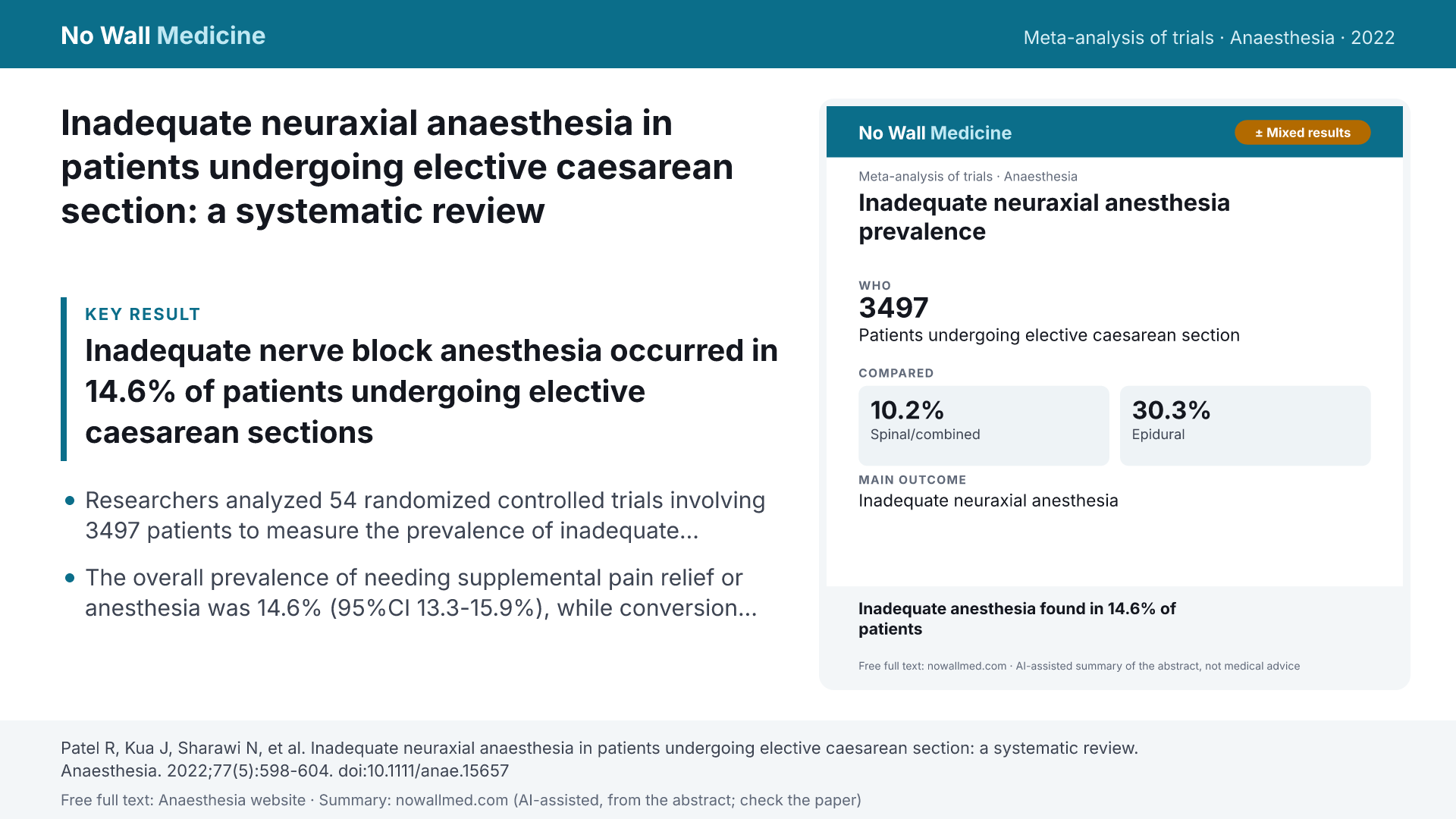
Key result: Inadequate nerve block anesthesia occurred in 14.6% of patients undergoing elective caesarean sections
Meta-analysis of trialsMixed results
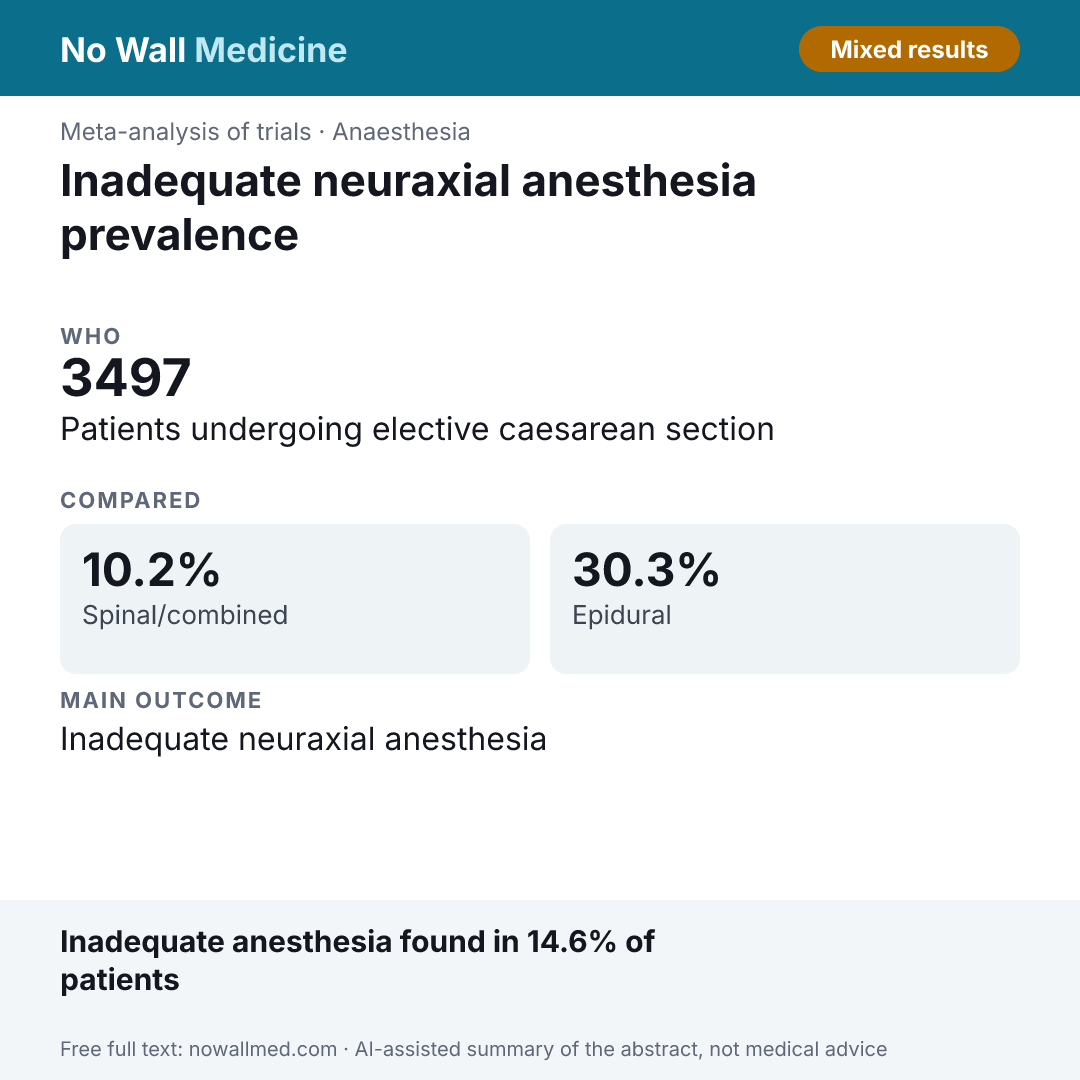
Inadequate neuraxial anesthesia prevalence
Who
3497
Patients undergoing elective caesarean section
Compared
10.2%Spinal/combined (278/2732)
30.3%Epidural (232/765)
Main outcome
Inadequate neuraxial anesthesia
Bottom line: Inadequate anesthesia found in 14.6% of patients
Anaesthesia · 2022-01-22 · Save PNG
Key points
- Researchers analyzed 54 randomized controlled trials involving 3497 patients to measure the prevalence of inadequate neuraxial anesthesia, which is numbing medicine injected near the spine.
- The overall prevalence of needing supplemental pain relief or anesthesia was 14.6% (95%CI 13.3-15.9%), while conversion to general anesthesia occurred in 2 out of 3497 patients (0.06% (95%CI 0.0-0.2%)).
- Spinal or combined spinal-epidural anesthesia was associated with a lower prevalence of inadequate anesthesia (10.2% (95%CI 9.0-11.4%)) compared to epidural anesthesia (30.3% (95%CI 26.5-34.5%)).
Discussion prompts
- Would these patients look like yours? Who was left out?
- Is the main outcome one that matters to patients?
- Is the difference large enough to change what you do?
Cite: Patel R, Kua J, Sharawi N, et al. Inadequate neuraxial anaesthesia in patients undergoing elective caesarean section: a systematic review. Anaesthesia. 2022;77(5):598-604. doi:10.1111/anae.15657
Free full text: Anaesthesia website · Summary and visual abstract: nowallmed.com/a/inadequate-neuraxial-anaesthesia-in-patients-undergoing-elective-1o8r158/ (AI-assisted from the abstract; check the paper before relying on it).