Increased versus standard gonadotrophin dosing in predicted poor responders of IVF: an open-label randomized controlled trial
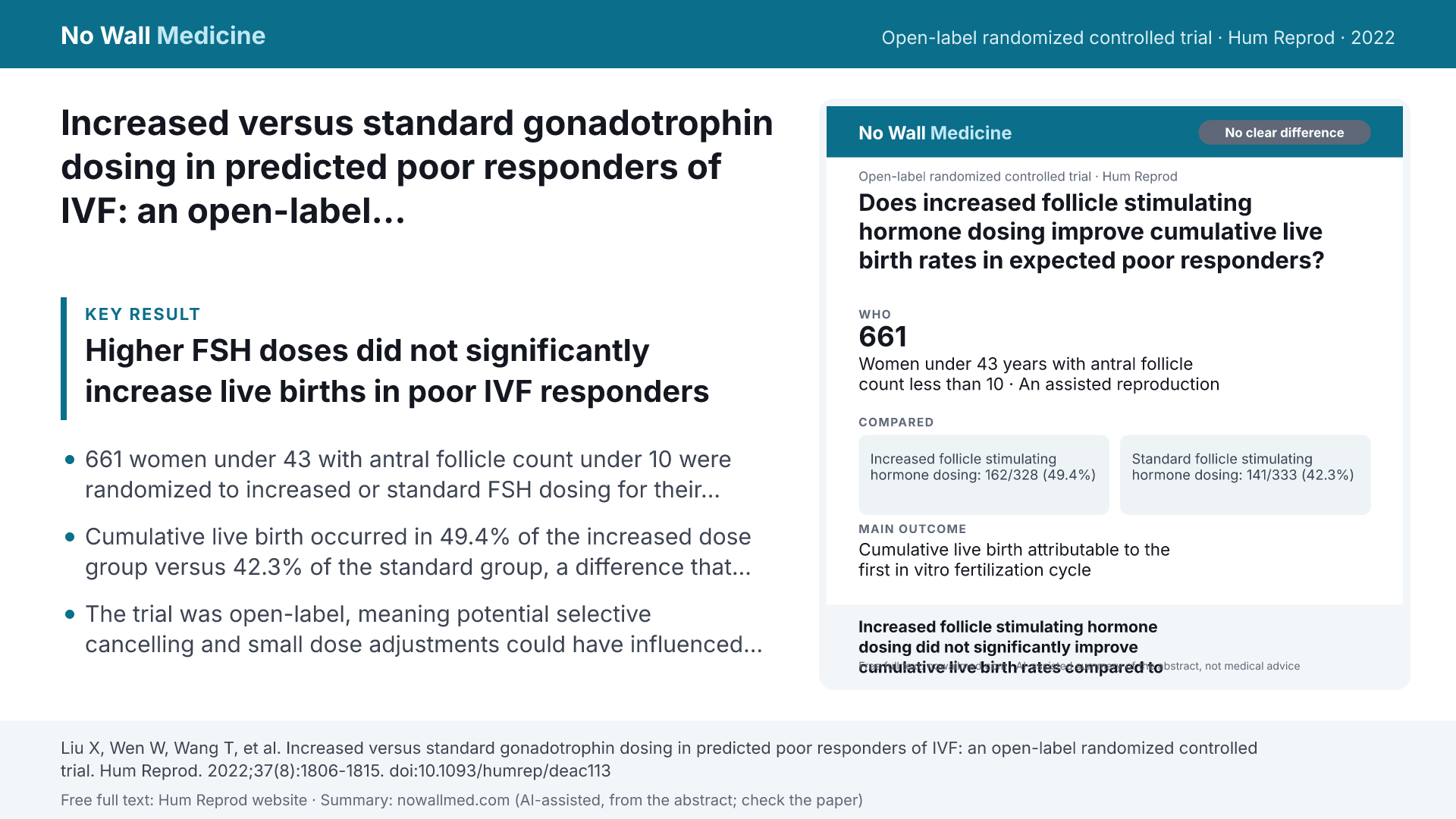
Key result: Increased follicle stimulating hormone dosing did not significantly increase live birth rates in predicted poor responders
Key points
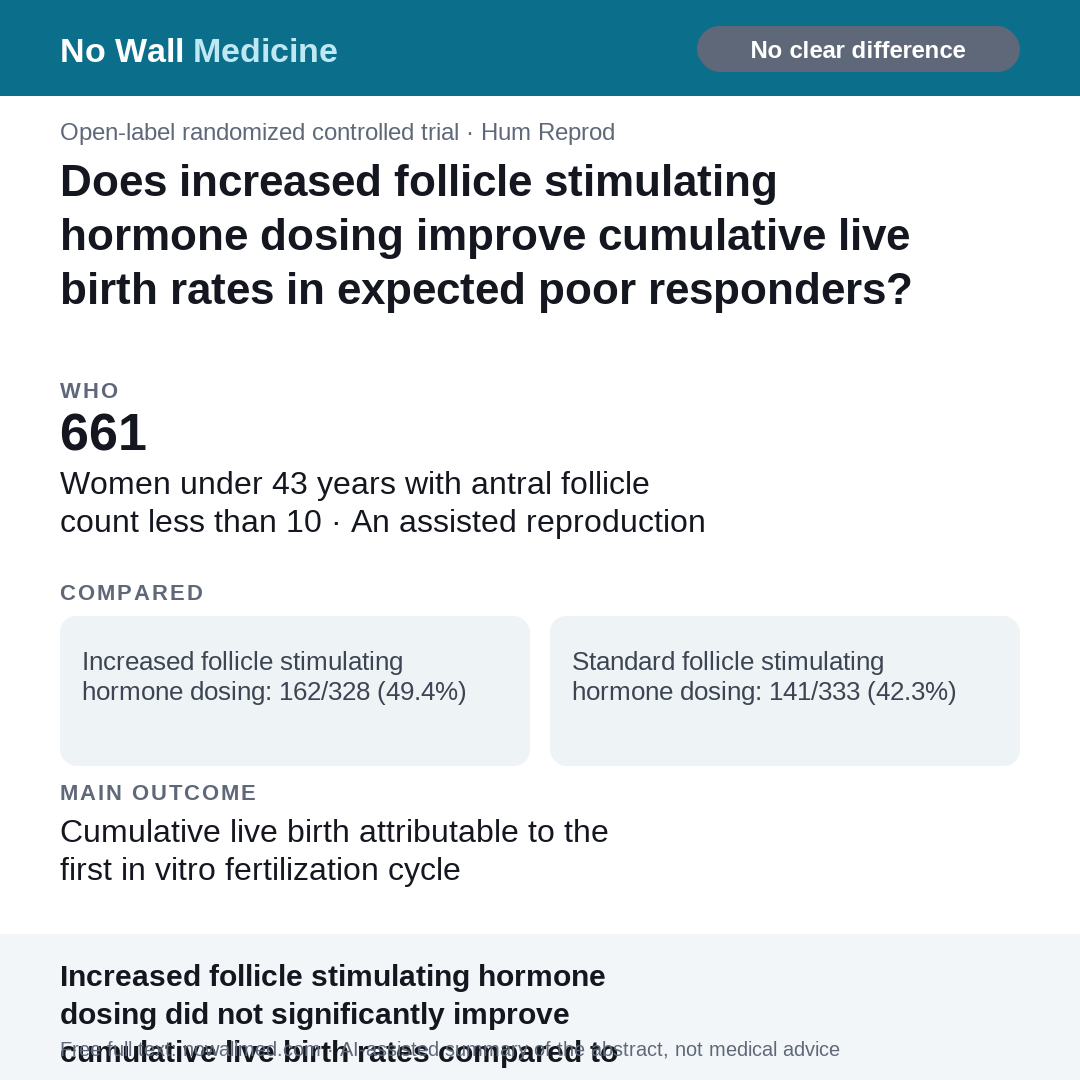
- Researchers randomized 661 women under 43 years of age with an antral follicle count under 10 to receive either increased or standard doses of follicle stimulating hormone.
- Cumulative live births occurred in 49.4% of the increased dosing group compared to 42.3% in the standard group, which was not a statistically significant difference.
- The live birth rate after the first embryo transfer was 38.1% in the increased group versus 35.1% in the standard group.
Why it matters: It is unknown whether increasing the dose of follicle stimulating hormone improves fertility outcomes for women expected to have a poor response to treatment.
Limitation the authors note: Because this was an open-label trial, potential selective cancelling and small dose adjustments could have influenced the results.
Discussion prompts
- Would these patients look like yours? Who was left out?
- Is the main outcome one that matters to patients?
- Is the difference large enough to change what you do?
Cite: Liu X, Wen W, Wang T, et al. Increased versus standard gonadotrophin dosing in predicted poor responders of IVF: an open-label randomized controlled trial. Hum Reprod. 2022. doi:10.1093/humrep/deac113
Free full text: Hum Reprod website · Summary and visual abstract: nowallmed.com/a/increased-versus-standard-gonadotrophin-dosing-in-predicted-poor-1wakha8/ (AI-assisted from the abstract; check the paper before relying on it).