Individual Patient Data Meta-Analysis of Dynamic Cerebral Autoregulation and Functional Outcome After Ischemic Stroke
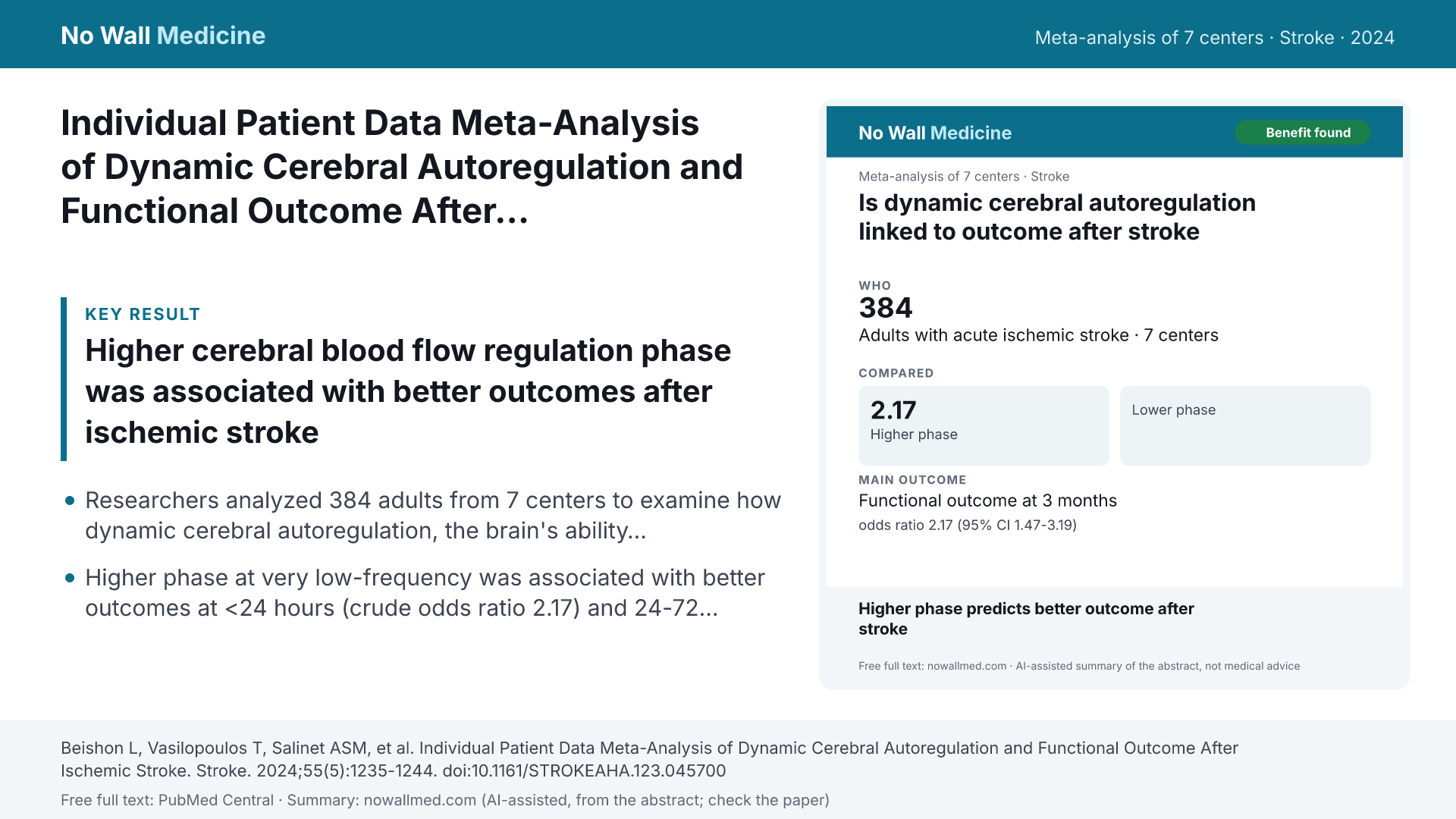
Key result: Higher cerebral blood flow regulation phase was associated with better outcomes after ischemic stroke
Key points
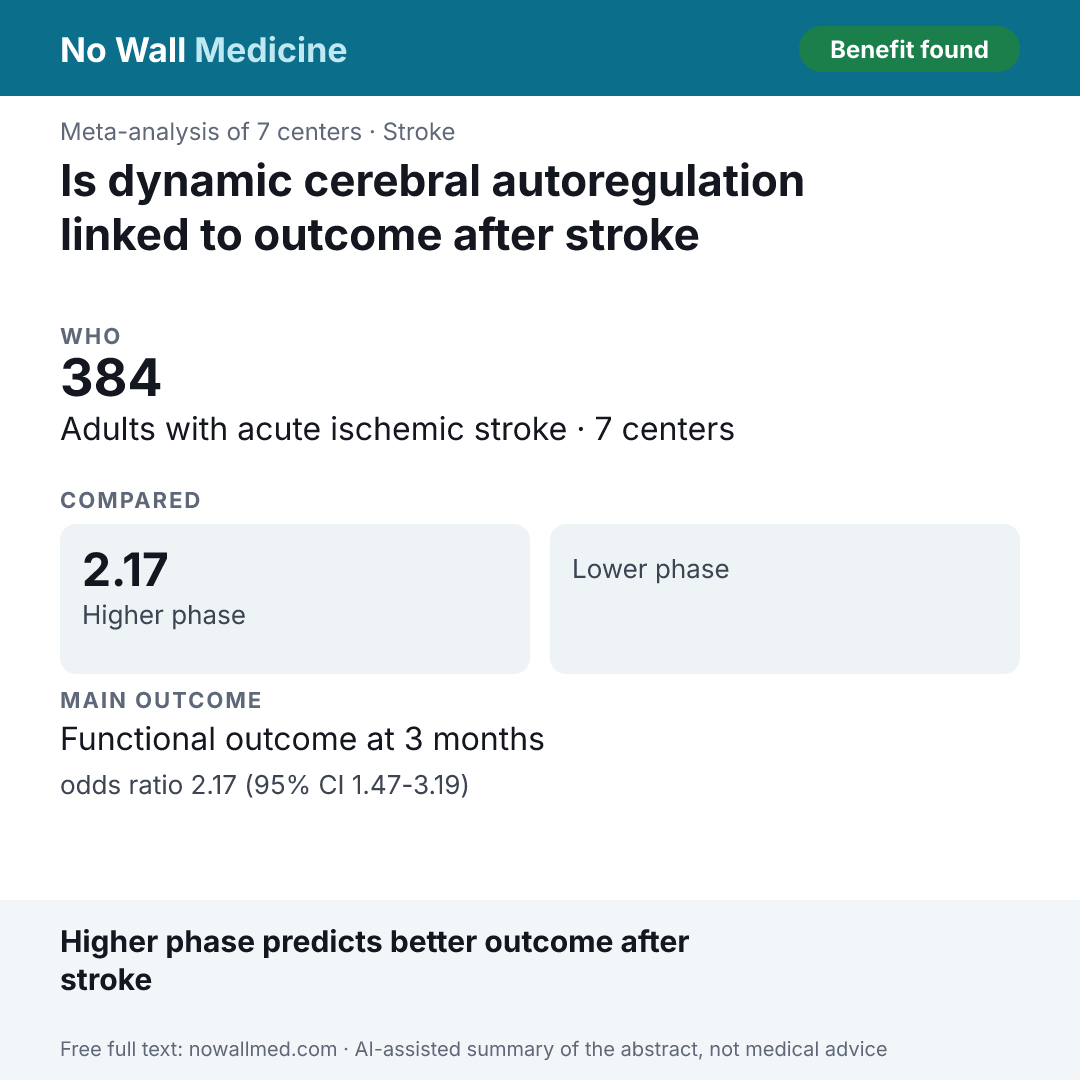
- Researchers analyzed 384 adults from 7 centers to examine how dynamic cerebral autoregulation, the brain's ability to maintain constant blood flow, relates to recovery after stroke.
- Higher phase at very low-frequency was associated with better outcomes at <24 hours (crude odds ratio 2.17) and 24-72 hours (crude odds ratio 1.95).
- Higher phase at low-frequency was associated with better outcomes at 3 months (crude odds ratio 3.03) after the stroke occurred.
Why it matters: The relationship between dynamic cerebral autoregulation and functional recovery after an acute ischemic stroke remains unclear due to small sample sizes and inconsistent previous findings.
Discussion prompts
- Would these patients look like yours? Who was left out?
- Is the main outcome one that matters to patients?
- Is the difference large enough to change what you do?
Cite: Beishon L, Vasilopoulos T, Salinet ASM, et al. Individual Patient Data Meta-Analysis of Dynamic Cerebral Autoregulation and Functional Outcome After Ischemic Stroke. Stroke. 2024;55(5):1235-1244. doi:10.1161/STROKEAHA.123.045700
Free full text: PubMed Central · Summary and visual abstract: nowallmed.com/a/individual-patient-data-meta-analysis-of-dynamic-cerebral-17niexm/ (AI-assisted from the abstract; check the paper before relying on it).