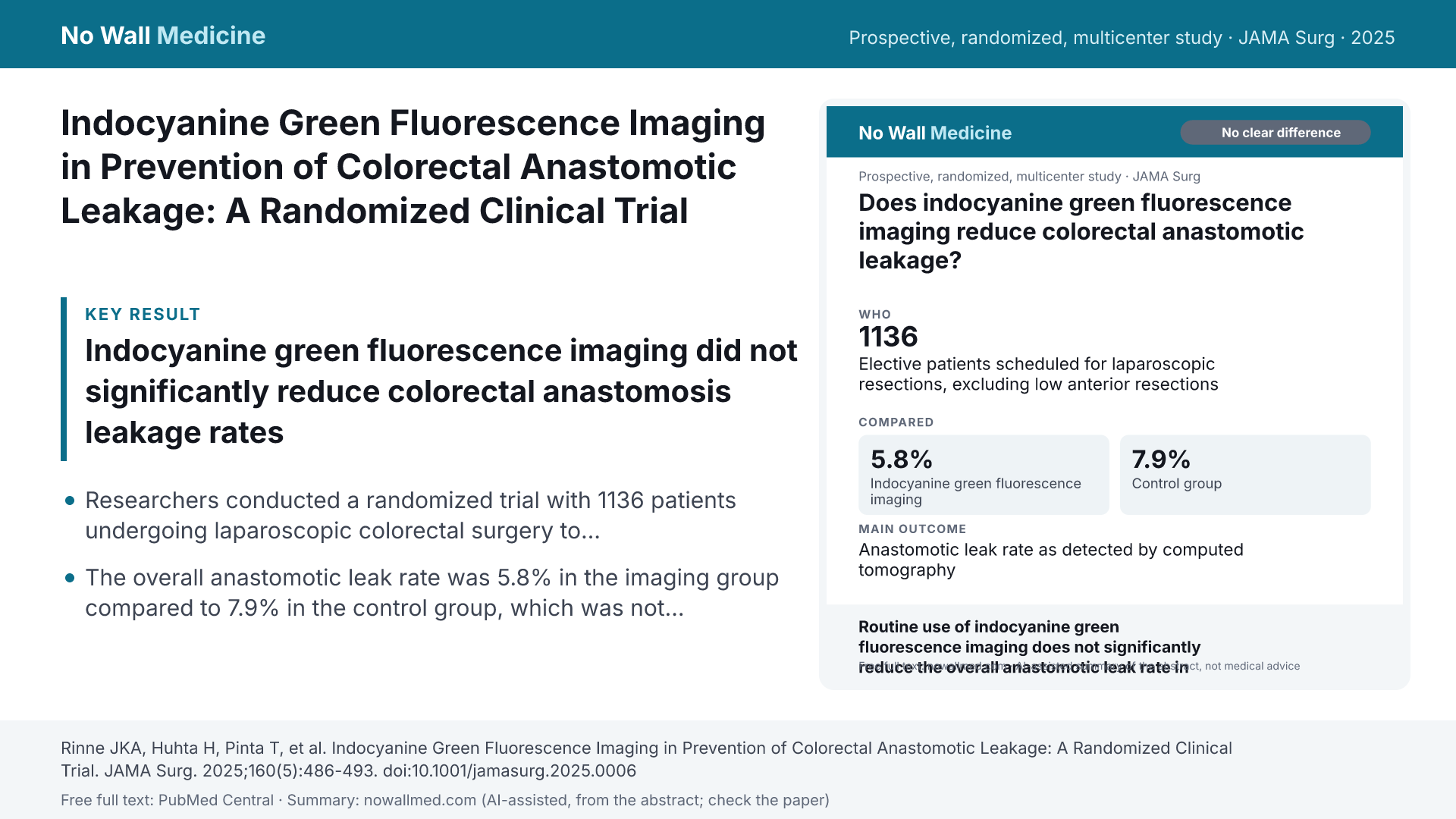
Indocyanine green fluorescence imaging did not significantly reduce colorectal anastomosis leakage rates
Indocyanine Green Fluorescence Imaging in Prevention of Colorectal Anastomotic Leakage: A Randomized Clinical Trial
Prospective, randomized, multicenter studyNo clear difference
Does indocyanine green fluorescence imaging reduce colorectal anastomotic leakage?
Who
1136
Elective patients scheduled for laparoscopic resections, excluding low anterior resections · 5 Finnish public hospitals
Compared
5.8%Indocyanine green fluorescence imaging (33/567)
7.9%Control group (45/569)
Main outcome
Anastomotic leak rate as detected by computed tomography
Result: odds ratio 0.73 (95% CI, 0.48-1.13)
Bottom line: Routine use of indocyanine green fluorescence imaging does not significantly reduce the overall anastomotic leak rate in laparoscopic colorectal surgery.
JAMA Surg · 2025-03-05 · Save PNG
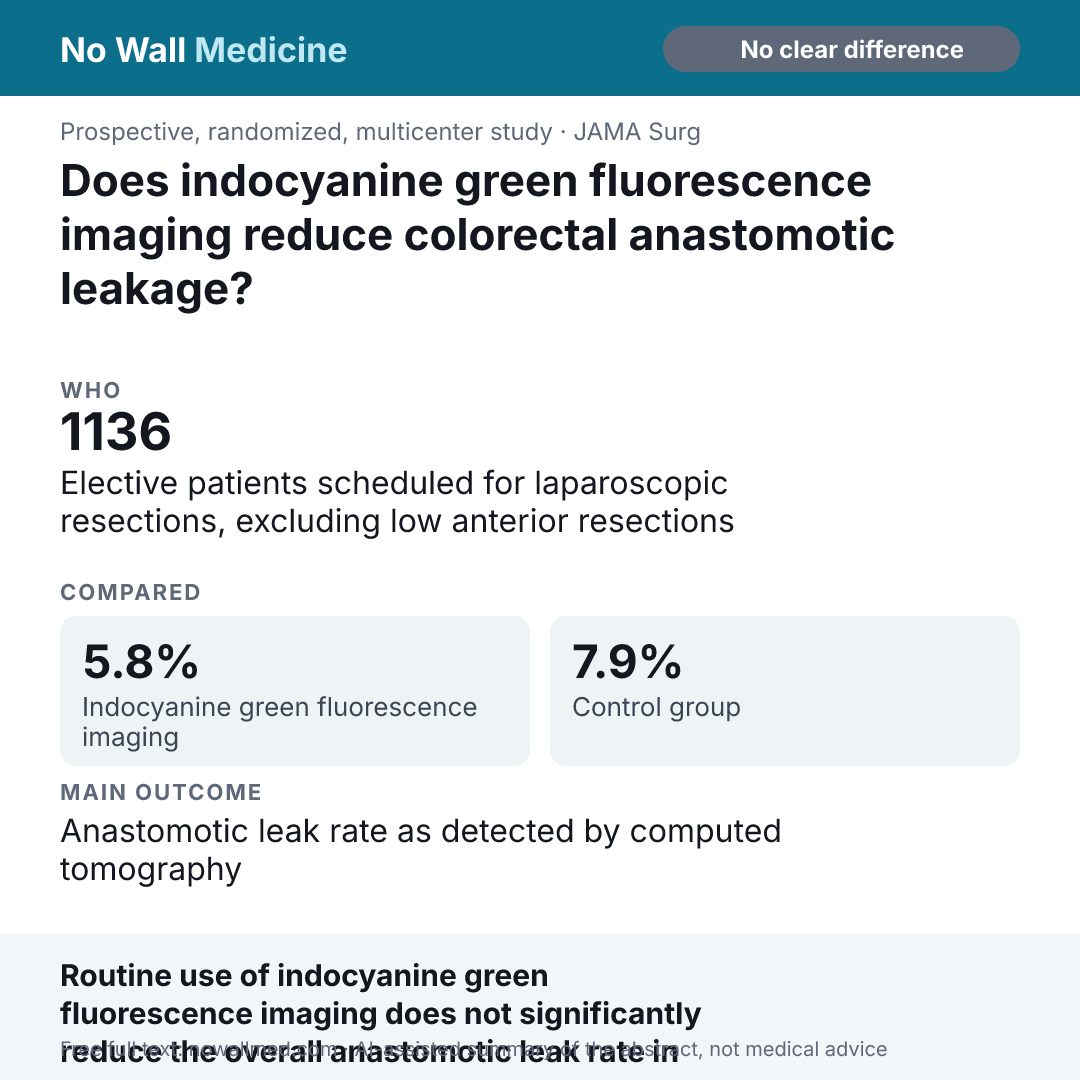
Clinical question: Does indocyanine green fluorescence imaging reduce colorectal anastomotic leakage?
Why it matters: It is challenging for surgeons to assess the risk of leakage when connecting two ends of the bowel during colorectal surgery.
Key points
- Researchers conducted a randomized trial with 1136 patients undergoing laparoscopic colorectal surgery to compare indocyanine green fluorescence imaging against standard care.
- The overall anastomotic leak rate was 5.8% in the imaging group compared to 7.9% in the control group, which was not a statistically significant difference.
- In left-sided operations, the leak rate was 5.2% with imaging versus 9.5% without imaging, though no adverse events related to the dye were reported.
Headline and key points written with AI from the paper’s abstract, with every number checked against it. Read the paper before relying on them.
Was this summary helpful?
Subject terms
Headline, design, result, key points, caveat and citation as plain text.
Cite this article
Rinne JKA, Huhta H, Pinta T, et al. Indocyanine Green Fluorescence Imaging in Prevention of Colorectal Anastomotic Leakage: A Randomized Clinical Trial. JAMA Surg. 2025;160(5):486-493. doi:10.1001/jamasurg.2025.0006
Spotted a mistake? Suggest a correction