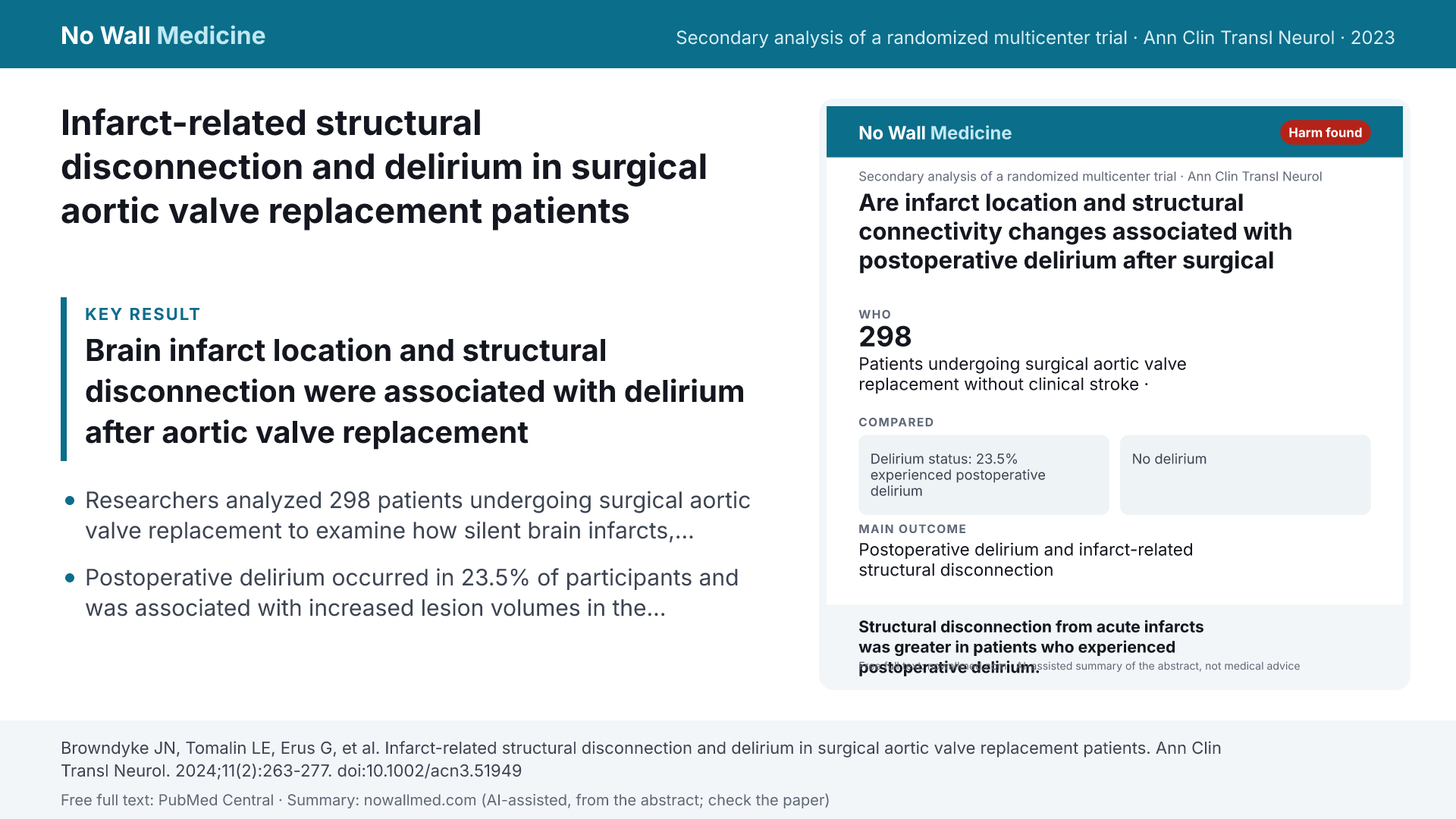
Brain infarct location and structural disconnection were associated with delirium after aortic valve replacement
Infarct-related structural disconnection and delirium in surgical aortic valve replacement patients
Secondary analysis of a randomized multicenter trialHarm found
Are infarct location and structural connectivity changes associated with postoperative delirium after surgical aortic valve replacement?
Who
298
Patients undergoing surgical aortic valve replacement without clinical stroke · Multicenter
Compared
Delirium status: 23.5% experienced postoperative delirium
No delirium
Main outcome
Postoperative delirium and infarct-related structural disconnection
Bottom line: Structural disconnection from acute infarcts was greater in patients who experienced postoperative delirium.
Ann Clin Transl Neurol · 2023-12-28Download image
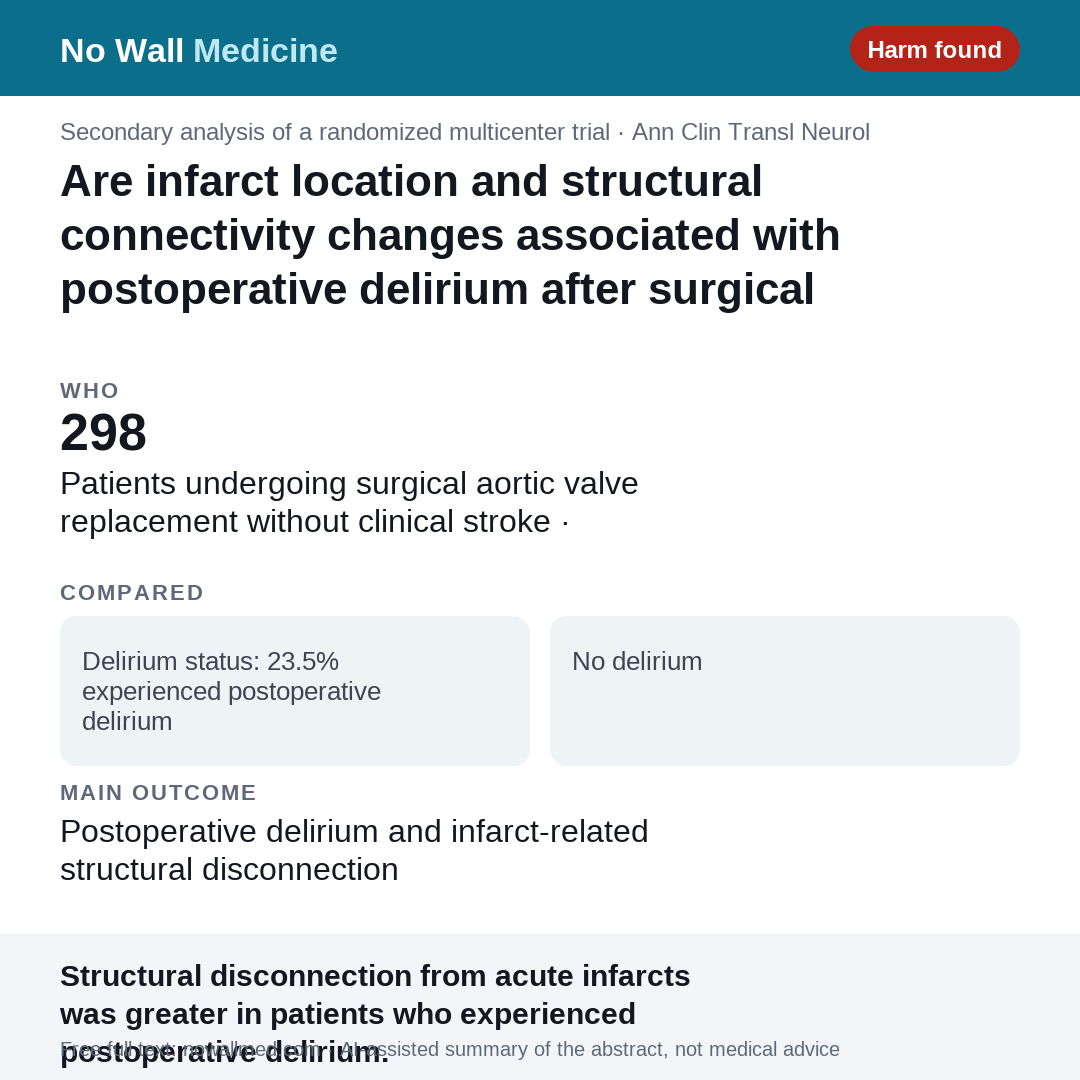
Clinical question: Are infarct location and structural connectivity changes associated with postoperative delirium after surgical aortic valve replacement?
Why it matters: The relationship between clinically silent brain infarcts and in-hospital delirium is uncertain because infarcts are often summarized as global metrics without considering location or structural consequences.
Key points
- Researchers analyzed 298 patients undergoing surgical aortic valve replacement to examine how silent brain infarcts, or small areas of tissue death, relate to delirium.
- Postoperative delirium occurred in 23.5% of participants and was associated with increased lesion volumes in the right cerebellum and temporal lobe white matter.
- Delirium was also associated with diffusion weighted imaging infarct-related structural disconnection, which is a loss of communication between brain regions, in the frontal and temporal lobes.
Headline and key points written with AI from the paper’s abstract, with every number checked against it. Read the paper before relying on them.
Was this summary helpful?
Subject terms
Cite this article
Browndyke JN, Tomalin LE, Erus G, Overbey JR, Kuceyeski A, Moskowitz AJ. Infarct-related structural disconnection and delirium in surgical aortic valve replacement patients. Ann Clin Transl Neurol. 2023. doi:10.1002/acn3.51949
Spotted a mistake? Suggest a correction
Top studies every Monday
The week’s key trials and guidelines in your specialties, plus any topics you follow. By email, free.
Get the weekly digest