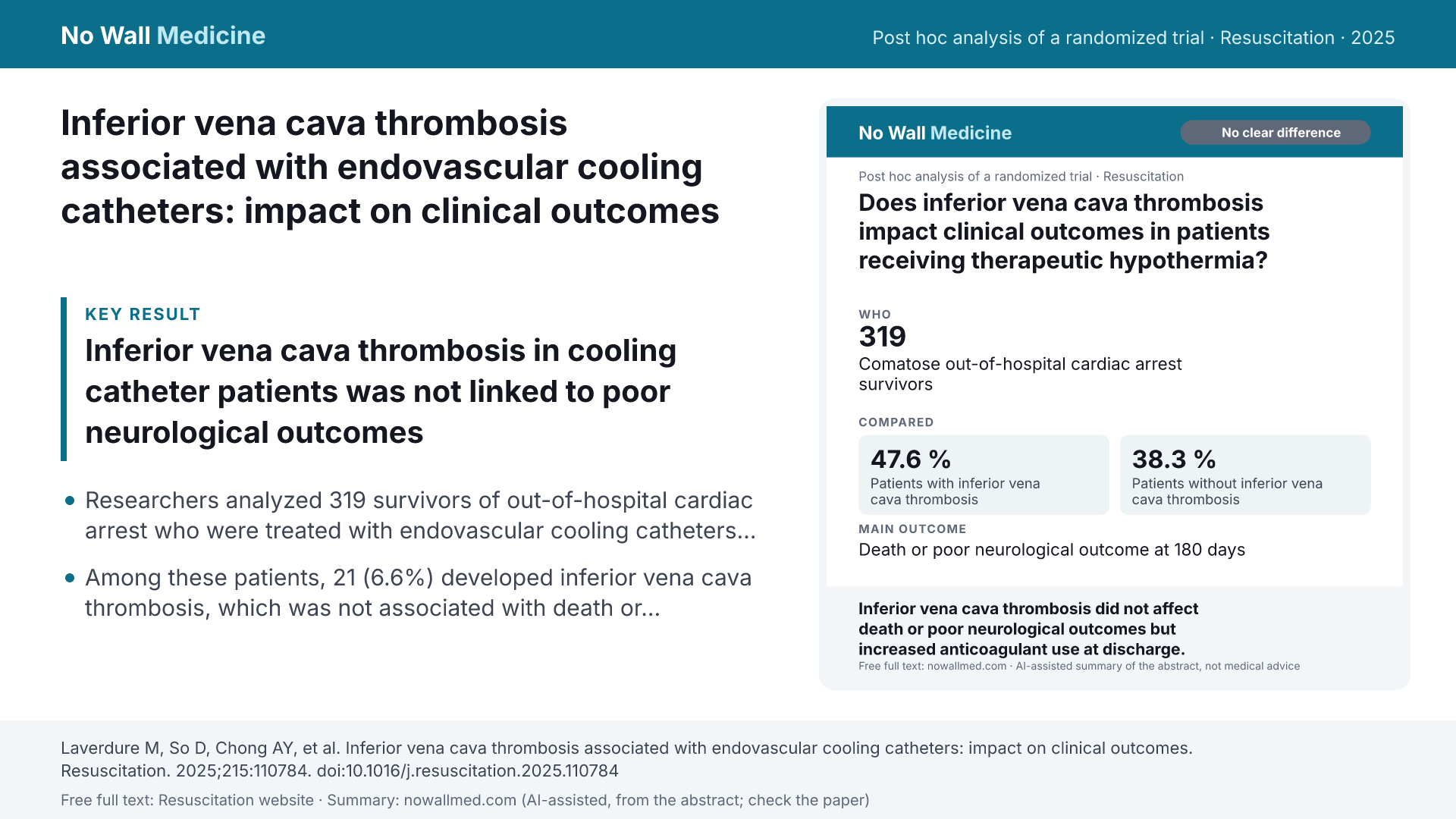
Inferior vena cava thrombosis in cooling catheter patients was not linked to poor neurological outcomes
Inferior vena cava thrombosis associated with endovascular cooling catheters: impact on clinical outcomes
Post hoc analysis of a randomized trialNo clear difference
Does inferior vena cava thrombosis impact clinical outcomes in patients receiving therapeutic hypothermia?
Who
319
Comatose out-of-hospital cardiac arrest survivors
Compared
47.6 %Patients with inferior vena cava thrombosis
38.3 %Patients without inferior vena cava thrombosis
Main outcome
Death or poor neurological outcome at 180 days
Bottom line: Inferior vena cava thrombosis did not affect death or poor neurological outcomes but increased anticoagulant use at discharge.
Resuscitation · 2025-08-20Download image
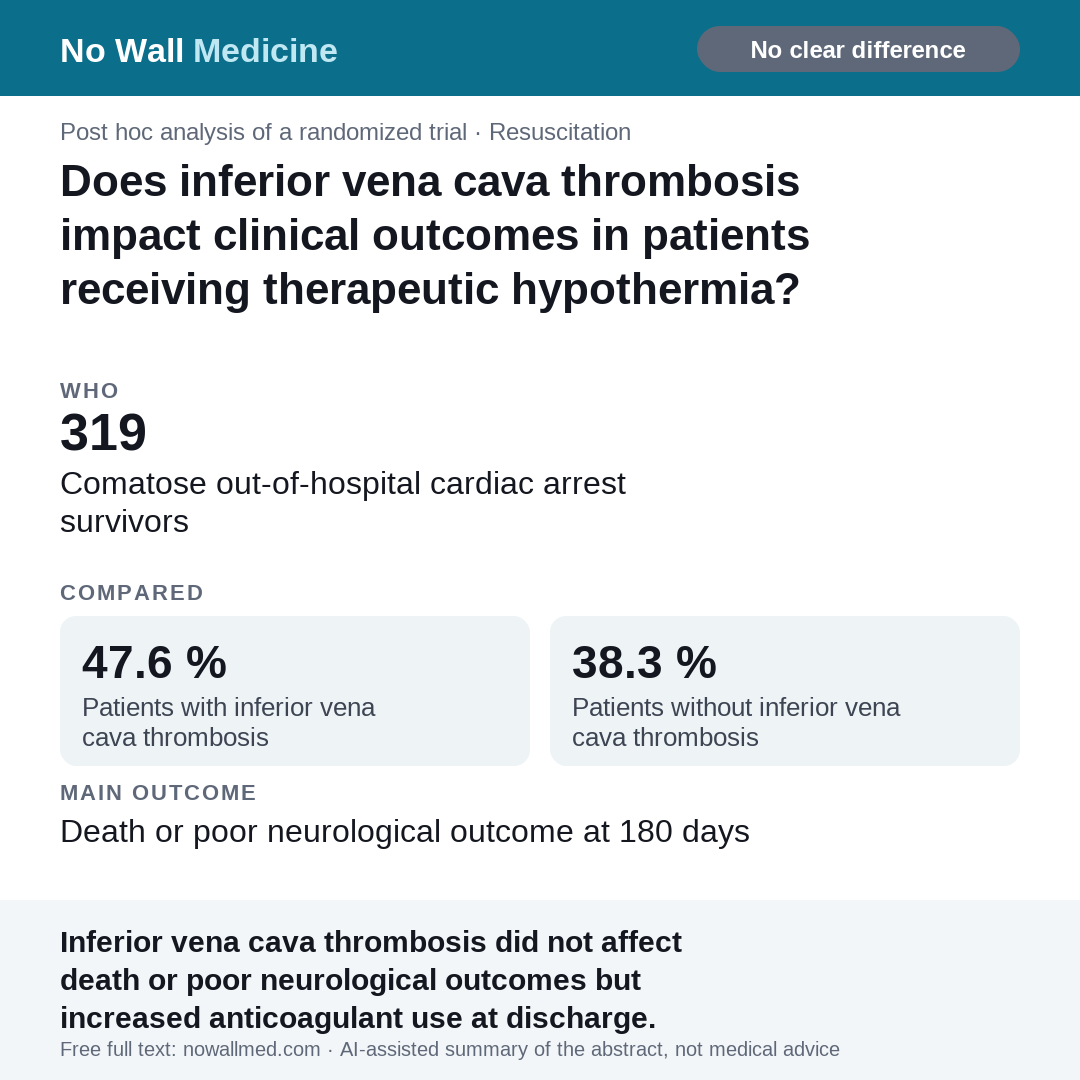
Clinical question: Does inferior vena cava thrombosis impact clinical outcomes in patients receiving therapeutic hypothermia?
Why it matters: The frequency and clinical impact of inferior vena cava thrombosis, a complication of endovascular cooling catheters, are not well established in patients undergoing therapeutic hypothermia.
Key points
- Researchers analyzed 319 survivors of out-of-hospital cardiac arrest who were treated with endovascular cooling catheters to induce therapeutic hypothermia.
- Among these patients, 21 (6.6%) developed inferior vena cava thrombosis, which was not associated with death or poor neurological outcomes at 180 days (47.6% vs 38.3%, P = 0.39).
- Patients with thrombosis were more likely to be discharged on anticoagulant medication (76.9% vs 22.5%, P < 0.0001) and had higher in-hospital bleeding rates (33.3% vs 22.8%, P = 0.24).
Headline and key points written with AI from the paper’s abstract, with every number checked against it. Read the paper before relying on them.
Was this summary helpful?
Subject terms
Cite this article
Laverdure M, So D, Chong AY, Dick A, Froeschl M, Glover C. Inferior vena cava thrombosis associated with endovascular cooling catheters: impact on clinical outcomes. Resuscitation. 2025. doi:10.1016/j.resuscitation.2025.110784
Spotted a mistake? Suggest a correction
Top studies every Monday
The week’s key trials and guidelines in your specialties, plus any topics you follow. By email, free.
Get the weekly digest