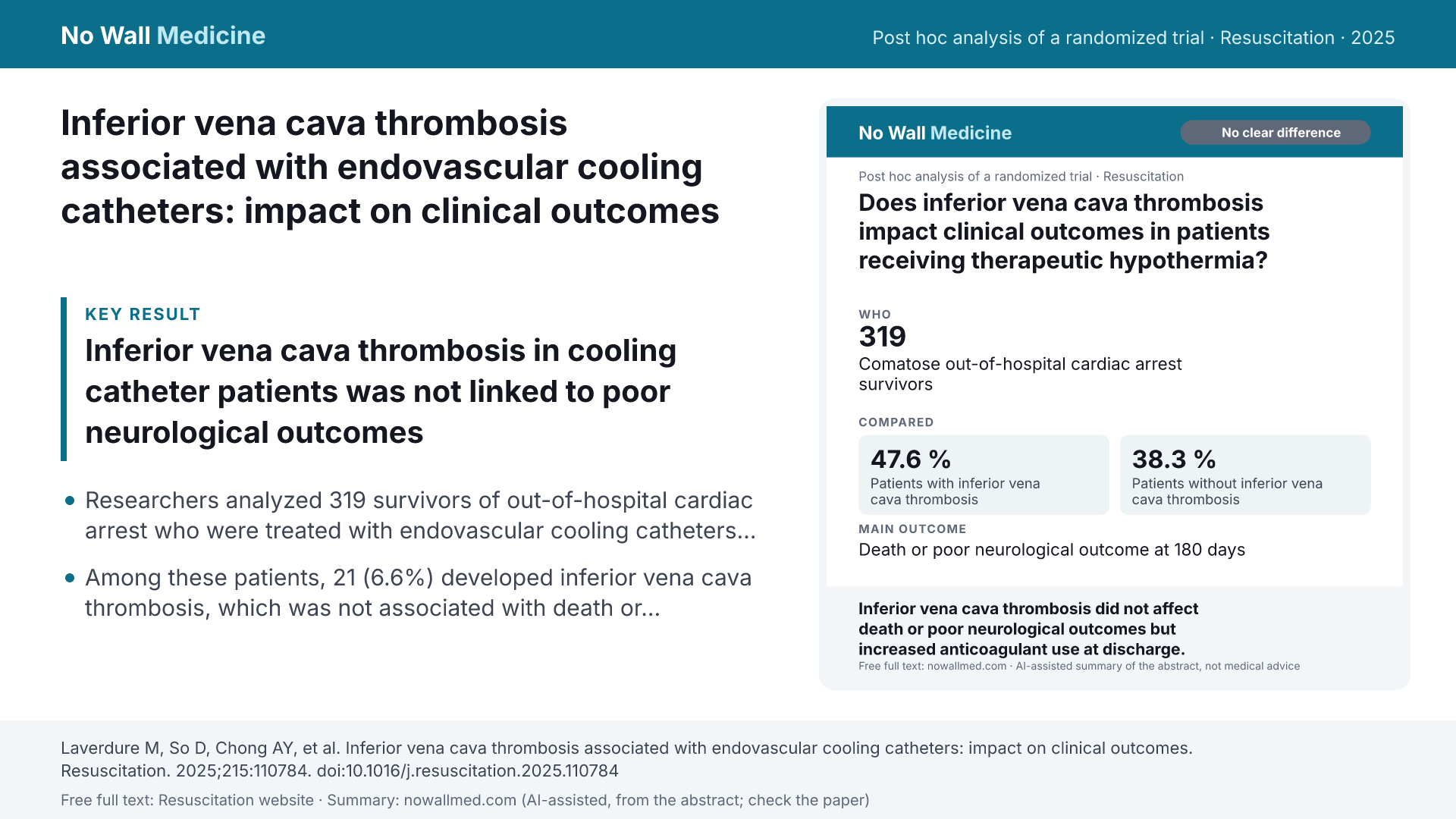
Inferior vena cava thrombosis associated with endovascular cooling catheters: impact on clinical outcomes
Key result: Inferior vena cava thrombosis in cooling catheter patients was not linked to poor neurological outcomes
Key points
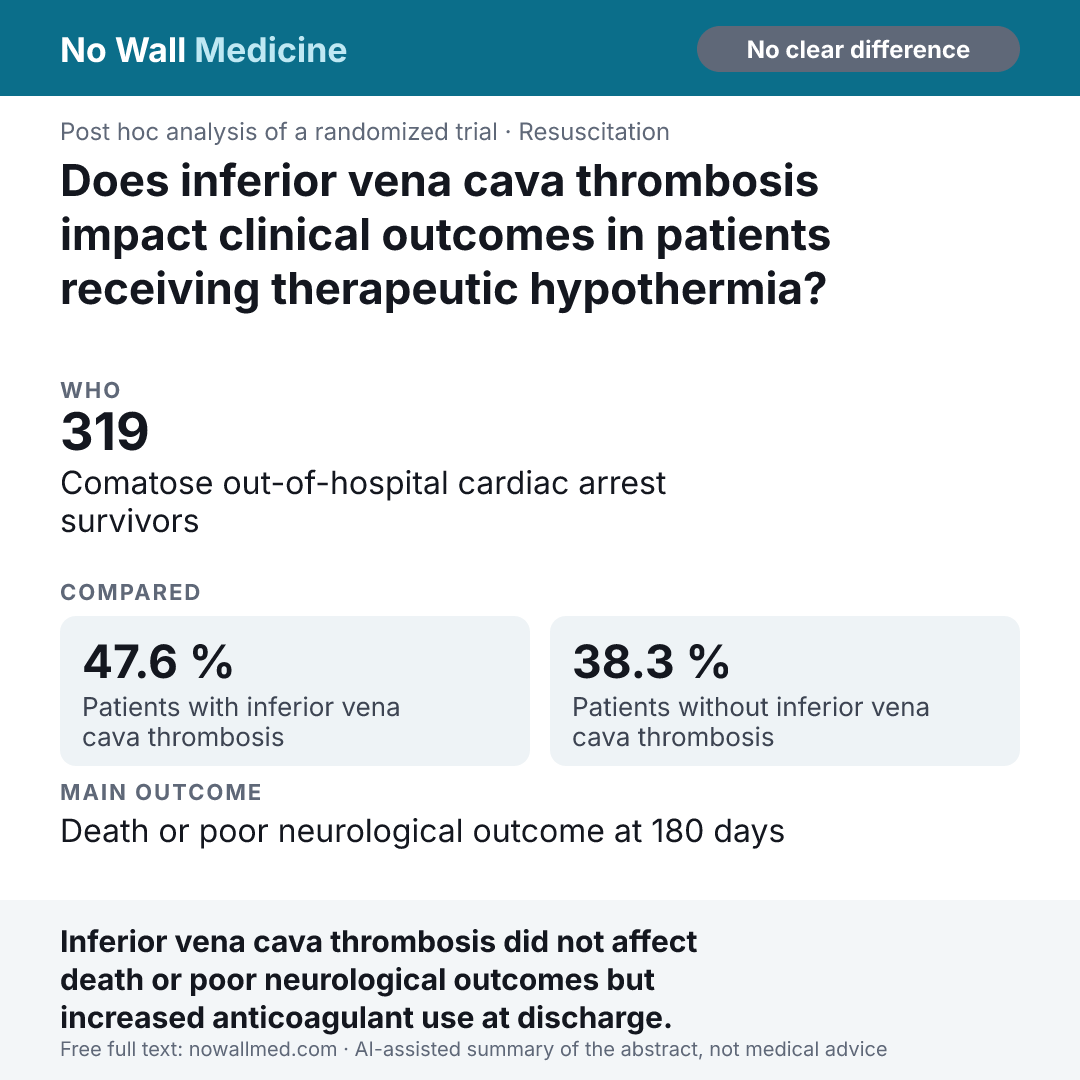
- Researchers analyzed 319 survivors of out-of-hospital cardiac arrest who were treated with endovascular cooling catheters to induce therapeutic hypothermia.
- Among these patients, 21 (6.6%) developed inferior vena cava thrombosis, which was not associated with death or poor neurological outcomes at 180 days (47.6% vs 38.3%, P = 0.39).
- Patients with thrombosis were more likely to be discharged on anticoagulant medication (76.9% vs 22.5%, P < 0.0001) and had higher in-hospital bleeding rates (33.3% vs 22.8%, P = 0.24).
Why it matters: The frequency and clinical impact of inferior vena cava thrombosis, a complication of endovascular cooling catheters, are not well established in patients undergoing therapeutic hypothermia.
Discussion prompts
- Would these patients look like yours? Who was left out?
- Is the main outcome one that matters to patients?
- Is the difference large enough to change what you do?
Cite: Laverdure M, So D, Chong AY, et al. Inferior vena cava thrombosis associated with endovascular cooling catheters: impact on clinical outcomes. Resuscitation. 2025;215:110784. doi:10.1016/j.resuscitation.2025.110784
Free full text: Resuscitation website · Summary and visual abstract: nowallmed.com/a/inferior-vena-cava-thrombosis-associated-with-endovascular-cooling-his30u/ (AI-assisted from the abstract; check the paper before relying on it).