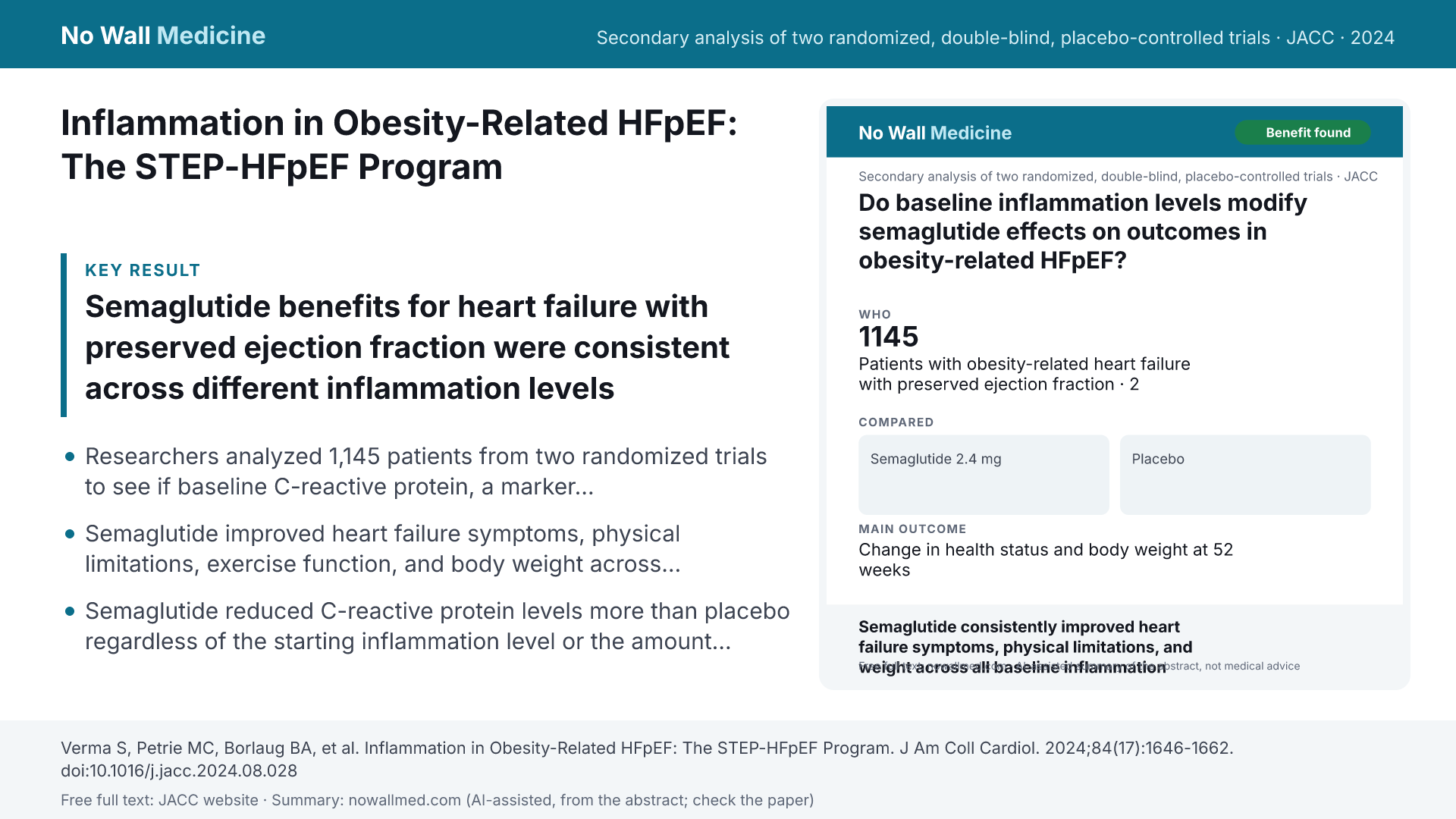
Inflammation in Obesity-Related HFpEF: The STEP-HFpEF Program
Key result: Semaglutide benefits for heart failure with preserved ejection fraction were consistent across different inflammation levels
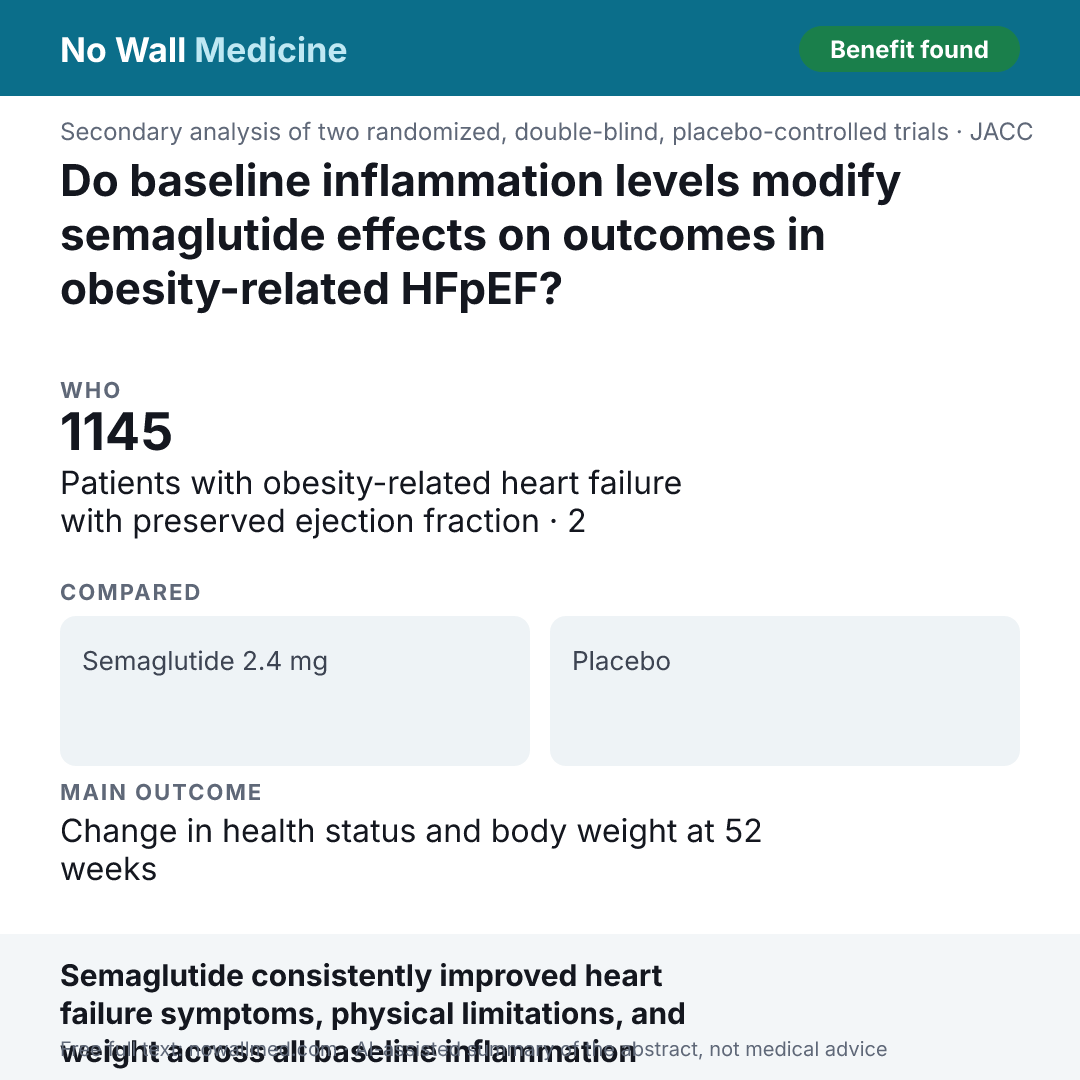
Secondary analysis of two randomized, double-blind, placebo-controlled trialsBenefit found
Do baseline inflammation levels modify semaglutide effects on outcomes in obesity-related HFpEF?
Who
1145
Patients with obesity-related heart failure with preserved ejection fraction · 2 international sites
Compared
Semaglutide 2.4 mg
Placebo
Main outcome
Change in health status and body weight at 52 weeks
Bottom line: Semaglutide consistently improved heart failure symptoms, physical limitations, and weight across all baseline inflammation levels.
JACC · 2024-08-30 · Save PNG
Key points
- Researchers analyzed 1,145 patients from two randomized trials to see if baseline C-reactive protein, a marker of inflammation, changed how semaglutide worked.
- Semaglutide improved heart failure symptoms, physical limitations, exercise function, and body weight across all inflammation categories, including the 71% of patients with C-reactive protein levels ≥2 mg/L.
- Semaglutide reduced C-reactive protein levels more than placebo regardless of the starting inflammation level or the amount of weight lost.
Discussion prompts
- Would these patients look like yours? Who was left out?
- Is the main outcome one that matters to patients?
- Is the difference large enough to change what you do?
Cite: Verma S, Petrie MC, Borlaug BA, et al. Inflammation in Obesity-Related HFpEF: The STEP-HFpEF Program. J Am Coll Cardiol. 2024;84(17):1646-1662. doi:10.1016/j.jacc.2024.08.028
Free full text: JACC website · Summary and visual abstract: nowallmed.com/a/inflammation-in-obesity-related-hfpef-the-step-hfpef-2qg8em/ (AI-assisted from the abstract; check the paper before relying on it).