Inflammatory and clinical risk factors for asthma attacks (ORACLE2): a patient-level meta-analysis of control groups of 22 randomised trials
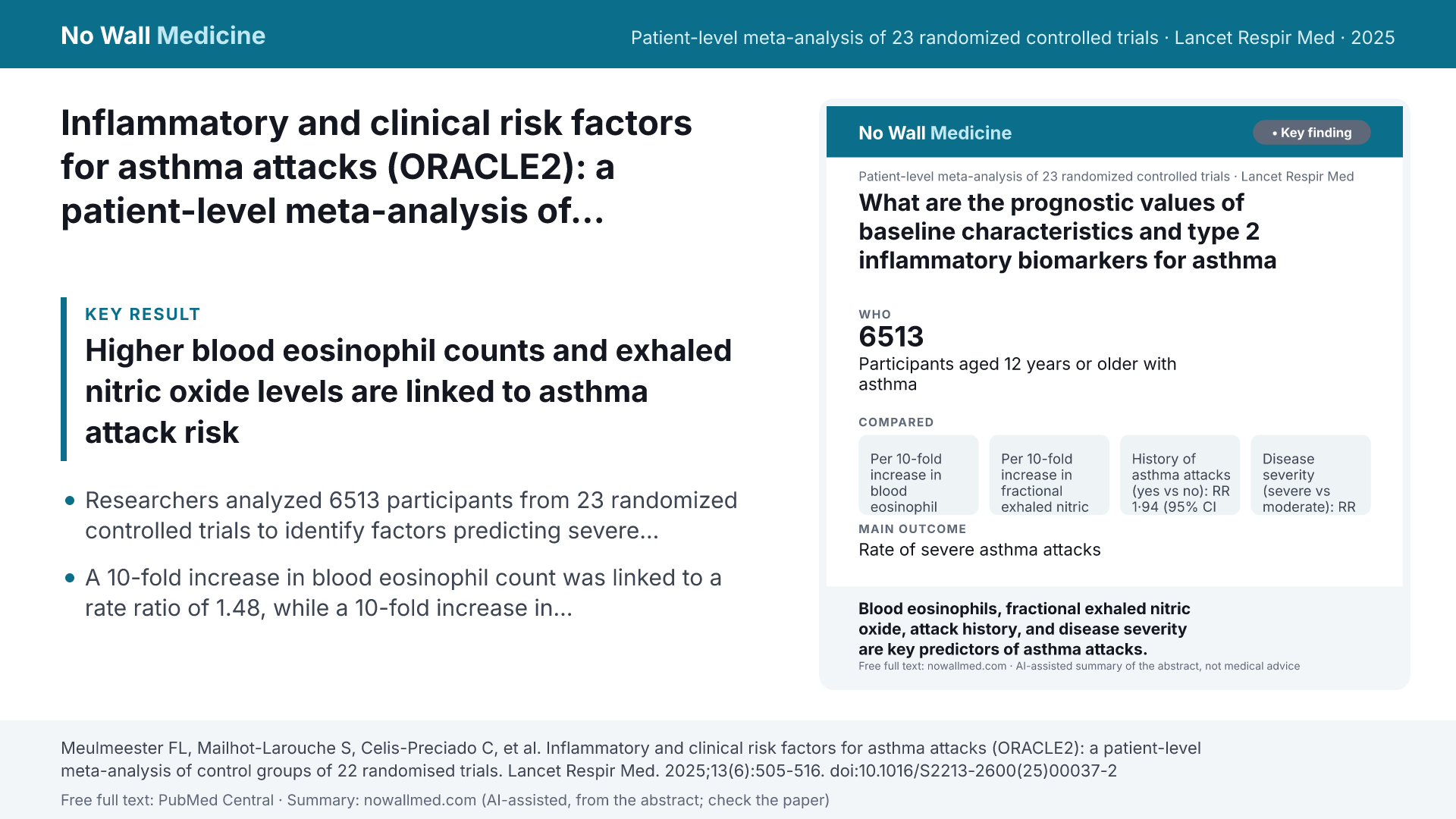
Key result: Higher blood eosinophil counts and exhaled nitric oxide levels are linked to asthma attack risk
Key points
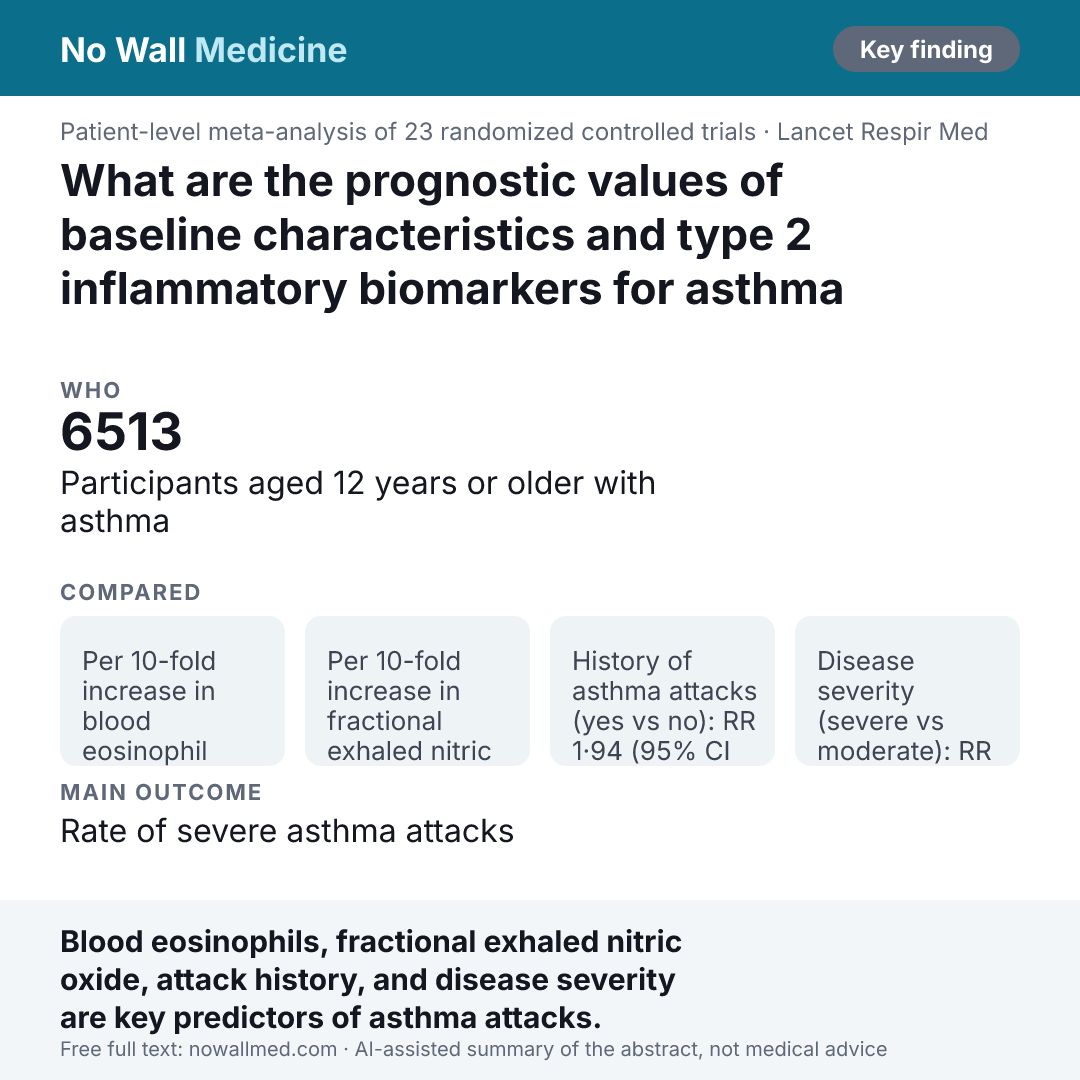
- Researchers analyzed 6513 participants from 23 randomized controlled trials to identify factors predicting severe asthma attacks.
- A 10-fold increase in blood eosinophil count was linked to a rate ratio of 1.48, while a 10-fold increase in fractional exhaled nitric oxide was linked to a rate ratio of 1.44.
- Other factors linked to higher risk included a history of attacks, severe disease, lower lung function, and higher symptom scores.
Limitation the authors note: The C-statistic ranged from 0.58 to 0.95, indicating major differences in patient and disease characteristics between studies.
Discussion prompts
- Would these patients look like yours? Who was left out?
- Is the main outcome one that matters to patients?
- Is the difference large enough to change what you do?
Cite: Meulmeester FL, Mailhot-Larouche S, Celis-Preciado C, et al. Inflammatory and clinical risk factors for asthma attacks (ORACLE2): a patient-level meta-analysis of control groups of 22 randomised trials. Lancet Respir Med. 2025;13(6):505-516. doi:10.1016/S2213-2600(25)00037-2
Free full text: PubMed Central · Summary and visual abstract: nowallmed.com/a/inflammatory-and-clinical-risk-factors-for-asthma-attacks-oracle2-a-s1oiyy/ (AI-assisted from the abstract; check the paper before relying on it).