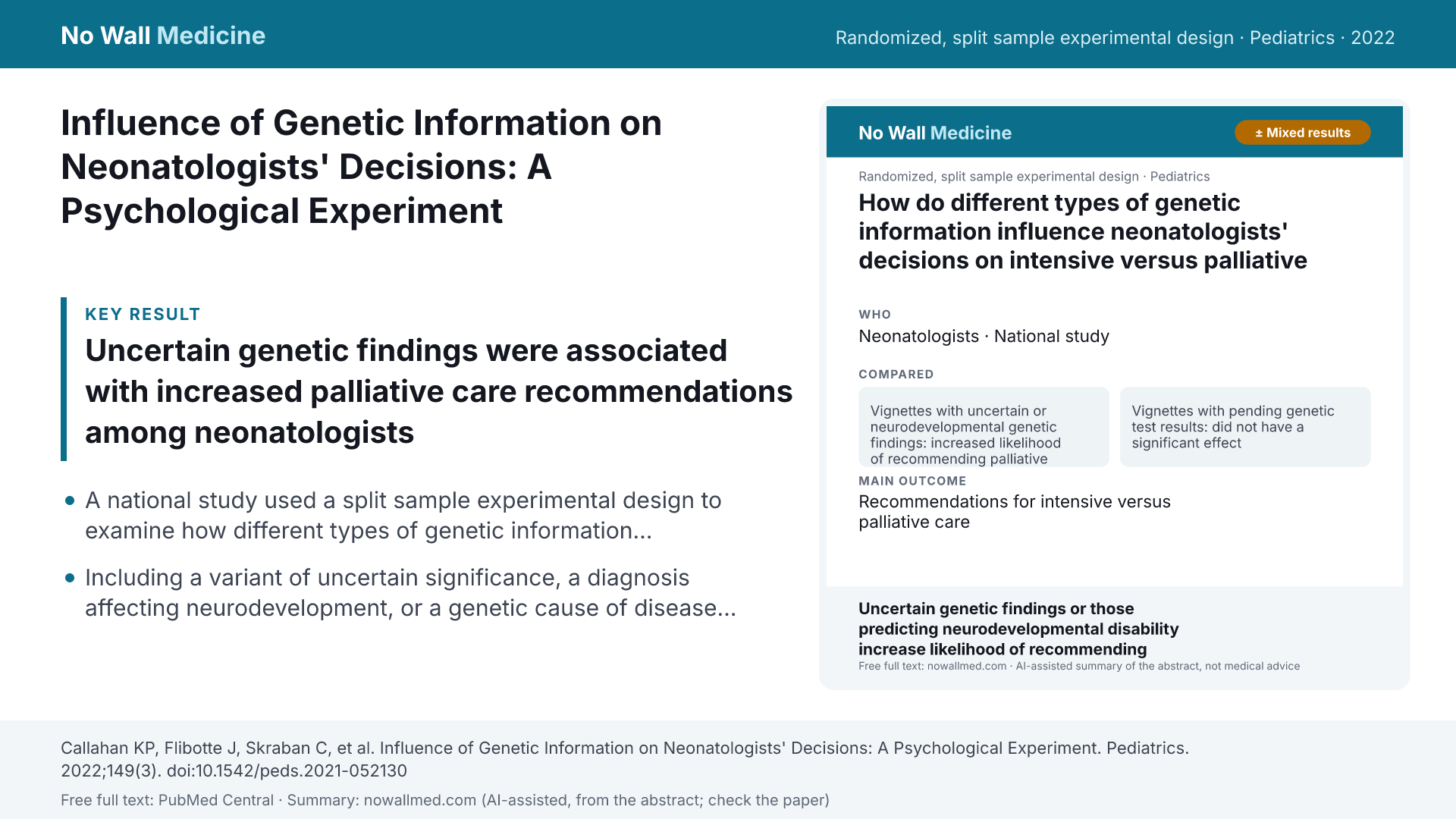
Influence of Genetic Information on Neonatologists' Decisions: A Psychological Experiment
Key result: Uncertain genetic findings were associated with increased palliative care recommendations among neonatologists
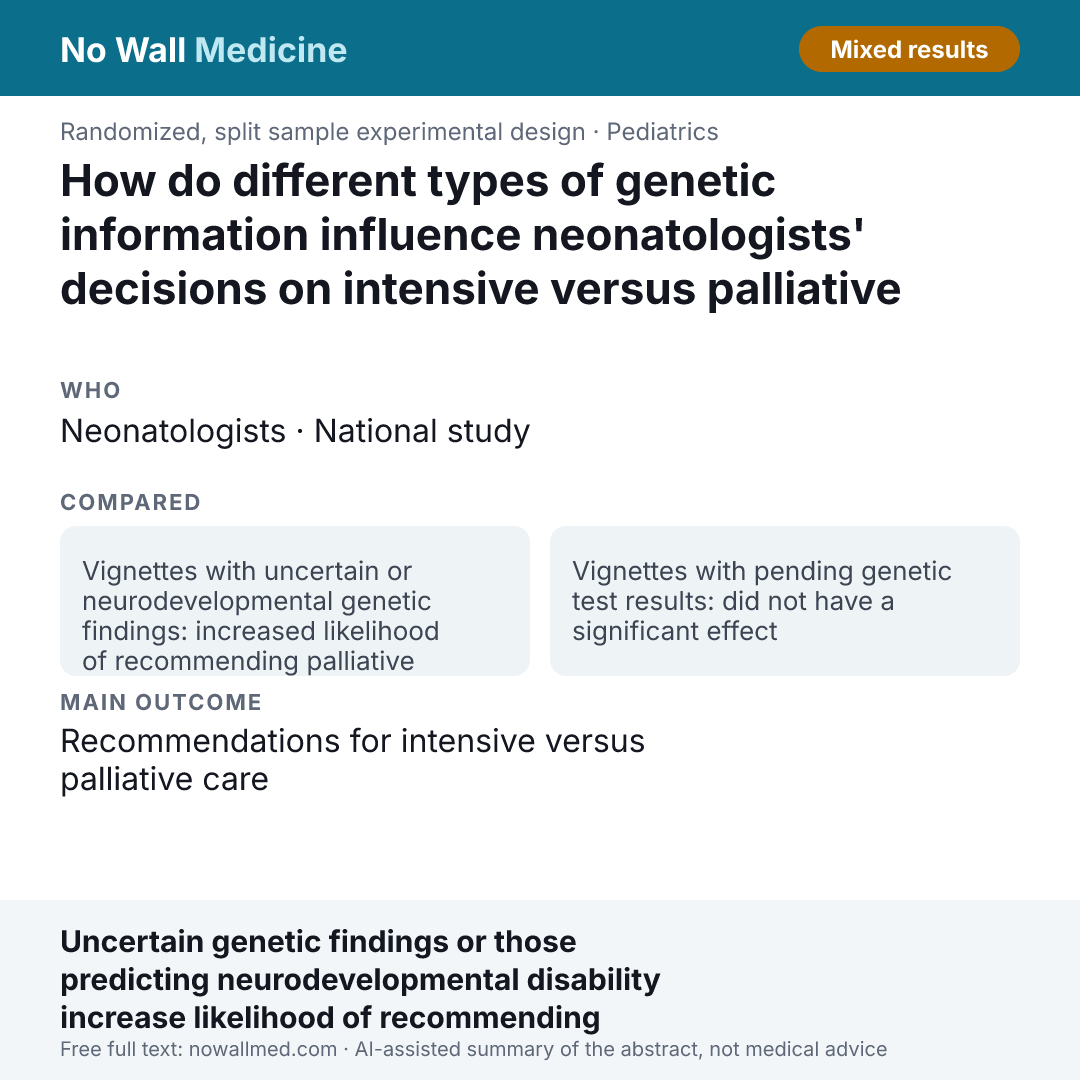
Randomized, split sample experimental designMixed results
How do different types of genetic information influence neonatologists' decisions on intensive versus palliative care?
Who
Neonatologists · National study
Compared
Vignettes with uncertain or neurodevelopmental genetic findings: increased likelihood of recommending palliative rather than intensive care
Vignettes with pending genetic test results: did not have a significant effect
Main outcome
Recommendations for intensive versus palliative care
Bottom line: Uncertain genetic findings or those predicting neurodevelopmental disability increase likelihood of recommending palliative care over intensive care.
Pediatrics · 2022-02-17 · Save PNG
Key points
- A national study used a split sample experimental design to examine how different types of genetic information influence neonatologists' decisions between intensive and palliative care.
- Including a variant of uncertain significance, a diagnosis affecting neurodevelopment, or a genetic cause of disease was associated with an increased likelihood of recommending palliative care.
- A pending genetic testing result was not linked to a significant change in care recommendations.
Discussion prompts
- Would these patients look like yours? Who was left out?
- Is the main outcome one that matters to patients?
- Is the difference large enough to change what you do?
Cite: Callahan KP, Flibotte J, Skraban C, et al. Influence of Genetic Information on Neonatologists' Decisions: A Psychological Experiment. Pediatrics. 2022;149(3). doi:10.1542/peds.2021-052130
Free full text: PubMed Central · Summary and visual abstract: nowallmed.com/a/influence-of-genetic-information-on-neonatologists-decisions-a-kwcmm8/ (AI-assisted from the abstract; check the paper before relying on it).