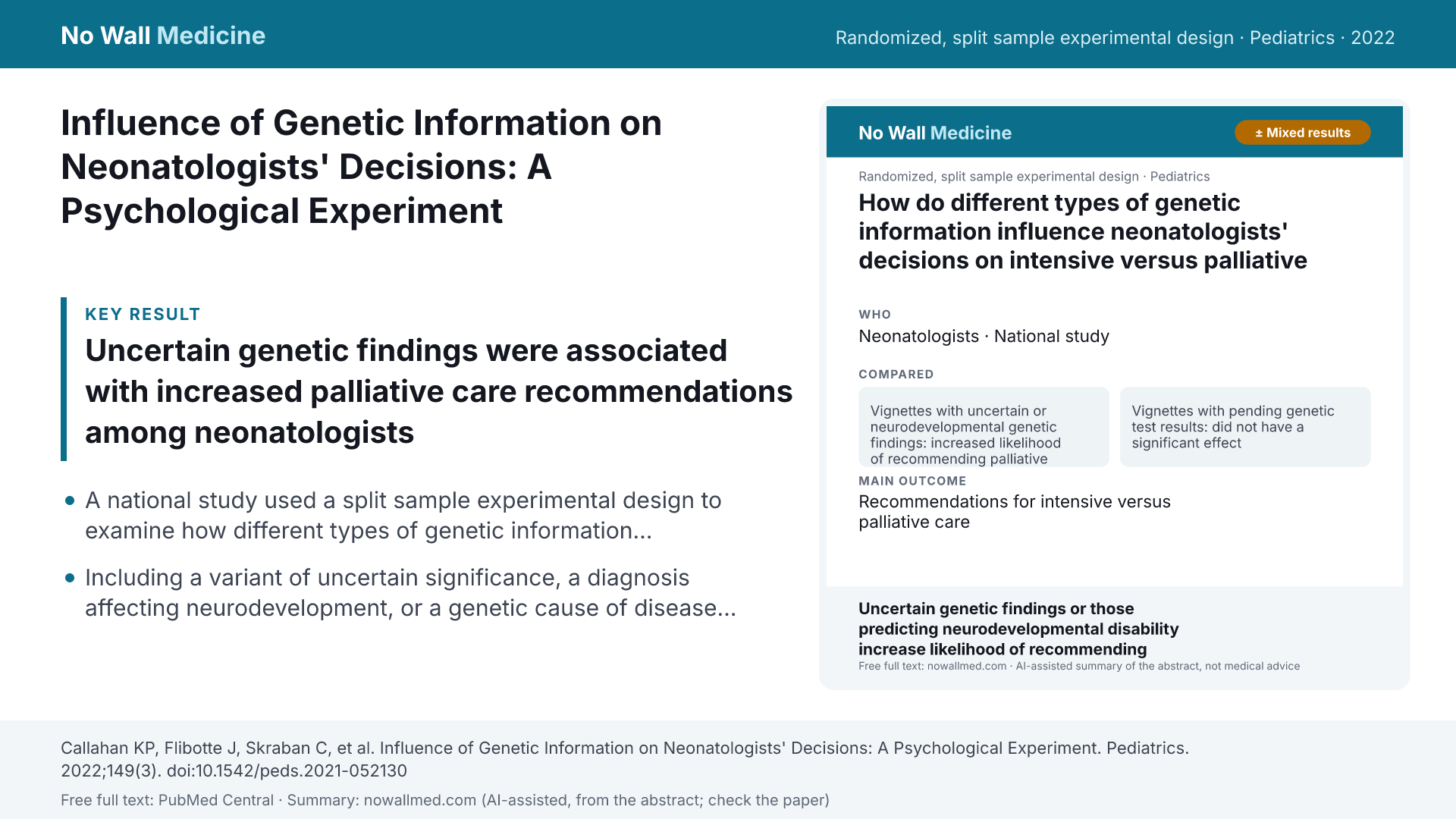
Uncertain genetic findings were associated with increased palliative care recommendations among neonatologists
Influence of Genetic Information on Neonatologists' Decisions: A Psychological Experiment
Randomized, split sample experimental designMixed results
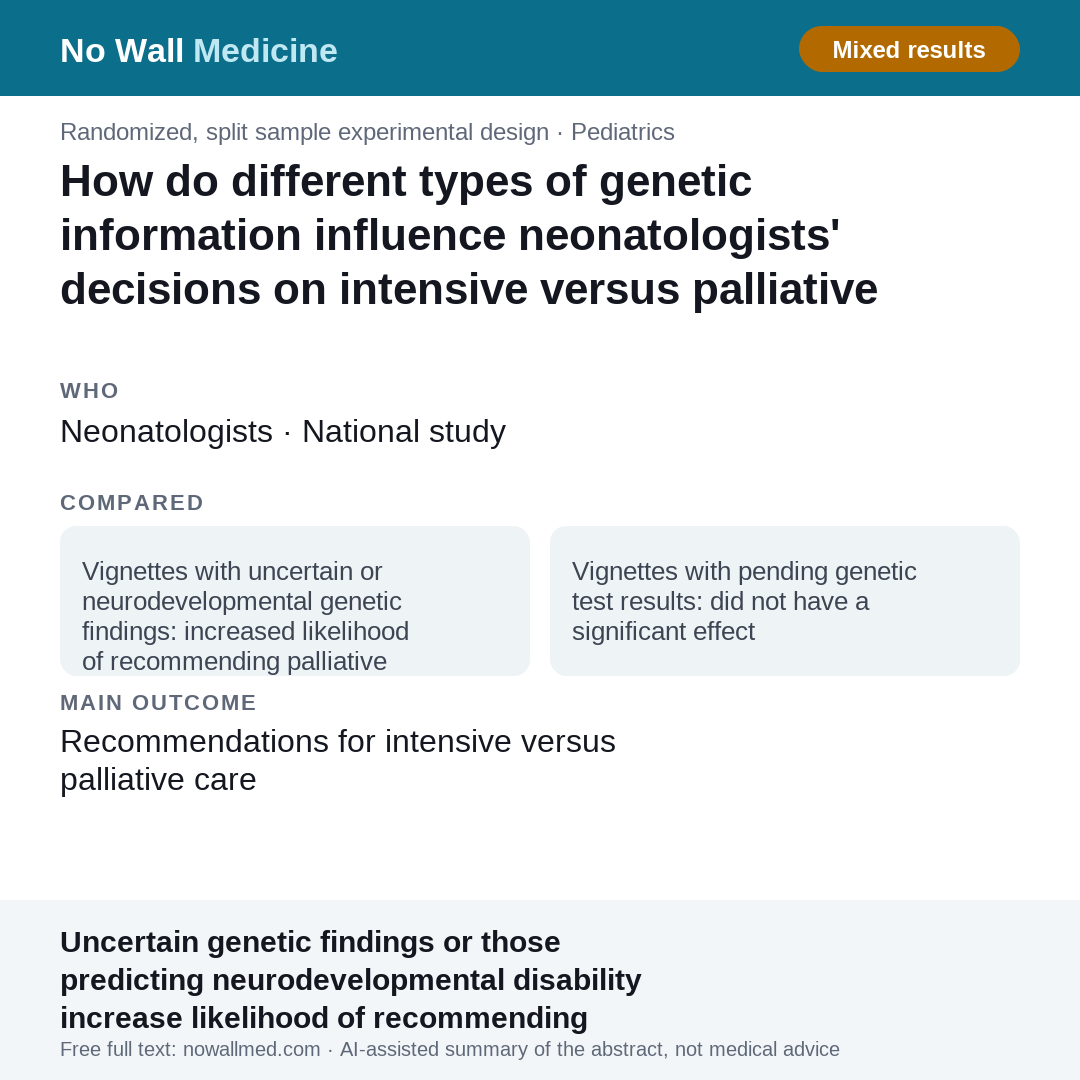
How do different types of genetic information influence neonatologists' decisions on intensive versus palliative care?
Who
Neonatologists · National study
Compared
Vignettes with uncertain or neurodevelopmental genetic findings: increased likelihood of recommending palliative rather than intensive care
Vignettes with pending genetic test results: did not have a significant effect
Main outcome
Recommendations for intensive versus palliative care
Bottom line: Uncertain genetic findings or those predicting neurodevelopmental disability increase likelihood of recommending palliative care over intensive care.
Pediatrics · 2022-02-17Download image
Clinical question: How do different types of genetic information influence neonatologists' decisions on intensive versus palliative care?
Why it matters: It is unclear how different types of genetic information with uncertain implications for prognosis influence clinician decisions to recommend intensive versus palliative care for ill neonates.
Key points
- A national study used a split sample experimental design to examine how different types of genetic information influence neonatologists' decisions between intensive and palliative care.
- Including a variant of uncertain significance, a diagnosis affecting neurodevelopment, or a genetic cause of disease was associated with an increased likelihood of recommending palliative care.
- A pending genetic testing result was not linked to a significant change in care recommendations.
Headline and key points written with AI from the paper’s abstract, with every number checked against it. Read the paper before relying on them.
Was this summary helpful?
Subject terms
Cite this article
Callahan KP, Flibotte J, Skraban C, et al. Influence of Genetic Information on Neonatologists' Decisions: A Psychological Experiment. Pediatrics. 2022. doi:10.1542/peds.2021-052130
Spotted a mistake? Suggest a correction