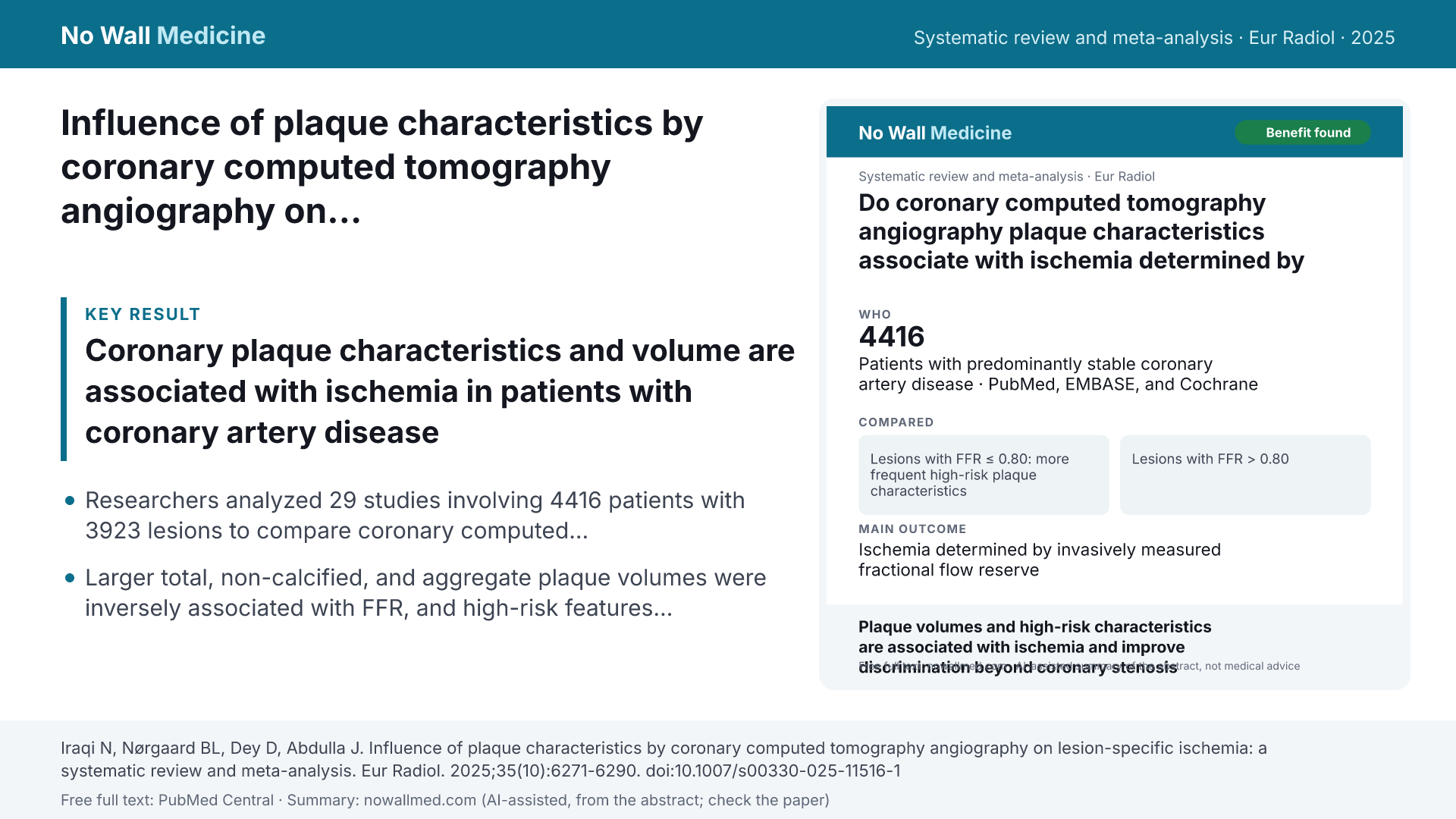
Influence of plaque characteristics by coronary computed tomography angiography on lesion-specific ischemia: a systematic review and meta-analysis
Key result: Coronary plaque characteristics and volume are associated with ischemia in patients with coronary artery disease
Systematic review and meta-analysisBenefit found
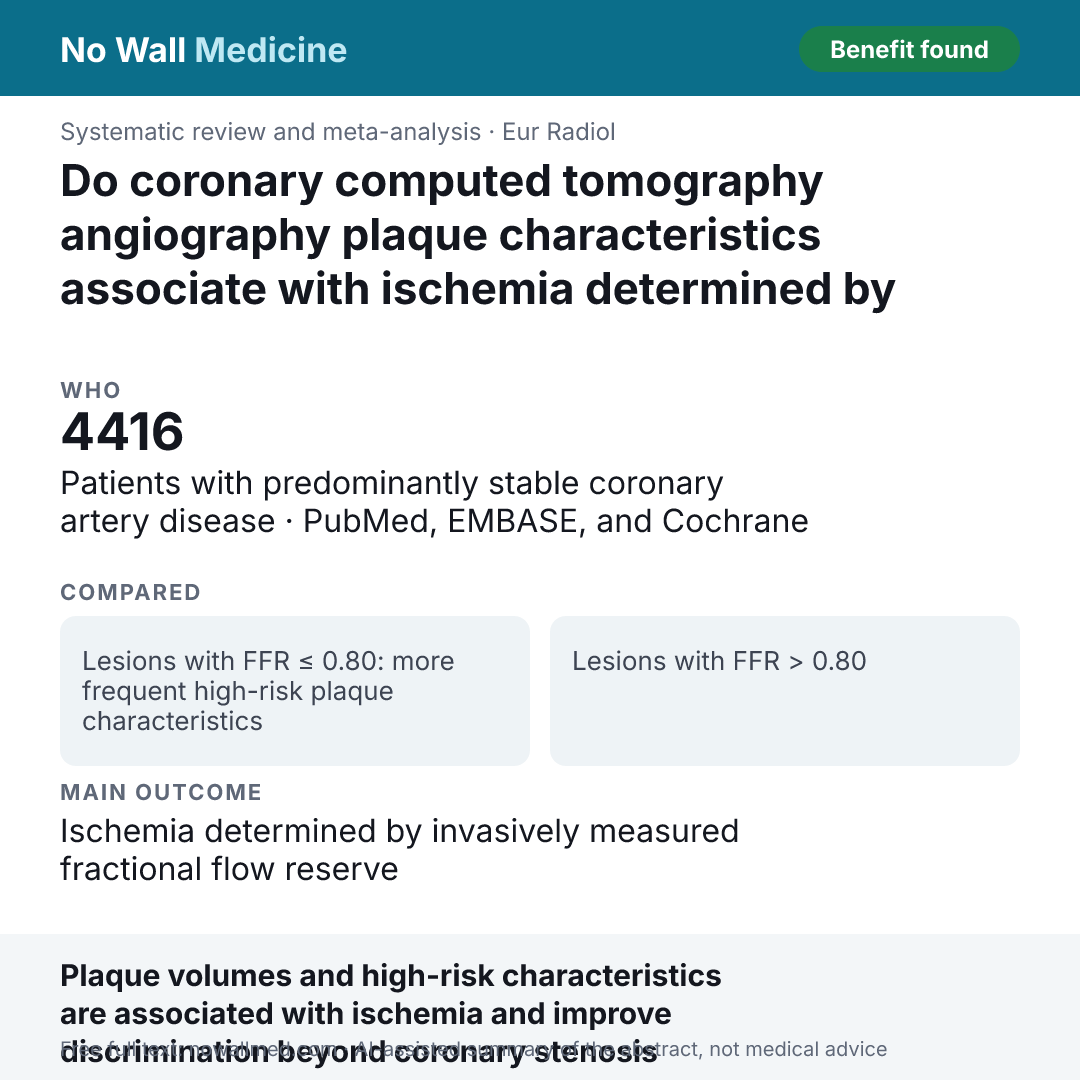
Do coronary computed tomography angiography plaque characteristics associate with ischemia determined by fractional flow reserve?
Who
4416
Patients with predominantly stable coronary artery disease · PubMed, EMBASE, and Cochrane Library databases
Compared
Lesions with FFR ≤ 0.80: more frequent high-risk plaque characteristics
Lesions with FFR > 0.80
Main outcome
Ischemia determined by invasively measured fractional flow reserve
Bottom line: Plaque volumes and high-risk characteristics are associated with ischemia and improve discrimination beyond coronary stenosis severity.
Eur Radiol · 2025-03-27 · Save PNG
Key points
- Researchers analyzed 29 studies involving 4416 patients with 3923 lesions to compare coronary computed tomography angiography (CCTA) plaque features with invasive fractional flow reserve (FFR).
- Larger total, non-calcified, and aggregate plaque volumes were inversely associated with FFR, and high-risk features like low-attenuation plaque were more frequent in lesions with FFR ≤ 0.80.
- The use of percent aggregate plaque volume was associated with improved discrimination of ischemia compared to using coronary stenosis severity alone.
Discussion prompts
- Would these patients look like yours? Who was left out?
- Is the main outcome one that matters to patients?
- Is the difference large enough to change what you do?
Cite: Iraqi N, Nørgaard BL, Dey D, Abdulla J. Influence of plaque characteristics by coronary computed tomography angiography on lesion-specific ischemia: a systematic review and meta-analysis. Eur Radiol. 2025;35(10):6271-6290. doi:10.1007/s00330-025-11516-1
Free full text: PubMed Central · Summary and visual abstract: nowallmed.com/a/influence-of-plaque-characteristics-by-coronary-computed-tomography-pjfyhn/ (AI-assisted from the abstract; check the paper before relying on it).