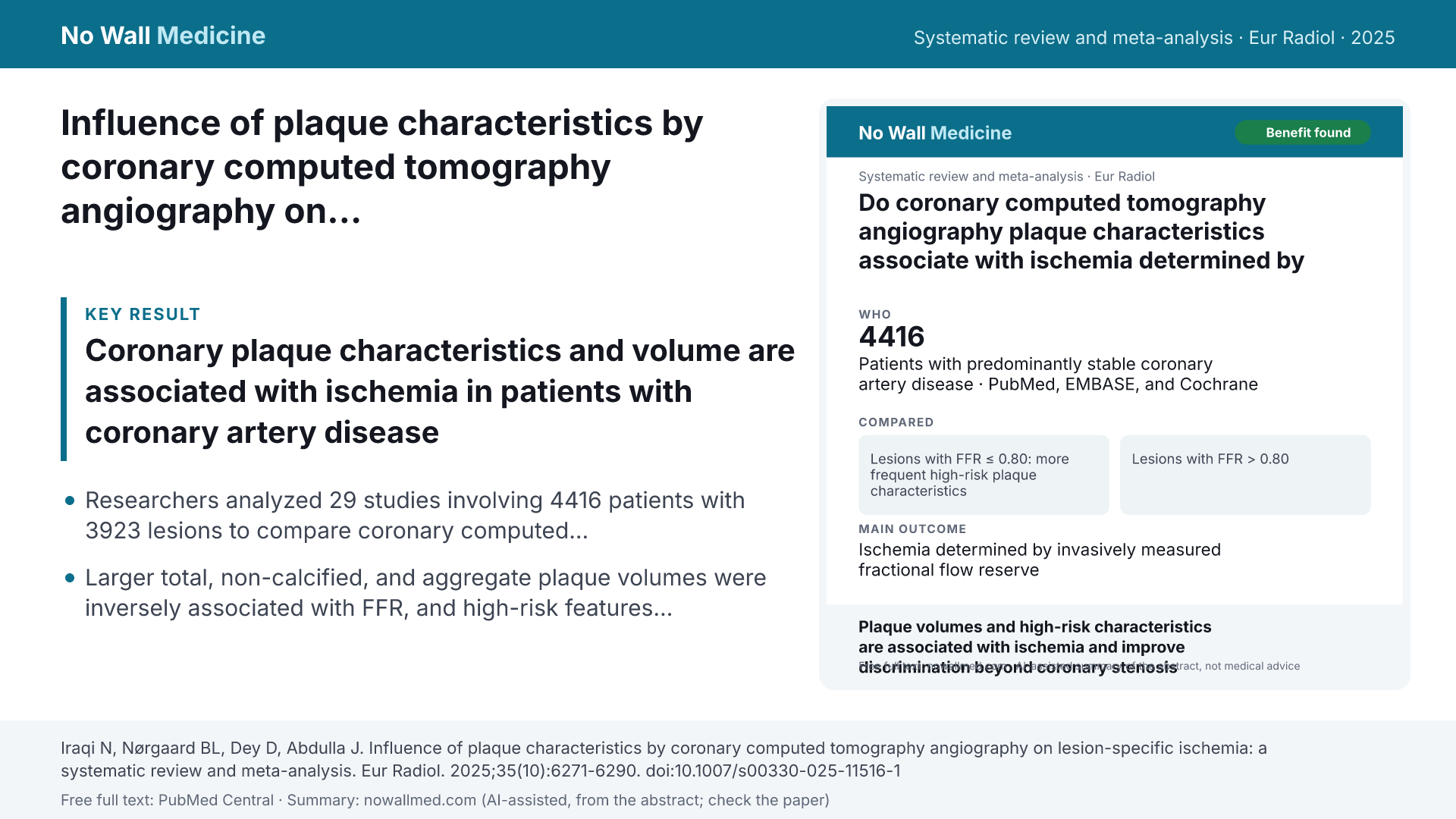
Coronary plaque characteristics and volume are associated with ischemia in patients with coronary artery disease
Influence of plaque characteristics by coronary computed tomography angiography on lesion-specific ischemia: a systematic review and meta-analysis
Systematic review and meta-analysisBenefit found
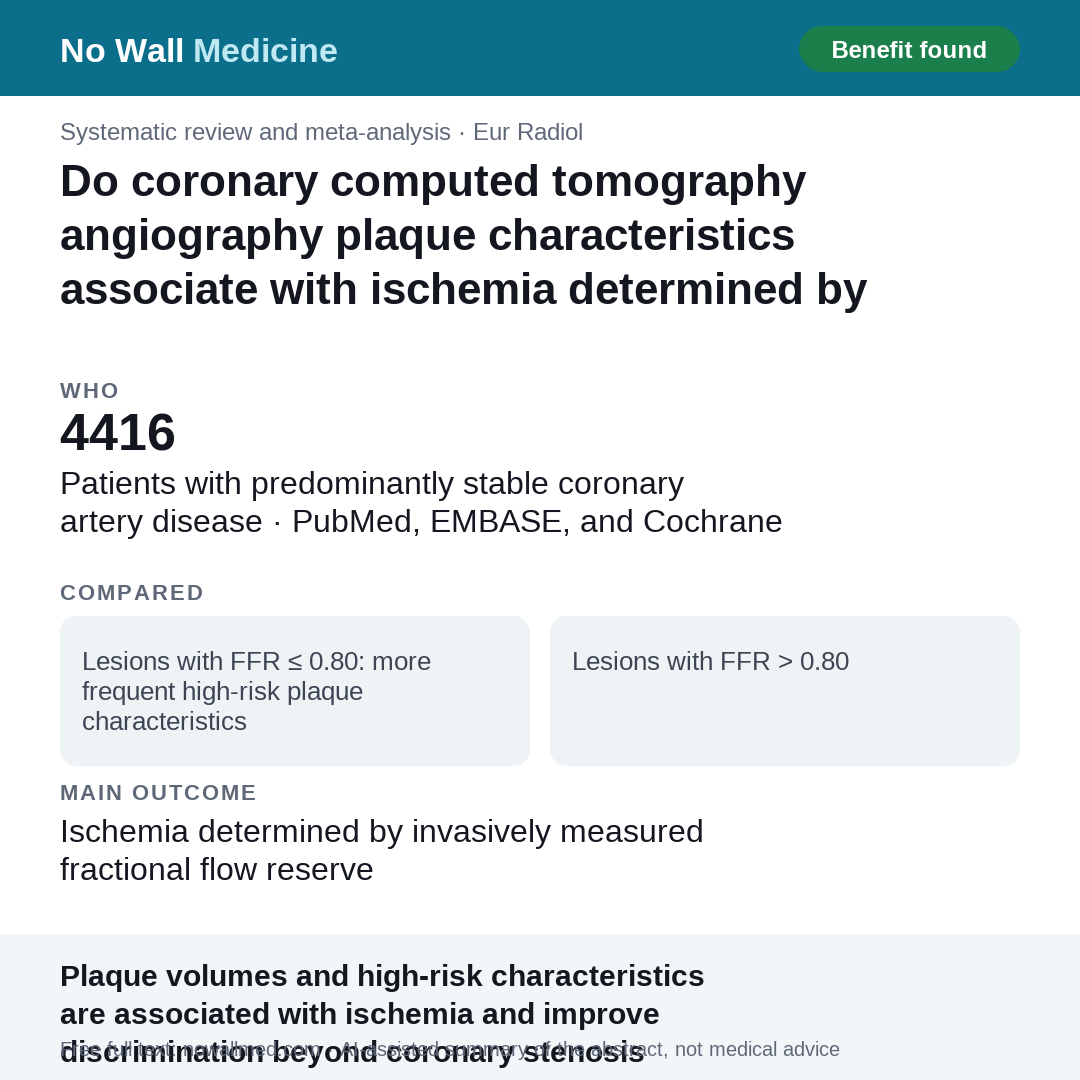
Do coronary computed tomography angiography plaque characteristics associate with ischemia determined by fractional flow reserve?
Who
4416
Patients with predominantly stable coronary artery disease · PubMed, EMBASE, and Cochrane Library databases
Compared
Lesions with FFR ≤ 0.80: more frequent high-risk plaque characteristics
Lesions with FFR > 0.80
Main outcome
Ischemia determined by invasively measured fractional flow reserve
Bottom line: Plaque volumes and high-risk characteristics are associated with ischemia and improve discrimination beyond coronary stenosis severity.
Eur Radiol · 2025-03-27Download image
Clinical question: Do coronary computed tomography angiography plaque characteristics associate with ischemia determined by fractional flow reserve?
Why it matters: It was unknown whether adding plaque characteristics from coronary computed tomography angiography to stenosis measurements improves the ability to identify ischemia-causing lesions.
Key points
- Researchers analyzed 29 studies involving 4416 patients with 3923 lesions to compare coronary computed tomography angiography (CCTA) plaque features with invasive fractional flow reserve (FFR).
- Larger total, non-calcified, and aggregate plaque volumes were inversely associated with FFR, and high-risk features like low-attenuation plaque were more frequent in lesions with FFR ≤ 0.80.
- The use of percent aggregate plaque volume was associated with improved discrimination of ischemia compared to using coronary stenosis severity alone.
Headline and key points written with AI from the paper’s abstract, with every number checked against it. Read the paper before relying on them.
Was this summary helpful?
Subject terms
Cite this article
Iraqi N, Nørgaard BL, Dey D, Abdulla J. Influence of plaque characteristics by coronary computed tomography angiography on lesion-specific ischemia: a systematic review and meta-analysis. Eur Radiol. 2025. doi:10.1007/s00330-025-11516-1
Spotted a mistake? Suggest a correction