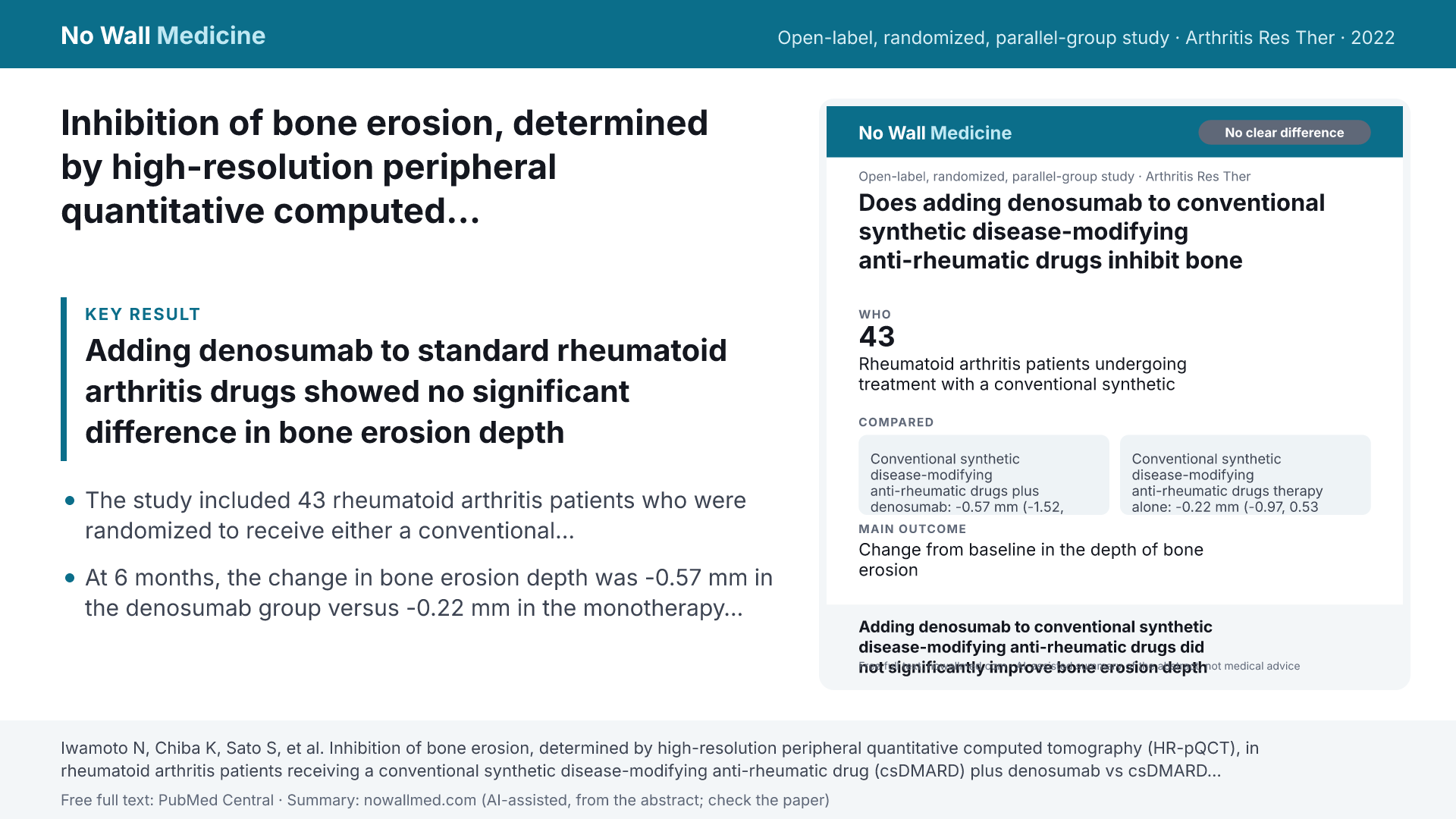
Inhibition of bone erosion, determined by high-resolution peripheral quantitative computed tomography (HR-pQCT), in rheumatoid arthritis patients receiving a conventional synthetic disease-modifying anti-rheumatic drug (csDMARD) plus denosumab vs csDMARD therapy alone: an open-label, randomized, parallel-group study
Key result: Adding denosumab to standard rheumatoid arthritis drugs showed no significant difference in bone erosion depth
Key points
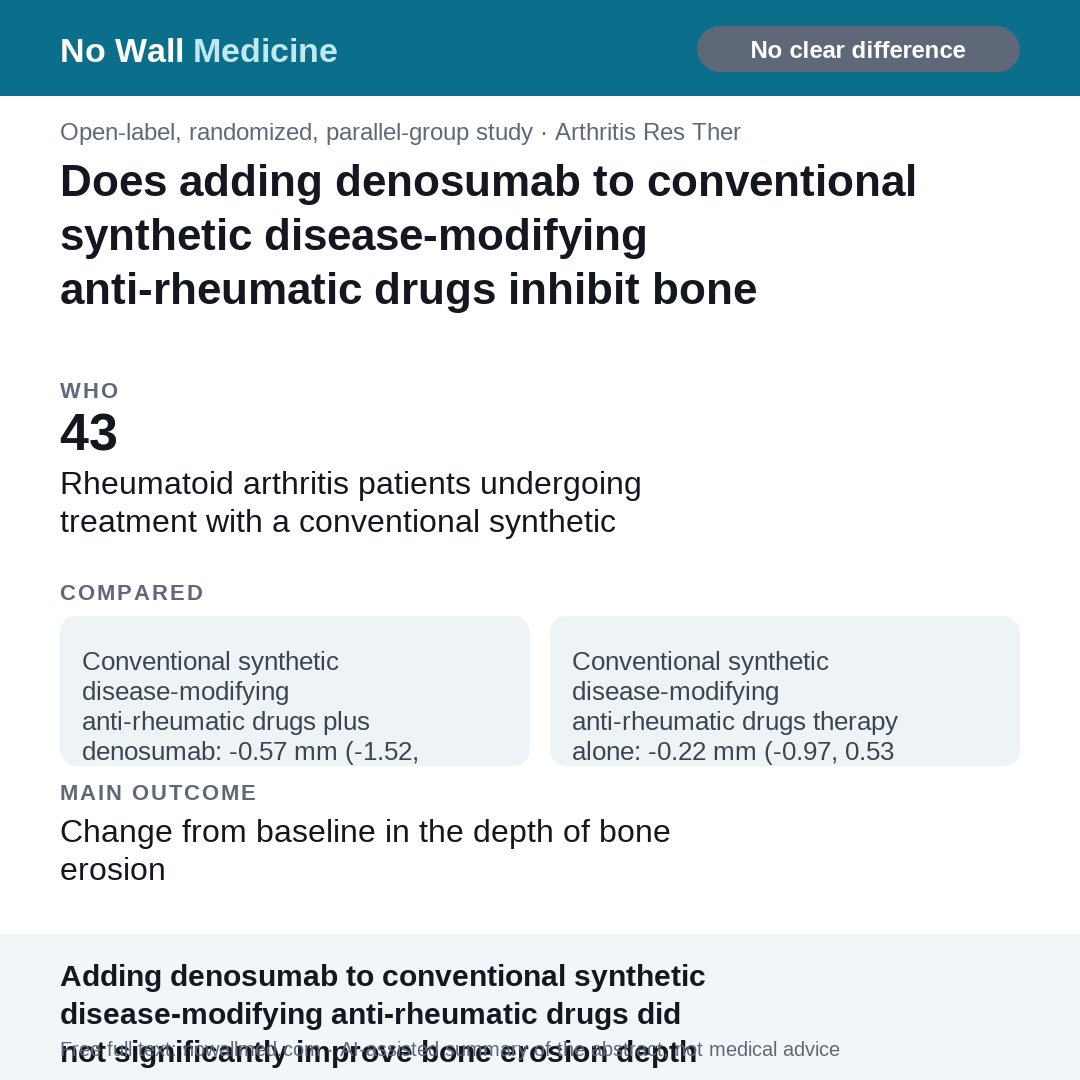
- The study included 43 rheumatoid arthritis patients who were randomized to receive either a conventional synthetic disease-modifying anti-rheumatic drug alone or combined with denosumab for 12 months.
- At 6 months, the change in bone erosion depth was -0.57 mm in the denosumab group versus -0.22 mm in the monotherapy group, which was not statistically significant (P = 0.2716).
- Adverse events occurred in 52.2% of the denosumab group and 56.5% of the monotherapy group, while serious adverse events were 4.3% and 8.7%, respectively.
Discussion prompts
- Would these patients look like yours? Who was left out?
- Is the main outcome one that matters to patients?
- Is the difference large enough to change what you do?
Cite: Iwamoto N, Chiba K, Sato S, et al. Inhibition of bone erosion, determined by high-resolution peripheral quantitative computed tomography (HR-pQCT), in rheumatoid arthritis patients receiving a conventional synthetic disease-modifying anti-rheumatic drug (csDMARD) plus denosumab vs csDMARD therapy alone: an open-label, randomized, parallel-group study. Arthritis Res Ther. 2022. doi:10.1186/s13075-022-02957-w
Free full text: PubMed Central · Summary and visual abstract: nowallmed.com/a/inhibition-of-bone-erosion-determined-by-high-resolution-peripheral-1yvdcs5/ (AI-assisted from the abstract; check the paper before relying on it).