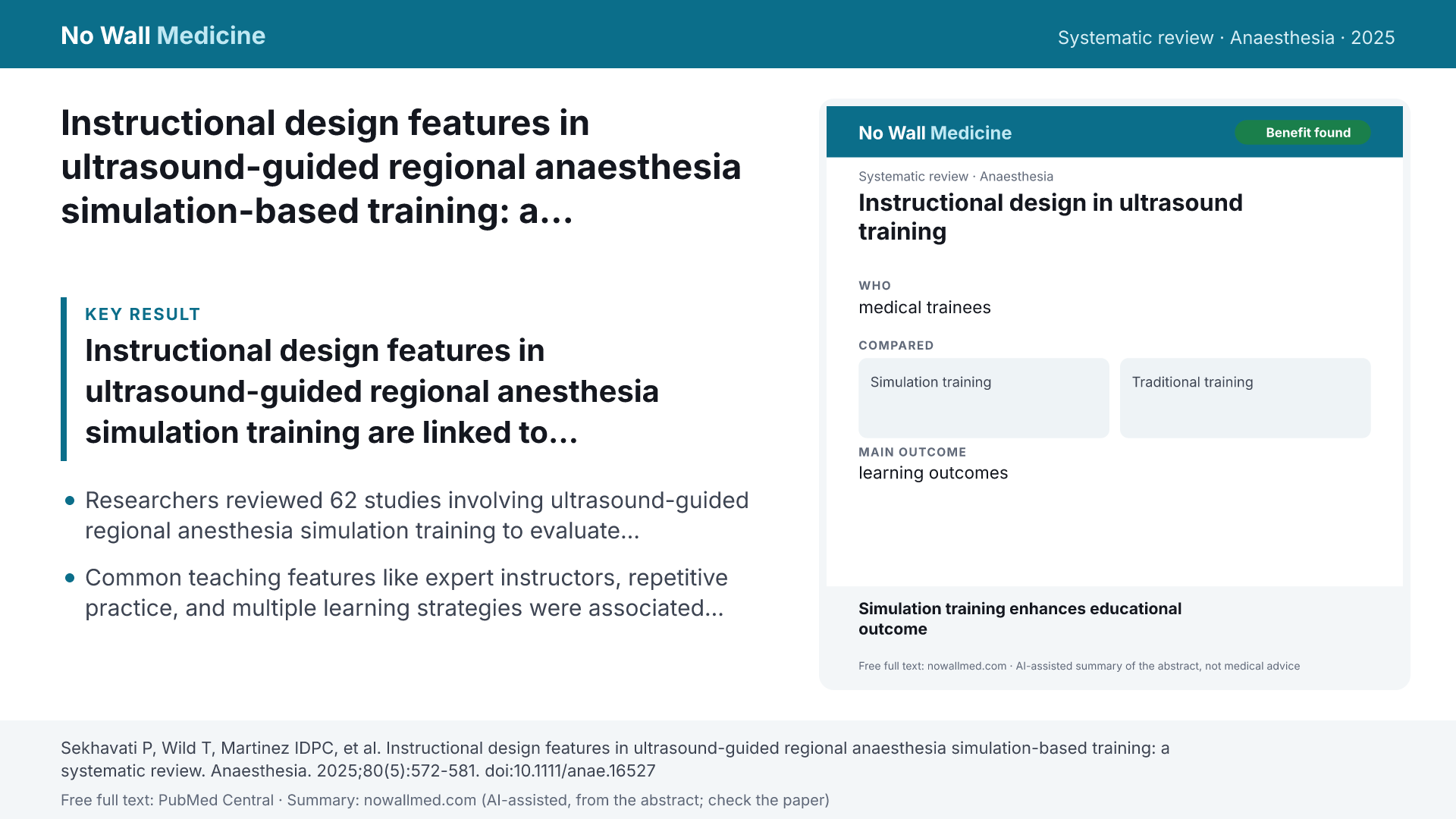
Instructional design features in ultrasound-guided regional anaesthesia simulation-based training: a systematic review
Key result: Instructional design features in ultrasound-guided regional anesthesia simulation training are linked to better learning outcomes
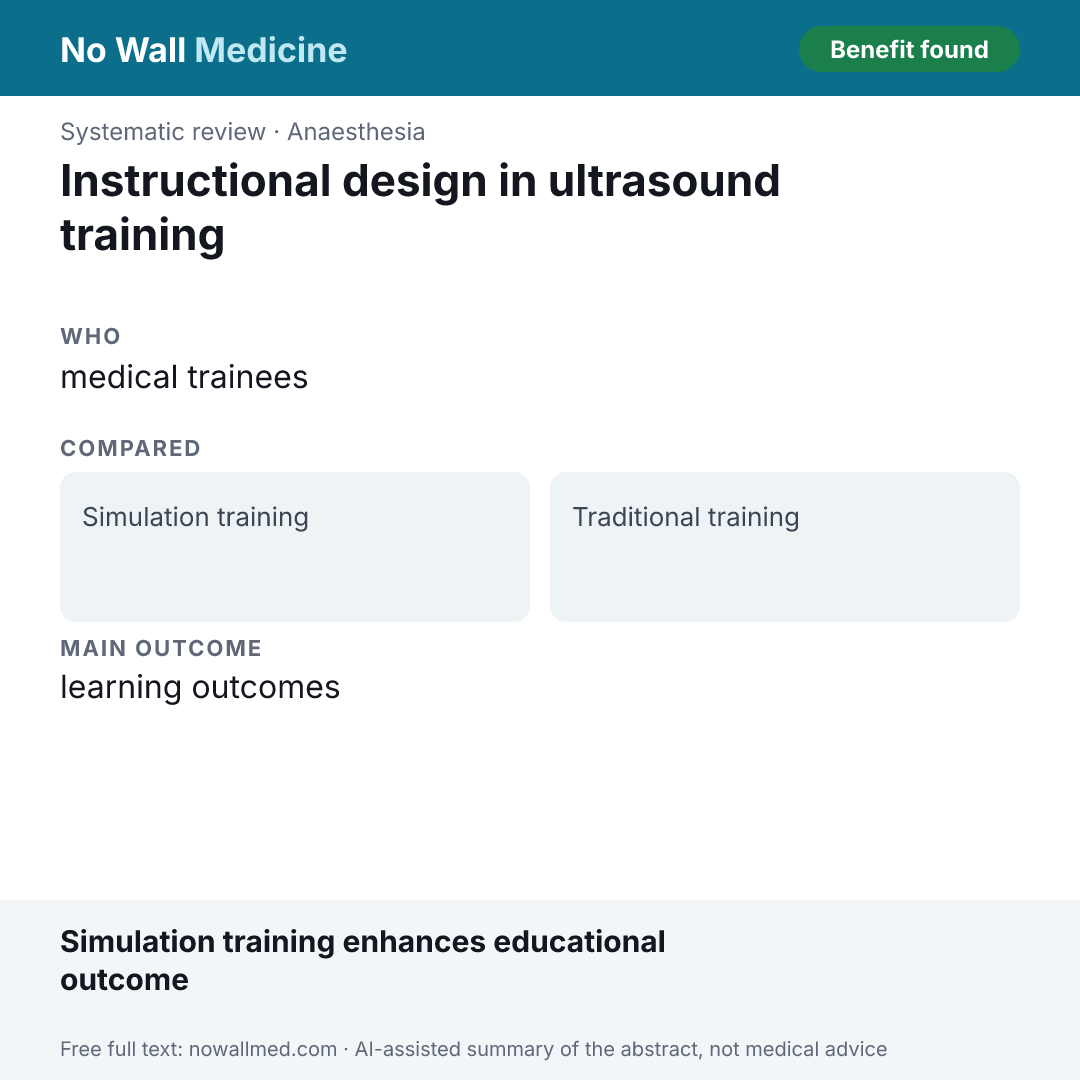
Systematic reviewBenefit found
Instructional design in ultrasound training
Who
medical trainees
Compared
Simulation training
Traditional training
Main outcome
learning outcomes
Bottom line: Simulation training enhances educational outcome
Limitation: outcome measurements not standardised
Anaesthesia · 2025-01-06 · Save PNG
Key points
- Researchers reviewed 62 studies involving ultrasound-guided regional anesthesia simulation training to evaluate different teaching methods and learning outcomes.
- Common teaching features like expert instructors, repetitive practice, and multiple learning strategies were associated with significant improvements across multiple outcome levels.
- Fewer studies assessed how training affects clinical behavior or actual patient outcomes.
Discussion prompts
- Would these patients look like yours? Who was left out?
- Is the main outcome one that matters to patients?
- Is the difference large enough to change what you do?
Cite: Sekhavati P, Wild T, Martinez IDPC, et al. Instructional design features in ultrasound-guided regional anaesthesia simulation-based training: a systematic review. Anaesthesia. 2025;80(5):572-581. doi:10.1111/anae.16527
Free full text: PubMed Central · Summary and visual abstract: nowallmed.com/a/instructional-design-features-in-ultrasound-guided-regional-1m7lvqp/ (AI-assisted from the abstract; check the paper before relying on it).