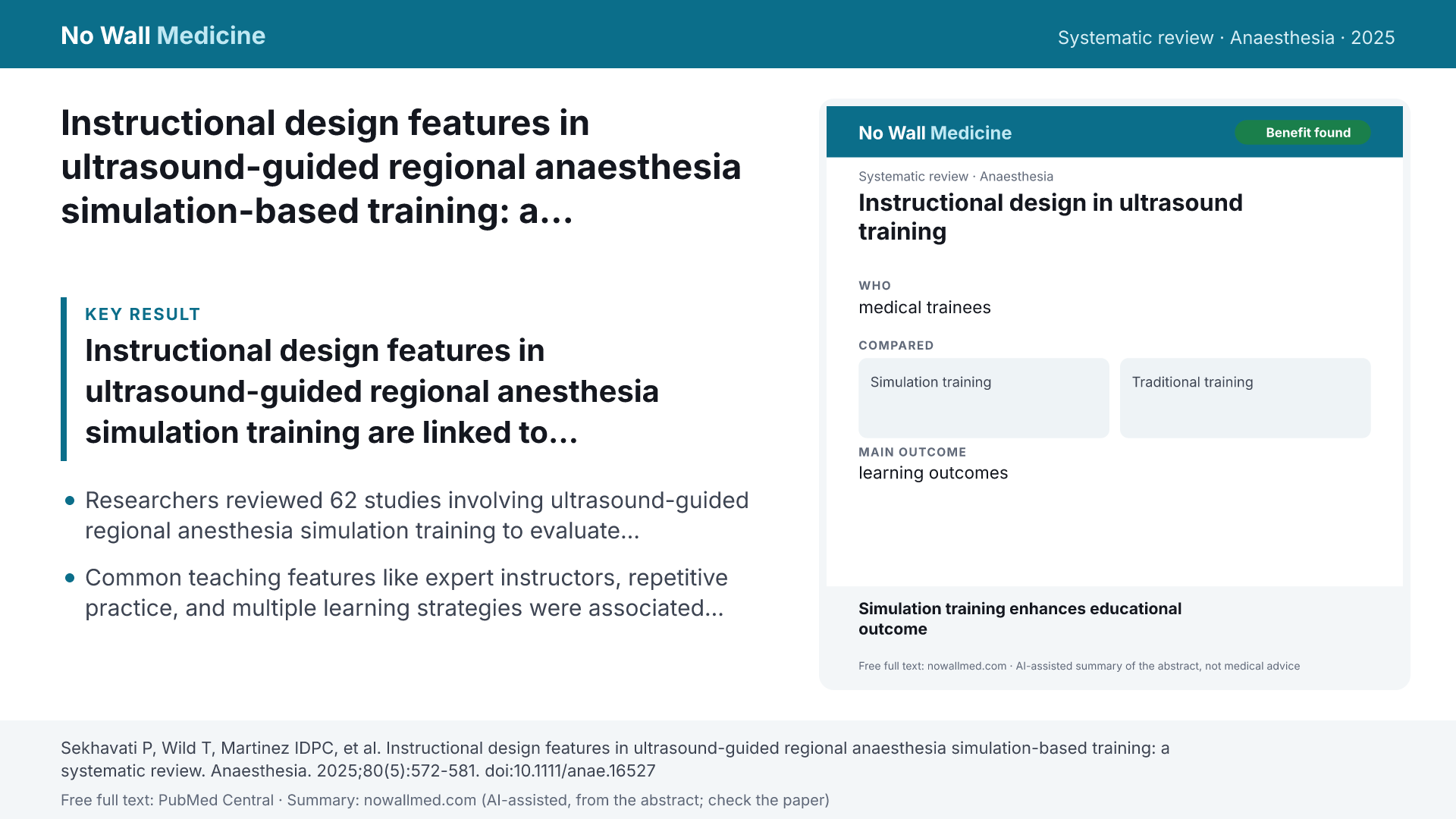
Instructional design features in ultrasound-guided regional anesthesia simulation training are linked to better learning outcomes
Instructional design features in ultrasound-guided regional anaesthesia simulation-based training: a systematic review
Systematic reviewBenefit found
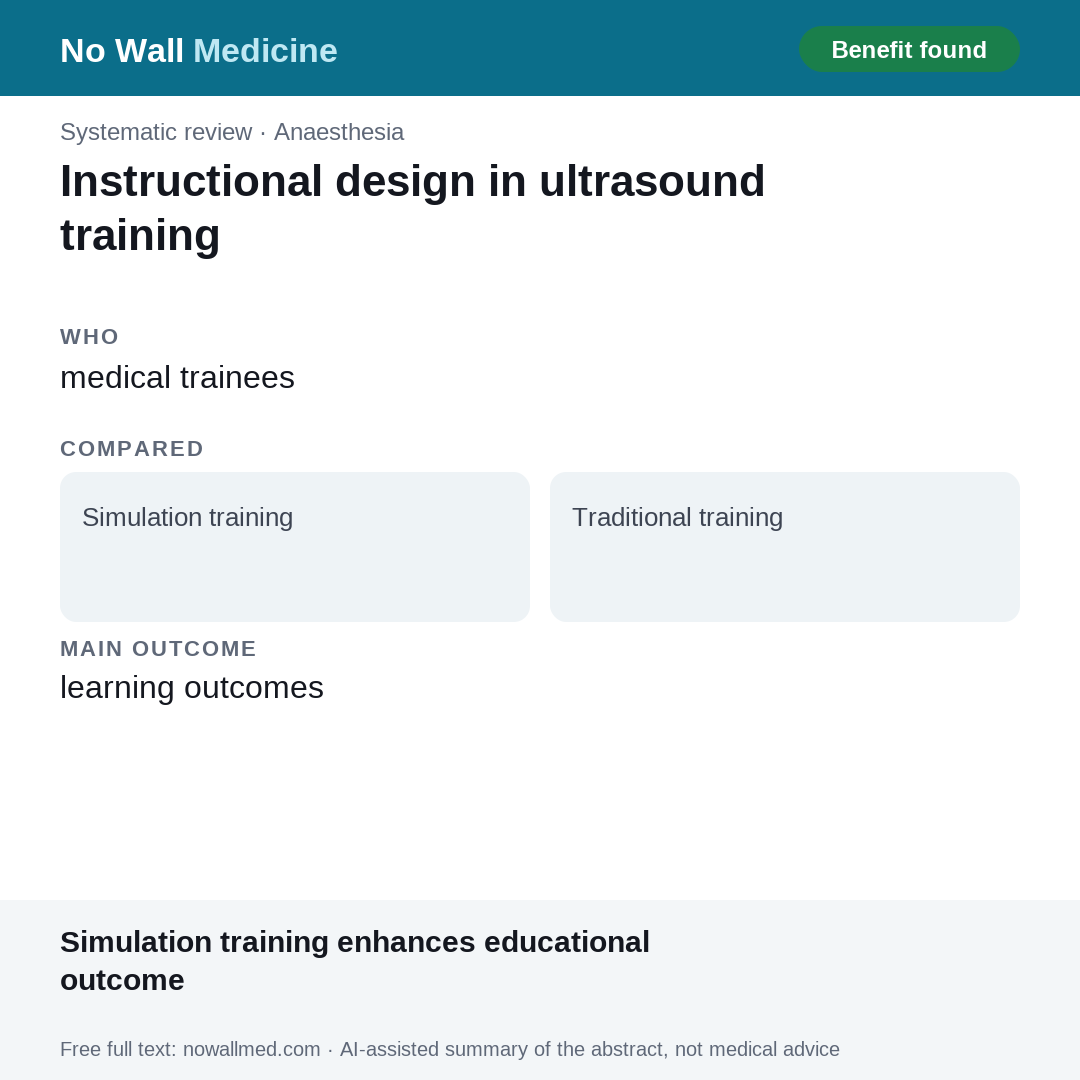
Instructional design in ultrasound training
Who
medical trainees
Compared
Simulation training
Traditional training
Main outcome
learning outcomes
Bottom line: Simulation training enhances educational outcome
Limitation: outcome measurements not standardised
Anaesthesia · 2025-01-06Download image
Why it matters: The specific combination of instructional design features required to improve higher-level clinical behavior and patient outcomes remains unclear.
Key points
- Researchers reviewed 62 studies involving ultrasound-guided regional anesthesia simulation training to evaluate different teaching methods and learning outcomes.
- Common teaching features like expert instructors, repetitive practice, and multiple learning strategies were associated with significant improvements across multiple outcome levels.
- Fewer studies assessed how training affects clinical behavior or actual patient outcomes.
Headline and key points written with AI from the paper’s abstract, with every number checked against it. Read the paper before relying on them.
Was this summary helpful?
Subject terms
Cite this article
Sekhavati P, Wild T, Martinez IDPC, Dion PM, Woo M, Ramlogan R. Instructional design features in ultrasound-guided regional anaesthesia simulation-based training: a systematic review. Anaesthesia. 2025. doi:10.1111/anae.16527
Spotted a mistake? Suggest a correction