Integration of a multicomponent intervention for hypertension into primary healthcare services in Singapore-A cluster randomized controlled trial
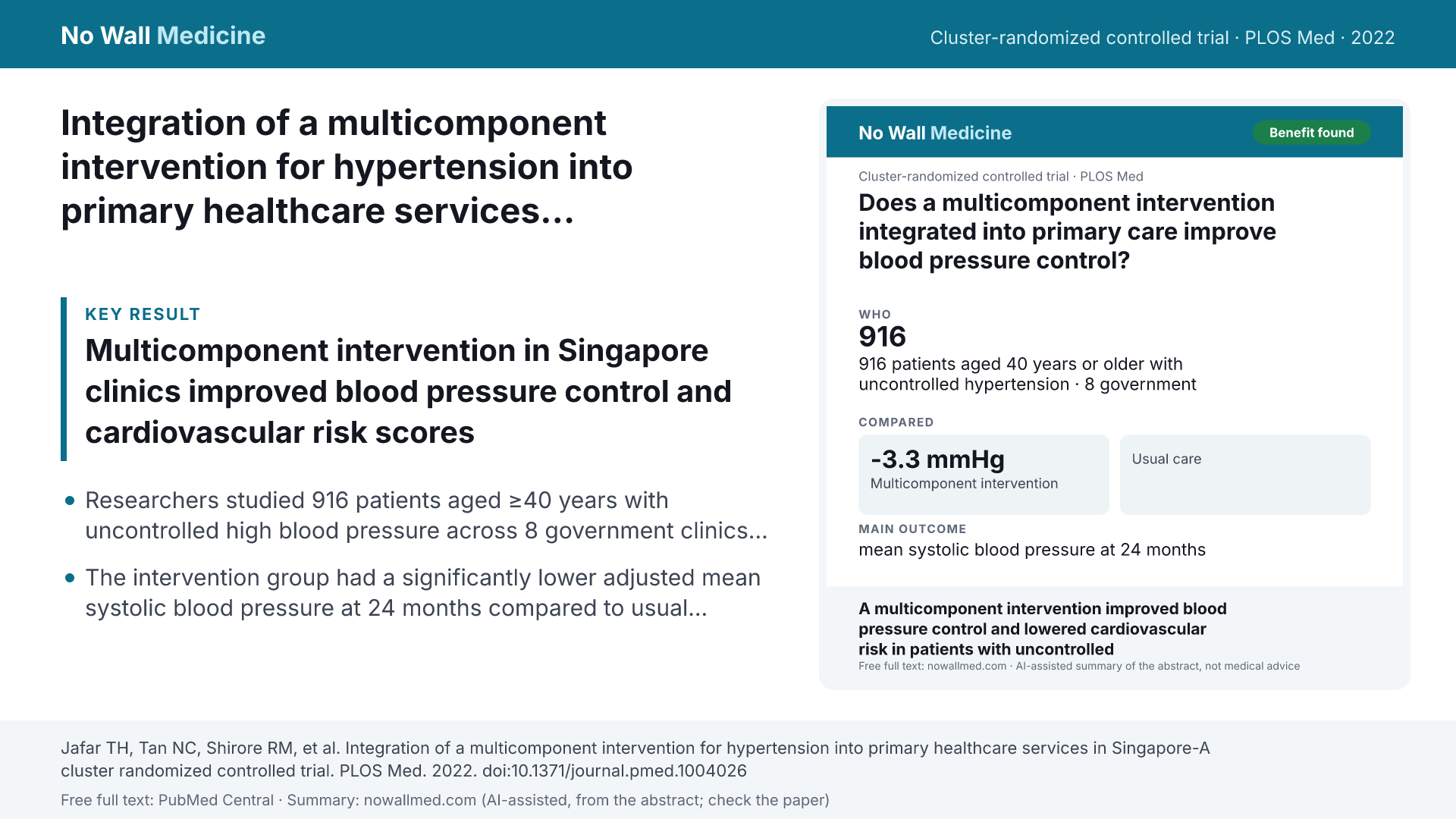
Key result: Multicomponent intervention in Singapore clinics improved blood pressure control and cardiovascular risk scores
Key points
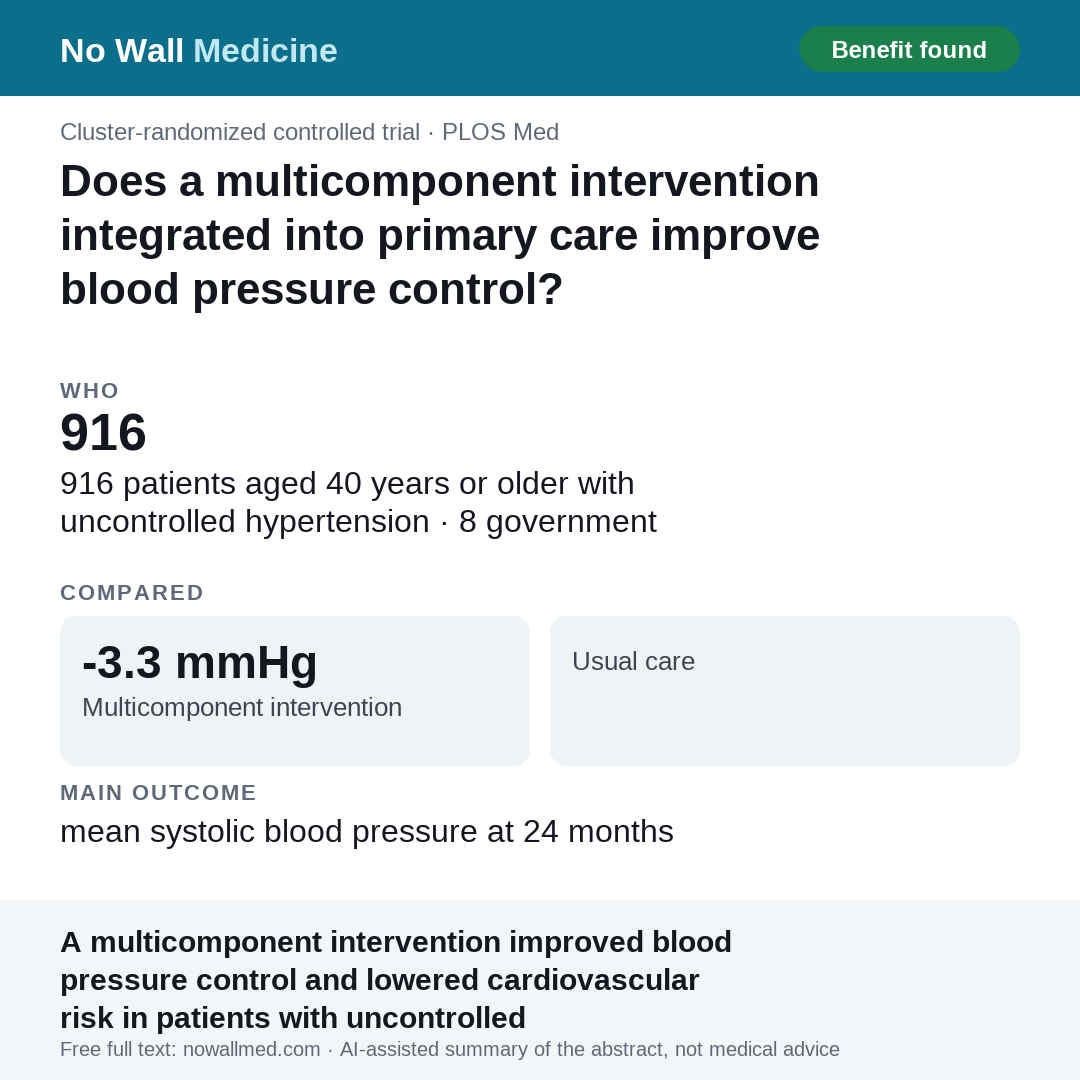
- Researchers studied 916 patients aged ≥40 years with uncontrolled high blood pressure across 8 government clinics in Singapore.
- The intervention group had a significantly lower adjusted mean systolic blood pressure at 24 months compared to usual care (-3.3 mmHg; 95% CI: -6.34, -0.32; p = 0.03).
- The intervention was associated with higher blood pressure control (odds ratio 1.51; 95% CI: 1.10, 2.09; p = 0.01) and lower odds of high 10-year cardiovascular risk (OR 0.67; 95% CI: 0.47, 0.97; p = 0.03).
Why it matters: Blood pressure control remains sub-optimal at less than 30% even in high-income countries despite existing clinical practice guidelines.
Limitation the authors note: The main limitation was no masking in the trial.
Discussion prompts
- Would these patients look like yours? Who was left out?
- Is the main outcome one that matters to patients?
- Is the difference large enough to change what you do?
Cite: Jafar TH, Tan NC, Shirore RM, et al. Integration of a multicomponent intervention for hypertension into primary healthcare services in Singapore-A cluster randomized controlled trial. PLOS Med. 2022. doi:10.1371/journal.pmed.1004026
Free full text: PubMed Central · Summary and visual abstract: nowallmed.com/a/integration-of-a-multicomponent-intervention-for-hypertension-into-wonihv/ (AI-assisted from the abstract; check the paper before relying on it).