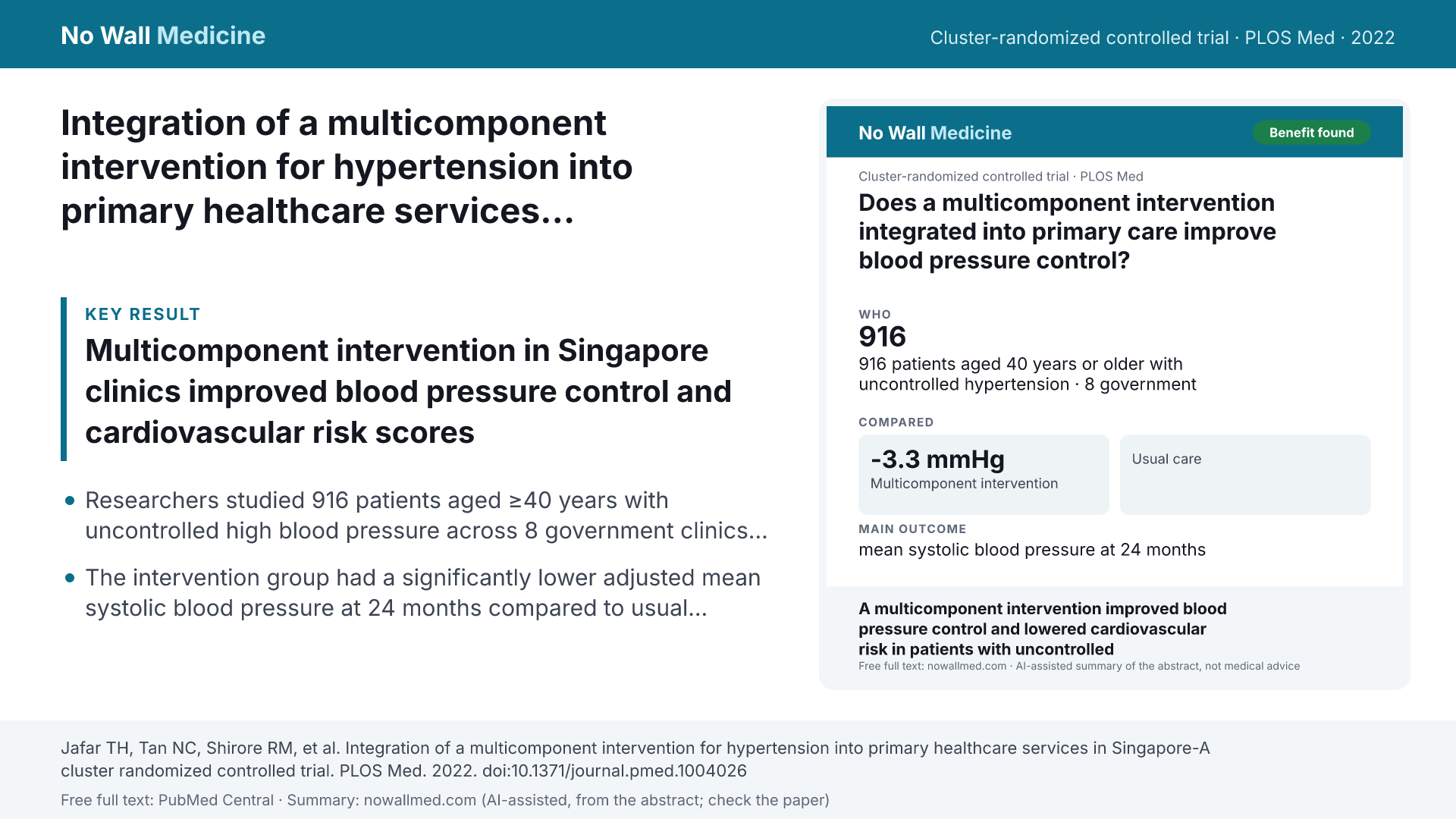
Multicomponent intervention in Singapore clinics improved blood pressure control and cardiovascular risk scores
Integration of a multicomponent intervention for hypertension into primary healthcare services in Singapore-A cluster randomized controlled trial
Cluster-randomized controlled trialBenefit found
Does a multicomponent intervention integrated into primary care improve blood pressure control?
Who
916
916 patients aged 40 years or older with uncontrolled hypertension · 8 government clinics in Singapore
Compared
-3.3 mmHgMulticomponent intervention
Usual care
Main outcome
mean systolic blood pressure at 24 months
Result: -3.3 mmHg; 95% CI: -6.34, -0.32
Bottom line: A multicomponent intervention improved blood pressure control and lowered cardiovascular risk in patients with uncontrolled hypertension.
Limitation: The main limitation was no masking in the trial.
PLOS Med · 2022-06-13Download image
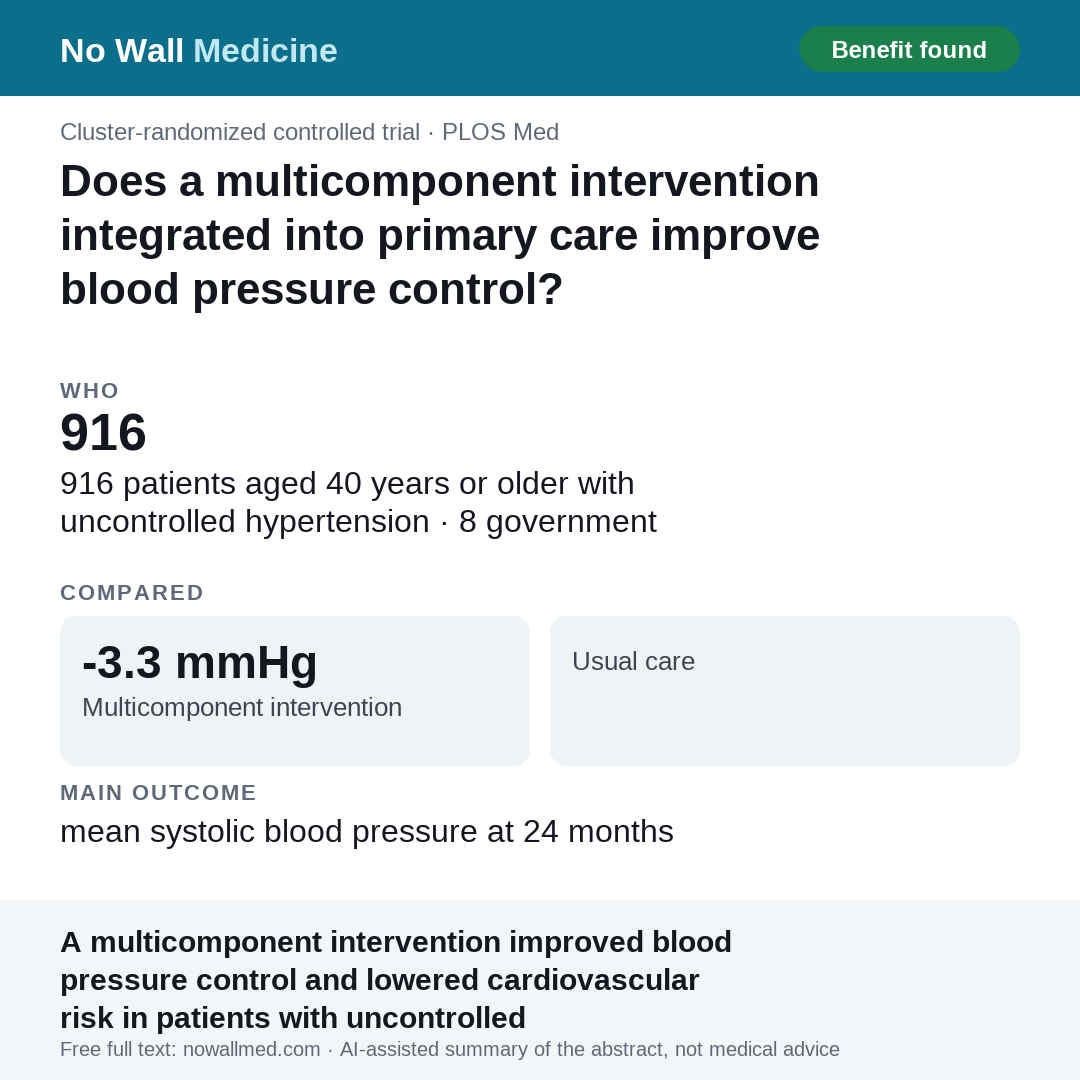
Clinical question: Does a multicomponent intervention integrated into primary care improve blood pressure control?
Why it matters: Blood pressure control remains sub-optimal at less than 30% even in high-income countries despite existing clinical practice guidelines.
Key points
- Researchers studied 916 patients aged ≥40 years with uncontrolled high blood pressure across 8 government clinics in Singapore.
- The intervention group had a significantly lower adjusted mean systolic blood pressure at 24 months compared to usual care (-3.3 mmHg; 95% CI: -6.34, -0.32; p = 0.03).
- The intervention was associated with higher blood pressure control (odds ratio 1.51; 95% CI: 1.10, 2.09; p = 0.01) and lower odds of high 10-year cardiovascular risk (OR 0.67; 95% CI: 0.47, 0.97; p = 0.03).
Limitation the authors note: The main limitation was no masking in the trial.
Headline and key points written with AI from the paper’s abstract, with every number checked against it. Read the paper before relying on them.
Was this summary helpful?
Subject terms
Cite this article
Jafar TH, Tan NC, Shirore RM, et al. Integration of a multicomponent intervention for hypertension into primary healthcare services in Singapore-A cluster randomized controlled trial. PLOS Med. 2022. doi:10.1371/journal.pmed.1004026
Spotted a mistake? Suggest a correction