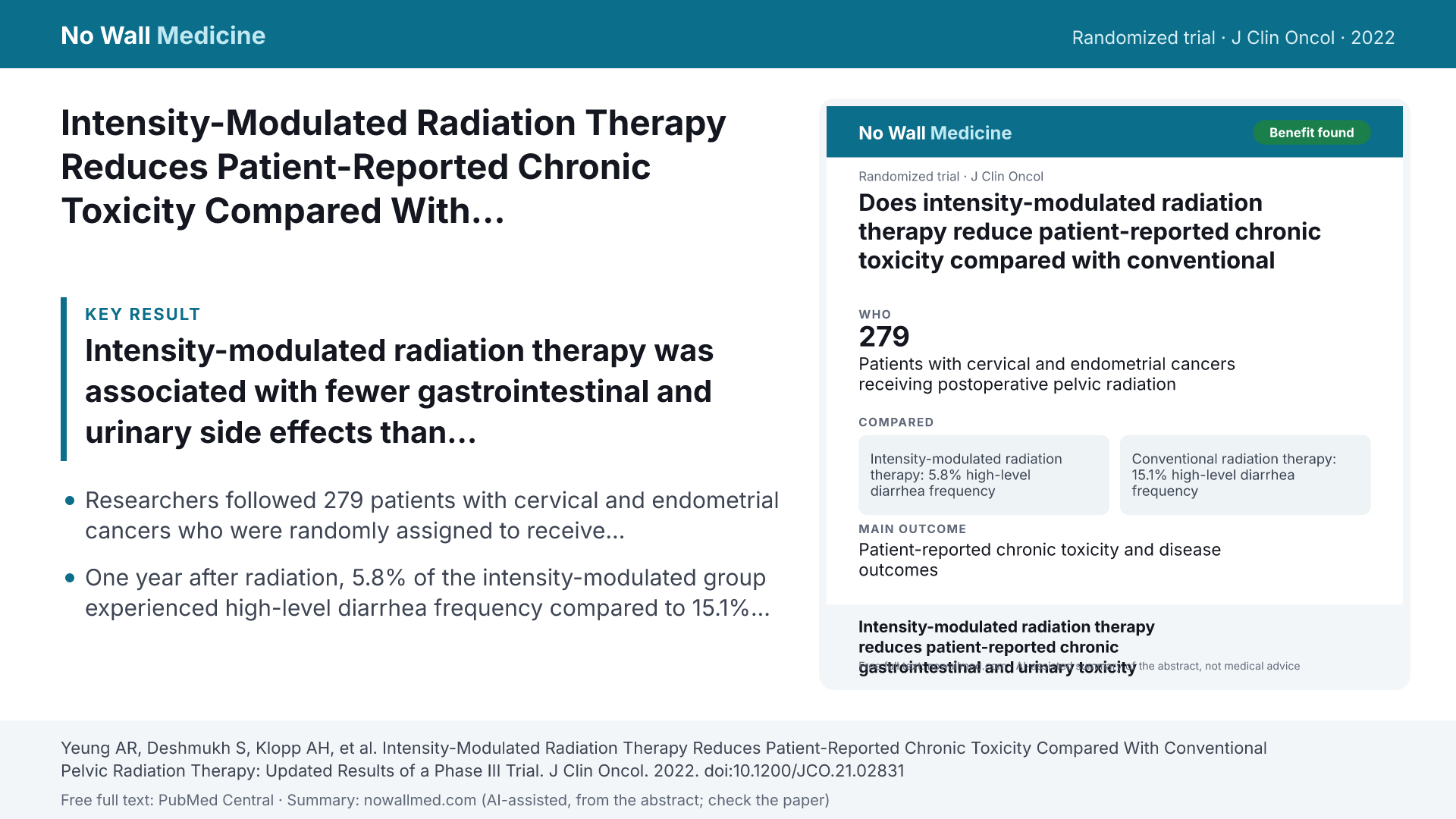
Intensity-Modulated Radiation Therapy Reduces Patient-Reported Chronic Toxicity Compared With Conventional Pelvic Radiation Therapy: Updated Results of a Phase III Trial
Key result: Intensity-modulated radiation therapy was associated with fewer gastrointestinal and urinary side effects than conventional radiation
Key points
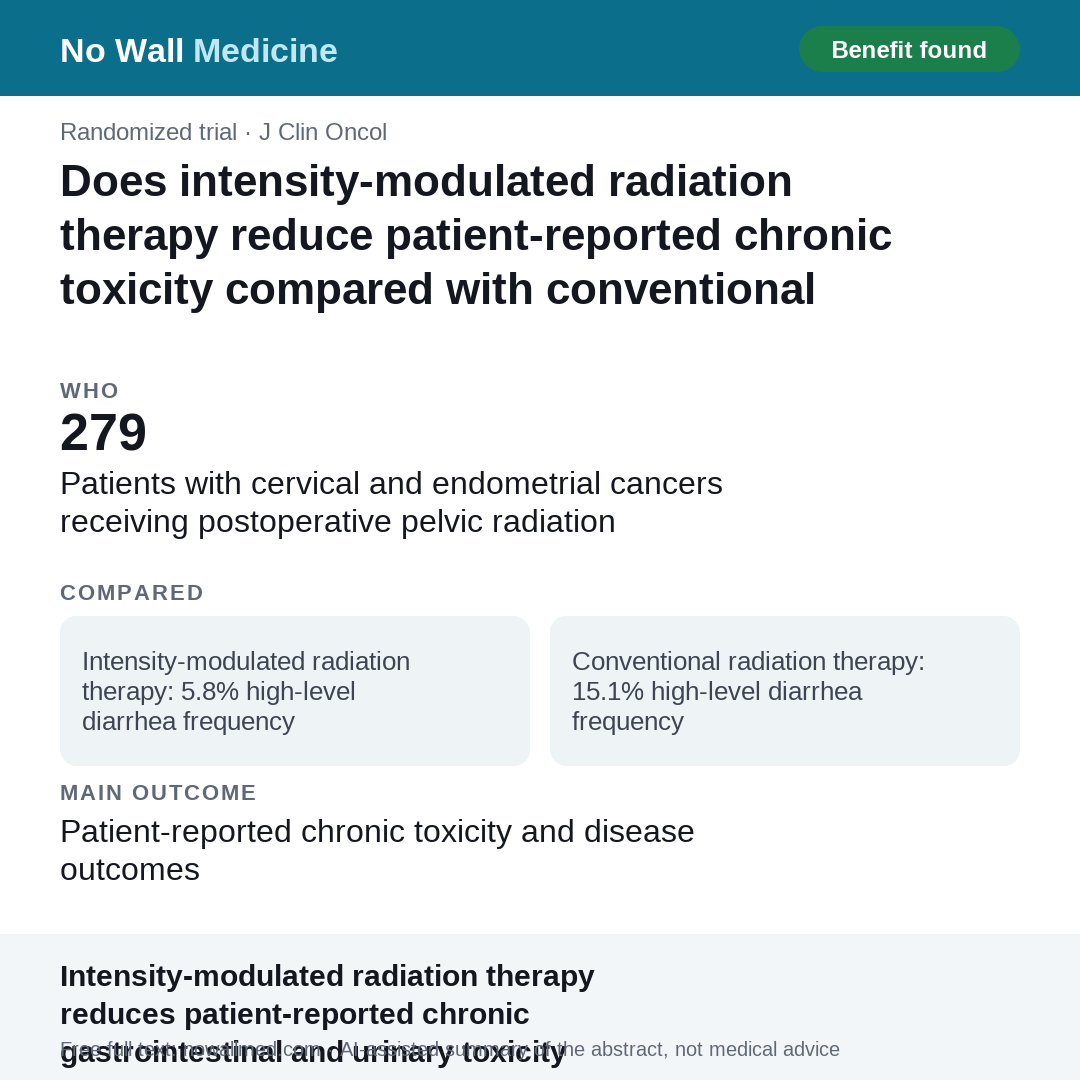
- Researchers followed 279 patients with cervical and endometrial cancers who were randomly assigned to receive either intensity-modulated radiation therapy or conventional pelvic radiation therapy.
- One year after radiation, 5.8% of the intensity-modulated group experienced high-level diarrhea frequency compared to 15.1% in the conventional group.
- At 3 years, the intensity-modulated group showed a mean urinary function score change of 0.5, while the conventional group showed a change of -6.0.
In absolute numbers: Intensity-modulated radiation therapy 5.8% vs Conventional radiation therapy 15.1%, a difference of 9.3 percentage points (about 11 people treated for one more to benefit).
Discussion prompts
- Would these patients look like yours? Who was left out?
- Is the main outcome one that matters to patients?
- Is the difference large enough to change what you do?
Cite: Yeung AR, Deshmukh S, Klopp AH, et al. Intensity-Modulated Radiation Therapy Reduces Patient-Reported Chronic Toxicity Compared With Conventional Pelvic Radiation Therapy: Updated Results of a Phase III Trial. J Clin Oncol. 2022. doi:10.1200/JCO.21.02831
Free full text: PubMed Central · Summary and visual abstract: nowallmed.com/a/intensity-modulated-radiation-therapy-reduces-patient-reported-1r62dfx/ (AI-assisted from the abstract; check the paper before relying on it).