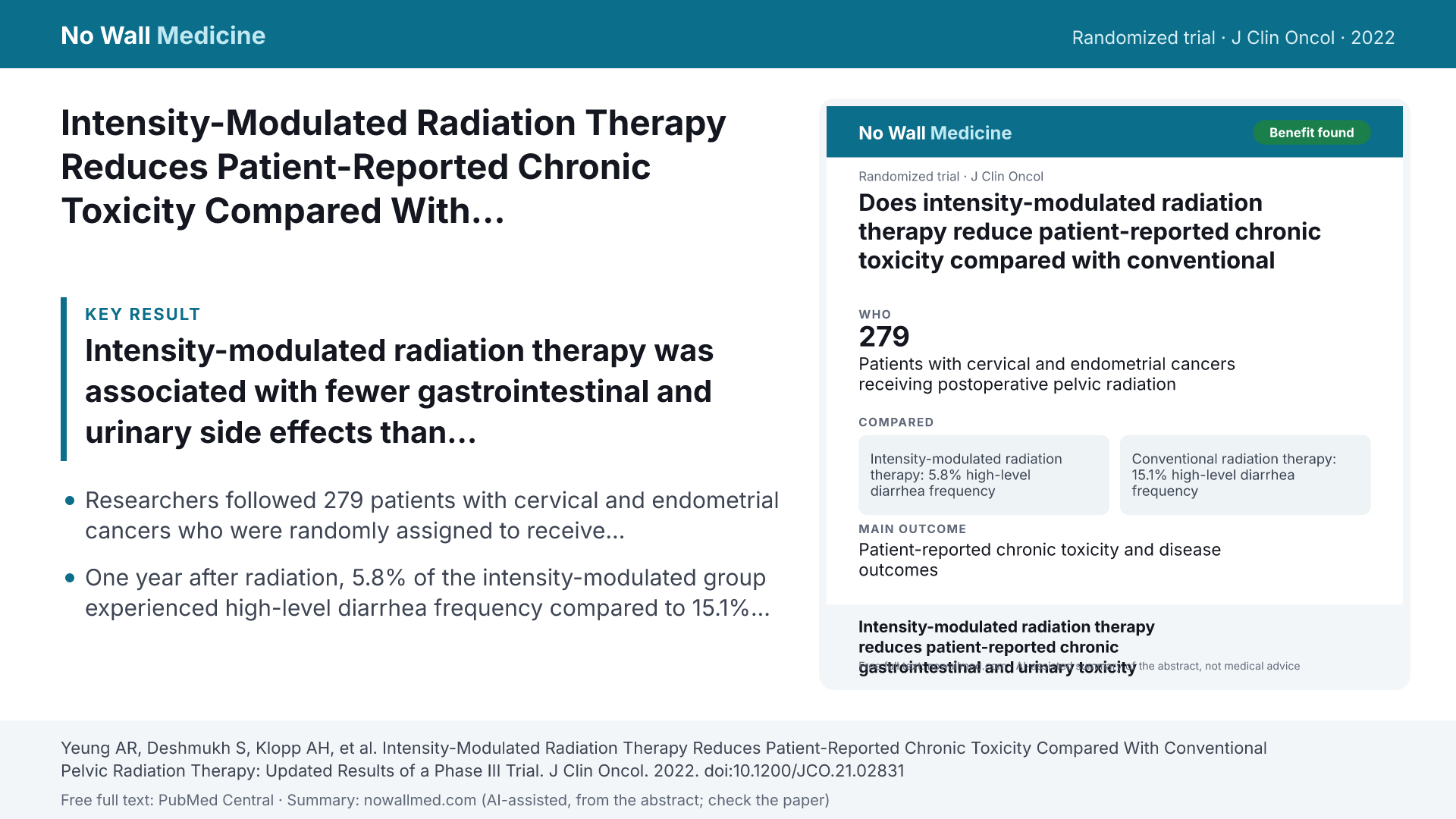
Intensity-modulated radiation therapy was associated with fewer gastrointestinal and urinary side effects than conventional radiation
Intensity-Modulated Radiation Therapy Reduces Patient-Reported Chronic Toxicity Compared With Conventional Pelvic Radiation Therapy: Updated Results of a Phase III Trial
Randomized trialBenefit found
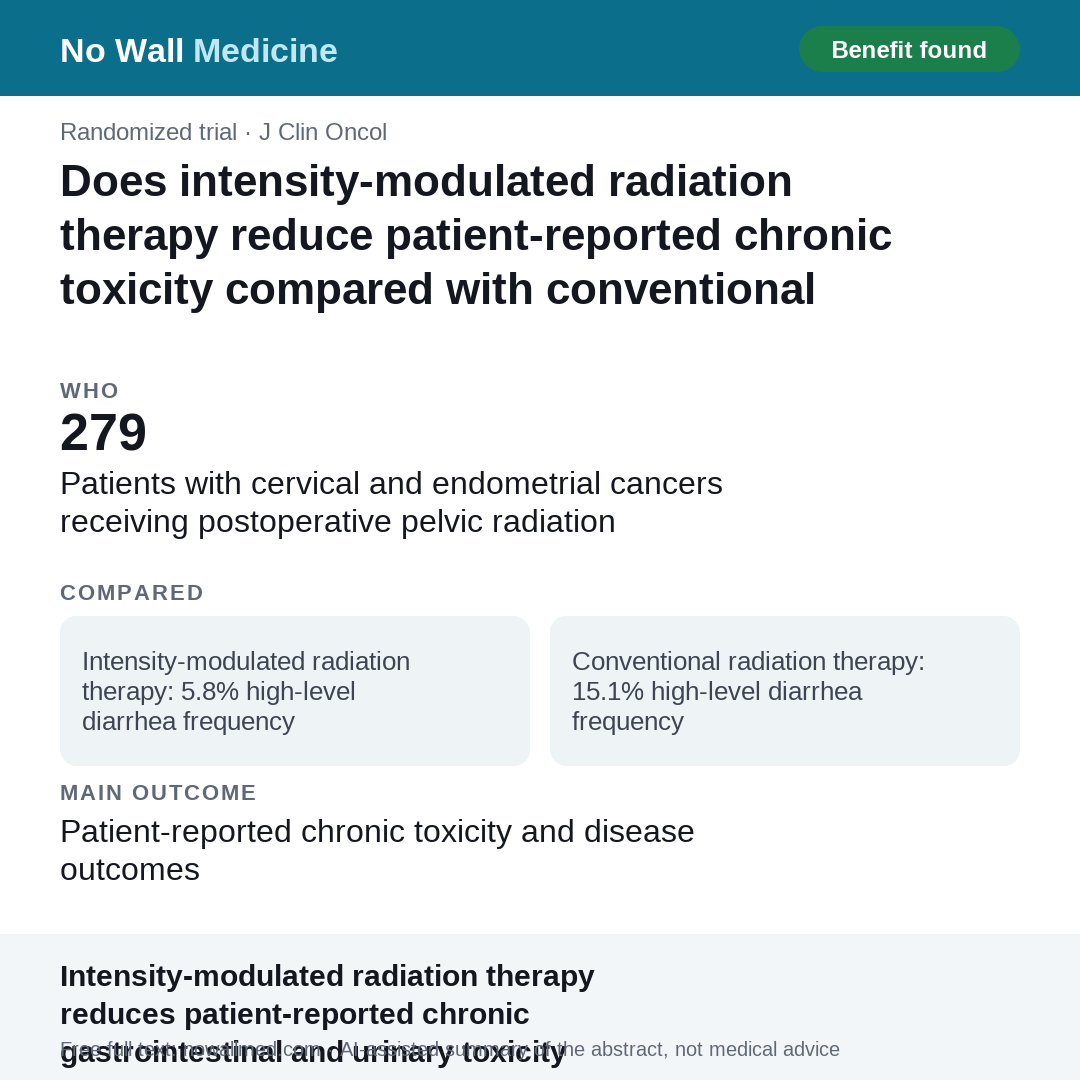
Does intensity-modulated radiation therapy reduce patient-reported chronic toxicity compared with conventional pelvic radiation?
Who
279
Patients with cervical and endometrial cancers receiving postoperative pelvic radiation
Compared
Intensity-modulated radiation therapy: 5.8% high-level diarrhea frequency
Conventional radiation therapy: 15.1% high-level diarrhea frequency
Main outcome
Patient-reported chronic toxicity and disease outcomes
Bottom line: Intensity-modulated radiation therapy reduces patient-reported chronic gastrointestinal and urinary toxicity without affecting treatment efficacy.
J Clin Oncol · 2022-08-12Download image
Clinical question: Does intensity-modulated radiation therapy reduce patient-reported chronic toxicity compared with conventional pelvic radiation?
In absolute numbers
Intensity-modulated radiation therapy: 5.8% · Conventional radiation therapy: 15.1% → a difference of 9.3 percentage points, so about 11 people would need the treatment for 1 more to benefit (number needed to treat) over the trial’s follow-up.
Worked out by us from the two group results above, not reported by the authors. Check the paper for the exact outcome and timing.
Key points
- Researchers followed 279 patients with cervical and endometrial cancers who were randomly assigned to receive either intensity-modulated radiation therapy or conventional pelvic radiation therapy.
- One year after radiation, 5.8% of the intensity-modulated group experienced high-level diarrhea frequency compared to 15.1% in the conventional group.
- At 3 years, the intensity-modulated group showed a mean urinary function score change of 0.5, while the conventional group showed a change of -6.0.
Headline and key points written with AI from the paper’s abstract, with every number checked against it. Read the paper before relying on them.
Was this summary helpful?
Subject terms
Headline, design, result, key points, caveat and citation as plain text.
Cite this article
Yeung AR, Deshmukh S, Klopp AH, et al. Intensity-Modulated Radiation Therapy Reduces Patient-Reported Chronic Toxicity Compared With Conventional Pelvic Radiation Therapy: Updated Results of a Phase III Trial. J Clin Oncol. 2022. doi:10.1200/JCO.21.02831
Spotted a mistake? Suggest a correction