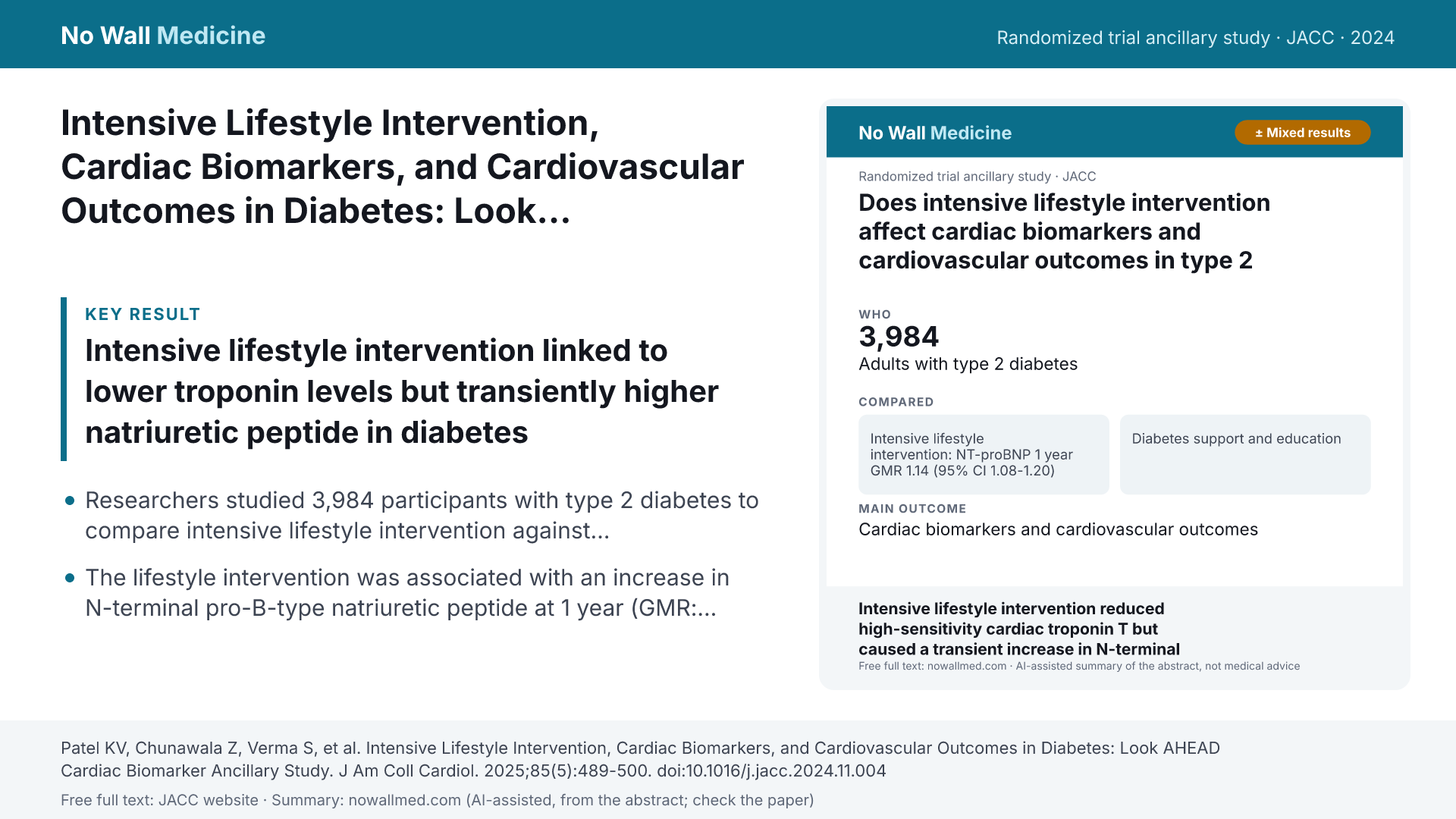
Intensive lifestyle intervention linked to lower troponin levels but transiently higher natriuretic peptide in diabetes
Intensive Lifestyle Intervention, Cardiac Biomarkers, and Cardiovascular Outcomes in Diabetes: Look AHEAD Cardiac Biomarker Ancillary Study
Randomized trial ancillary studyMixed results
Does intensive lifestyle intervention affect cardiac biomarkers and cardiovascular outcomes in type 2 diabetes?
Who
3,984
Adults with type 2 diabetes
Compared
Intensive lifestyle intervention: NT-proBNP 1 year GMR 1.14 (95% CI 1.08-1.20)
Diabetes support and education
Main outcome
Cardiac biomarkers and cardiovascular outcomes
Bottom line: Intensive lifestyle intervention reduced high-sensitivity cardiac troponin T but caused a transient increase in N-terminal pro-B-type natriuretic peptide.
JACC · 2024-11-15 · Save PNG
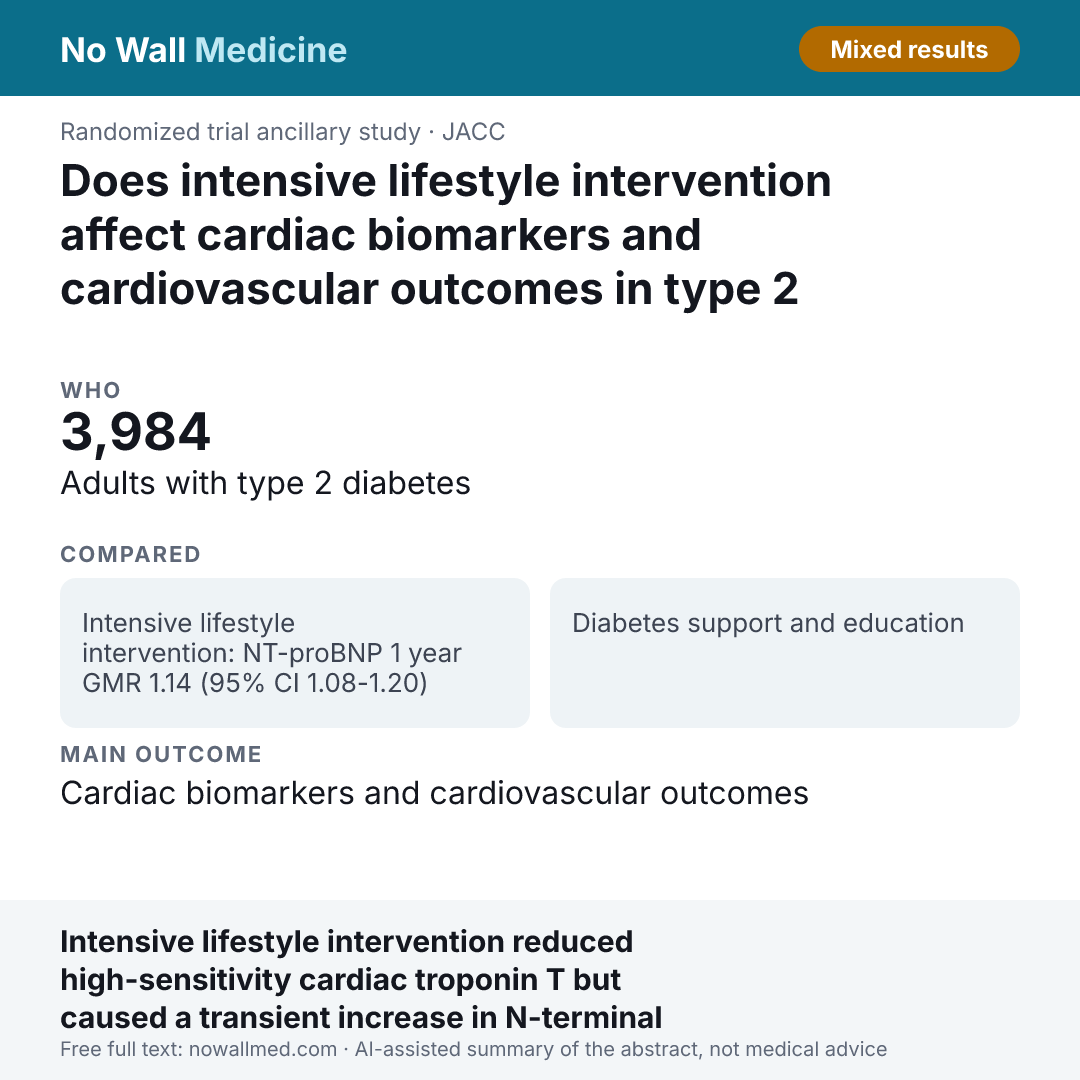
Clinical question: Does intensive lifestyle intervention affect cardiac biomarkers and cardiovascular outcomes in type 2 diabetes?
Why it matters: The effects of intensive lifestyle interventions on cardiac biomarkers and how changes in these markers predict cardiovascular outcomes in people with type 2 diabetes are not well-established.
Key points
- Researchers studied 3,984 participants with type 2 diabetes to compare intensive lifestyle intervention against diabetes support and education.
- The lifestyle intervention was associated with an increase in N-terminal pro-B-type natriuretic peptide at 1 year (GMR: 1.14; 95% CI: 1.08-1.20) but lower high-sensitivity cardiac troponin T at 1 year (GMR: 0.94; 95% CI: 0.91-0.97) and 4 years (GMR: 0.93; 95% CI: 0.90-0.96).
- Increases in N-terminal pro-B-type natriuretic peptide were associated with higher risk of heart failure and atherosclerotic cardiovascular disease.
Headline and key points written with AI from the paper’s abstract, with every number checked against it. Read the paper before relying on them.
Was this summary helpful?
Subject terms
Headline, design, result, key points, caveat and citation as plain text.
Cite this article
Patel KV, Chunawala Z, Verma S, et al. Intensive Lifestyle Intervention, Cardiac Biomarkers, and Cardiovascular Outcomes in Diabetes: Look AHEAD Cardiac Biomarker Ancillary Study. J Am Coll Cardiol. 2025;85(5):489-500. doi:10.1016/j.jacc.2024.11.004
Spotted a mistake? Suggest a correction