Intensive blood pressure control after mechanical thrombectomy is linked to worse outcomes and higher mortality
Intensive Versus Standard Blood Pressure Control After Endovascular Thrombectomy in Acute Ischemic Stroke: A Meta-Analysis of Randomized Controlled Trials
Meta-analysis of 6 randomized controlled trialsHarm found
Is intensive versus standard blood pressure control better after mechanical thrombectomy for stroke?
Who
Patients with acute ischemic stroke due to large vessel occlusion
Compared
Intensive blood pressure control
Standard blood pressure control
Main outcome
Good functional outcome and all-cause mortality
Result: OR 0.70 (95% CI 0.54-0.91) for good functional outcome
Bottom line: Intensive blood pressure control may cause harm, including reduced good functional outcomes, increased mortality, and more hypotensive episodes.
J Am Heart Assoc · 2026-04-16Download image
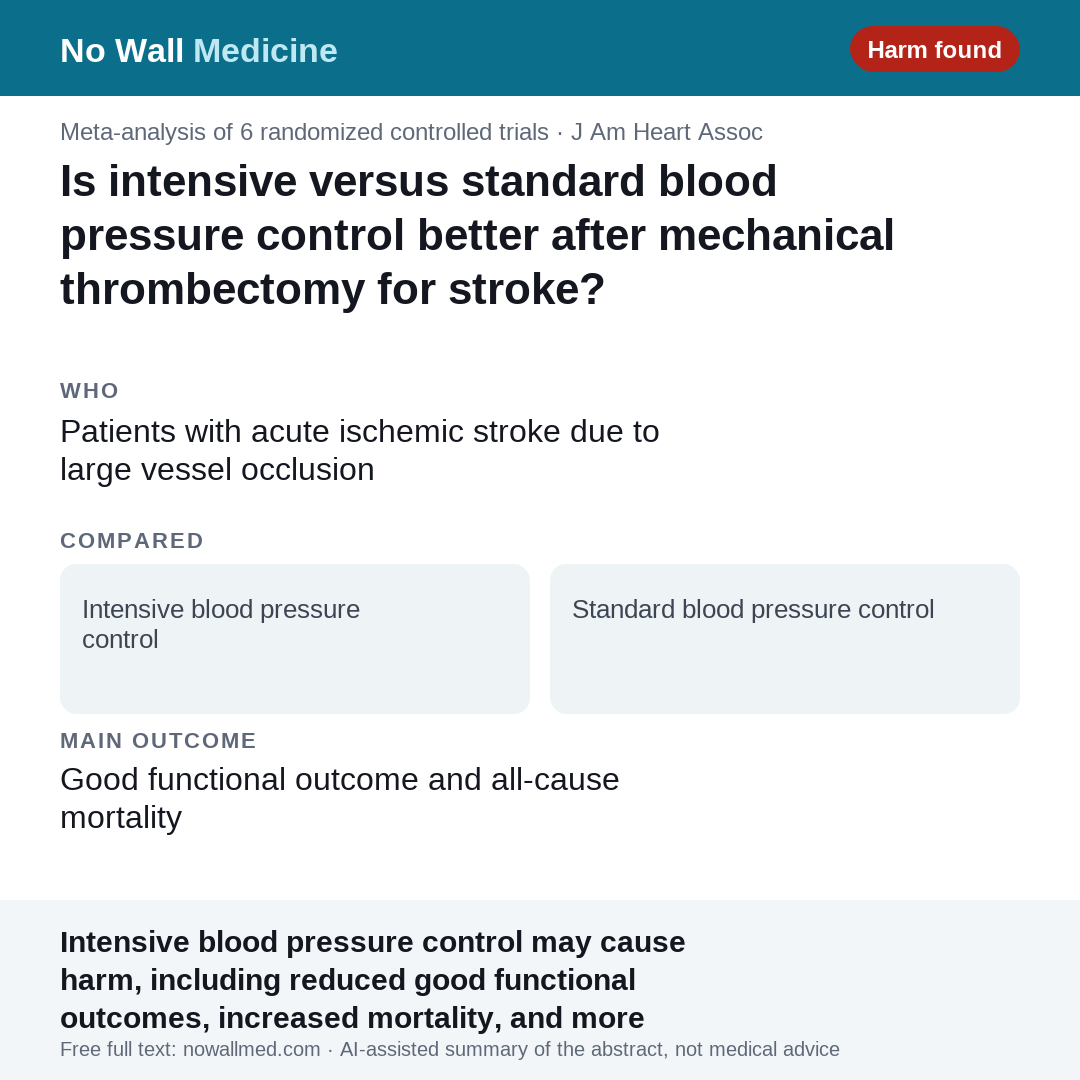
Clinical question: Is intensive versus standard blood pressure control better after mechanical thrombectomy for stroke?
Why it matters: The optimal strategy for managing blood pressure following mechanical thrombectomy for large vessel occlusion remains a subject of ongoing research.
Key points
- Researchers analyzed 6 randomized controlled trials comparing intensive versus standard blood pressure management after mechanical thrombectomy for acute ischemic stroke.
- Intensive control was associated with lower rates of good functional outcome (OR, 0.70 [95% CI, 0.54-0.91]) and increased all-cause mortality (OR, 1.21 [95% CI, 1.05-1.40]).
- Patients receiving intensive control had a higher incidence of hypotensive episodes, which are periods of dangerously low blood pressure (OR, 2.49 [95% CI, 1.56-3.96]).
Headline and key points written with AI from the paper’s abstract, with every number checked against it. Read the paper before relying on them.
Topics
Cite this article
Hashmi TM, Ahmed M, Ashraf H, Shakir M, Bhatti IA, Ahmed F. Intensive Versus Standard Blood Pressure Control After Endovascular Thrombectomy in Acute Ischemic Stroke: A Meta-Analysis of Randomized Controlled Trials. J Am Heart Assoc. 2026. doi:10.1161/JAHA.125.045503
Spotted a mistake? Suggest a correction