Infarct growth speed did not change how well combined stroke treatments worked
Interaction between intravenous thrombolysis and clinical outcome between slow and fast progressors undergoing mechanical thrombectomy: a post-hoc analysis of the SWIFT-DIRECT trial
Post-hoc analysis of a randomized trialNo clear difference
Does infarct growth speed affect outcomes of intravenous thrombolysis plus mechanical thrombectomy?
Who
376
Patients with proximal occlusions undergoing mechanical thrombectomy
Compared
Intravenous thrombolysis plus mechanical thrombectomy
Mechanical thrombectomy alone
Main outcome
3-month functional independence
Bottom line: Infarct growth speed did not significantly interact with treatment allocation regarding favorable functional outcomes.
Limitation: This is a post-hoc analysis of the SWIFT-DIRECT trial data.
J Neurointerv Surg · 2023-12-19Download image
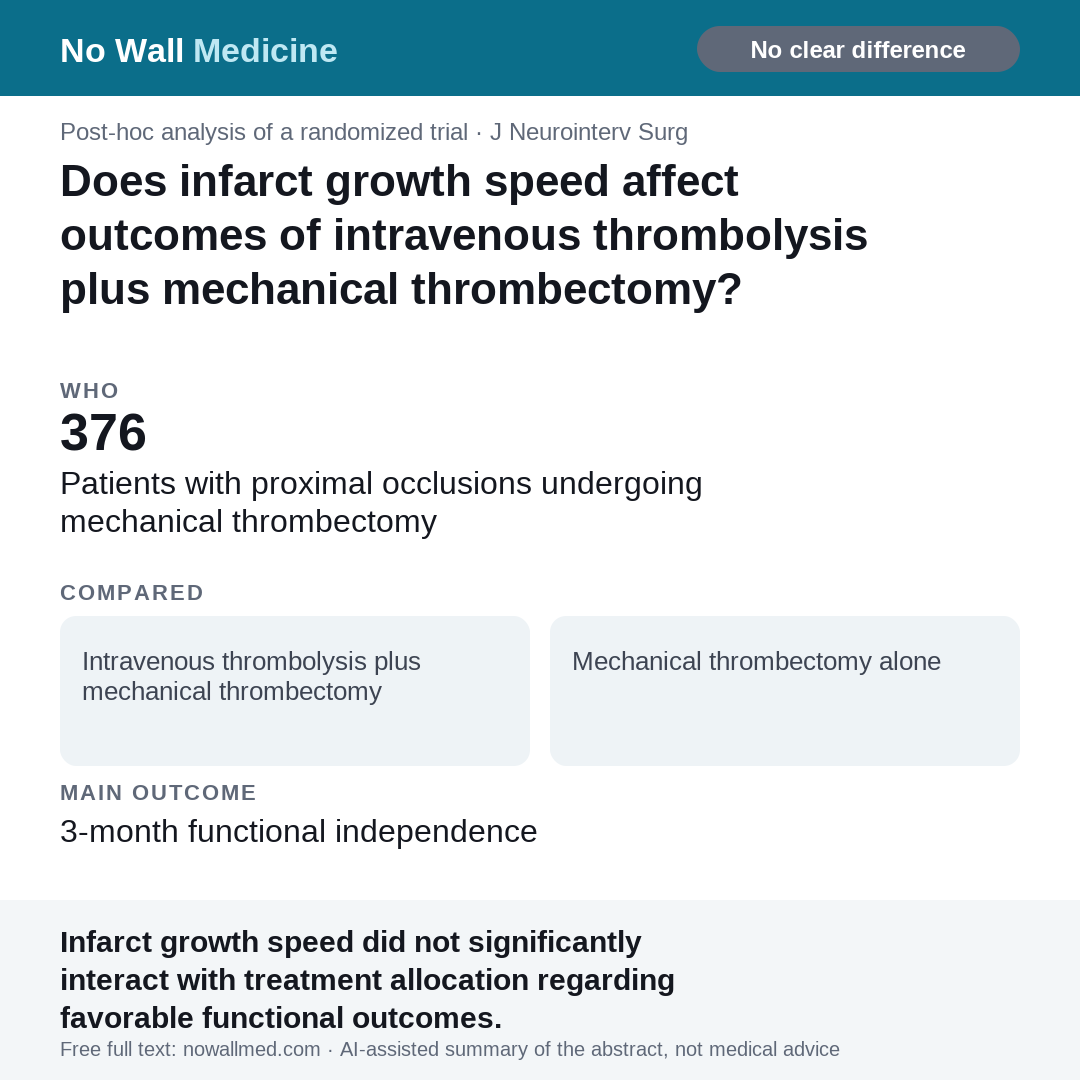
Clinical question: Does infarct growth speed affect outcomes of intravenous thrombolysis plus mechanical thrombectomy?
Why it matters: It was unknown if the speed of brain tissue damage growth affects how well combined clot-dissolving medication and mechanical clot removal work.
Key points
- Researchers analyzed 376 patients randomized to receive either intravenous clot-dissolving medication plus mechanical clot removal or mechanical clot removal alone.
- The speed of brain tissue damage growth was not linked to a significant difference in 3-month functional independence between the treatment groups.
- In the combined treatment group, intracranial hemorrhage was associated with 22.8% in slow progressors versus 49.4% in fast progressors.
Headline and key points written with AI from the paper’s abstract, with every number checked against it. Read the paper before relying on them.
Was this summary helpful?
Subject terms
Cite this article
Marnat G, Kaesmacher J, Buetikofer L, Sibon I, Saleme S, Pop R. Interaction between intravenous thrombolysis and clinical outcome between slow and fast progressors undergoing mechanical thrombectomy: a post-hoc analysis of the SWIFT-DIRECT trial. J Neurointerv Surg. 2023. doi:10.1136/jnis-2023-020113
Spotted a mistake? Suggest a correction
Top studies every Monday
The week’s key trials and guidelines in your specialties, plus any topics you follow. By email, free.
Get the weekly digest