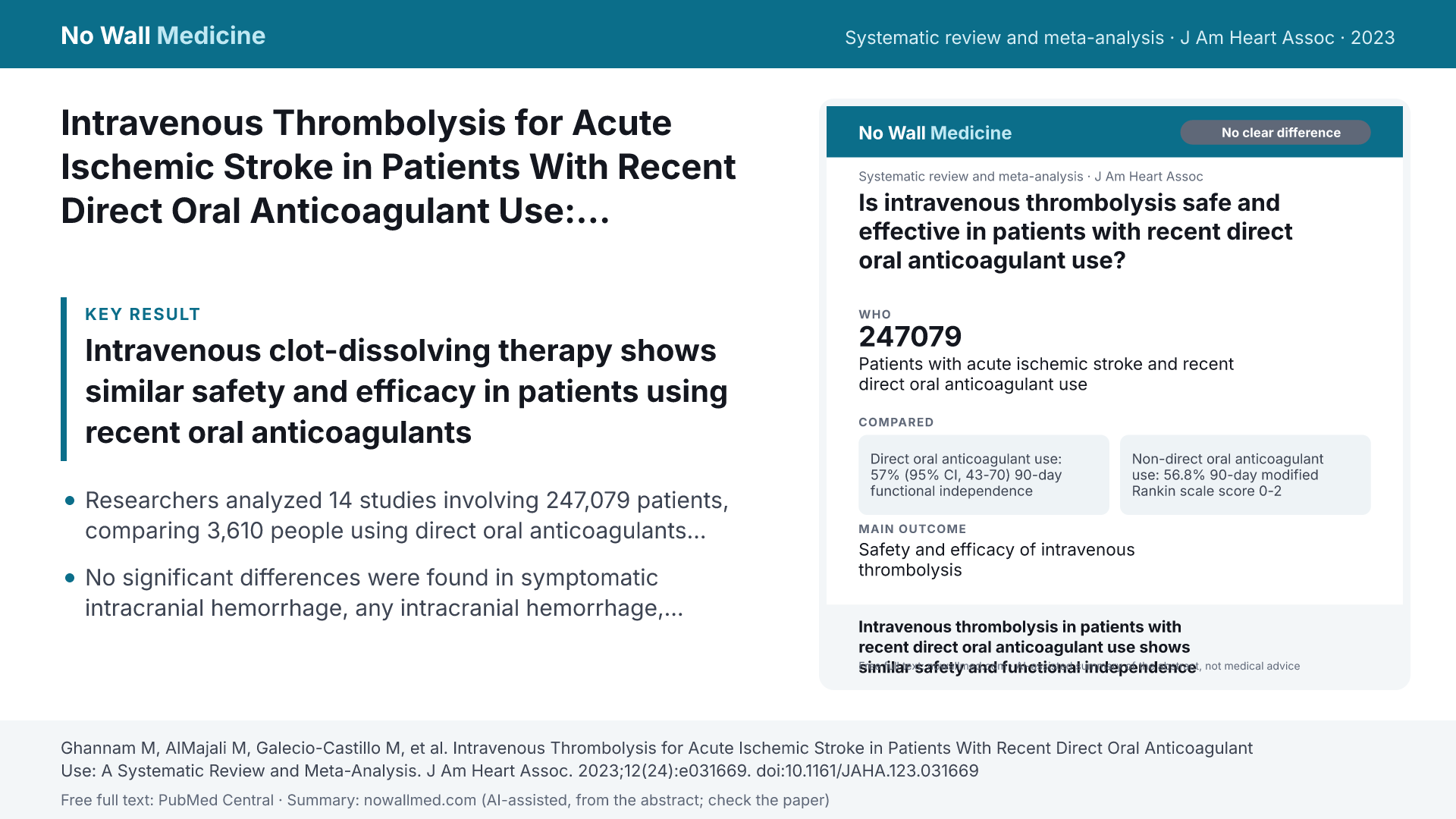
Intravenous clot-dissolving therapy shows similar safety and efficacy in patients using recent oral anticoagulants
Intravenous Thrombolysis for Acute Ischemic Stroke in Patients With Recent Direct Oral Anticoagulant Use: A Systematic Review and Meta-Analysis
Systematic review and meta-analysisNo clear difference
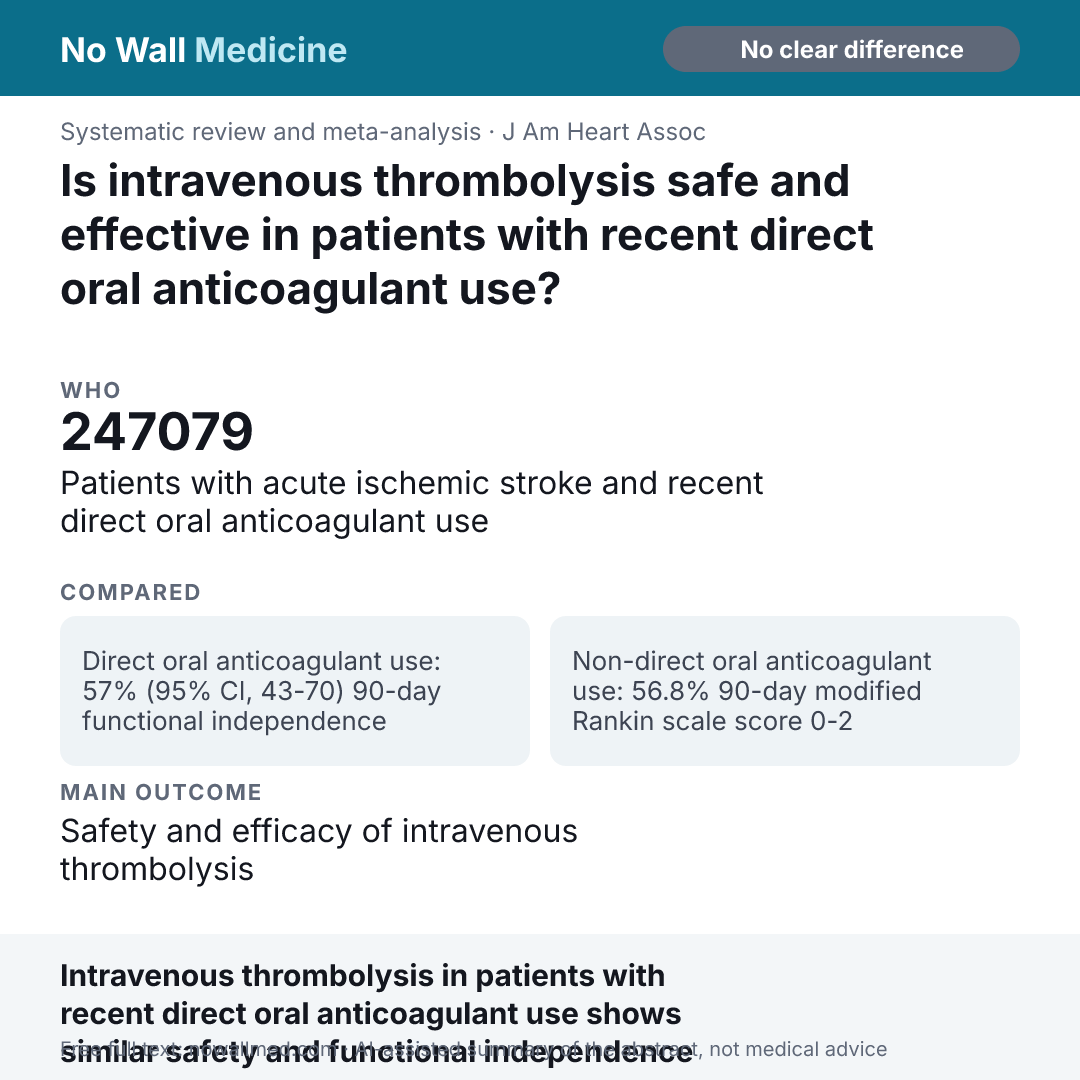
Is intravenous thrombolysis safe and effective in patients with recent direct oral anticoagulant use?
Who
247079
Patients with acute ischemic stroke and recent direct oral anticoagulant use
Compared
Direct oral anticoagulant use: 57% (95% CI, 43-70) 90-day functional independence
Non-direct oral anticoagulant use: 56.8% 90-day modified Rankin scale score 0-2
Main outcome
Safety and efficacy of intravenous thrombolysis
Result: OR, 0.95 [95% CI, 0.67-1.36] for symptomatic intracranial hemorrhage
Bottom line: Intravenous thrombolysis in patients with recent direct oral anticoagulant use shows similar safety and functional independence compared to non-users.
J Am Heart Assoc · 2023-12-18 · Save PNG
Clinical question: Is intravenous thrombolysis safe and effective in patients with recent direct oral anticoagulant use?
Why it matters: Current guidelines do not recommend intravenous clot-dissolving therapy for patients who have recently taken direct oral anticoagulants.
Key points
- Researchers analyzed 14 studies involving 247,079 patients, comparing 3,610 people using direct oral anticoagulants to 243,469 people not using them.
- No significant differences were found in symptomatic intracranial hemorrhage, any intracranial hemorrhage, serious systemic bleeding, or 90-day functional independence between the two groups.
- In the direct oral anticoagulant group, 57% achieved 90-day functional independence, while symptomatic intracranial hemorrhage occurred in 3% of these patients.
Headline and key points written with AI from the paper’s abstract, with every number checked against it. Read the paper before relying on them.
Was this summary helpful?
Subject terms
Headline, design, result, key points, caveat and citation as plain text.
Cite this article
Ghannam M, AlMajali M, Galecio-Castillo M, et al. Intravenous Thrombolysis for Acute Ischemic Stroke in Patients With Recent Direct Oral Anticoagulant Use: A Systematic Review and Meta-Analysis. J Am Heart Assoc. 2023;12(24):e031669. doi:10.1161/JAHA.123.031669
Spotted a mistake? Suggest a correction