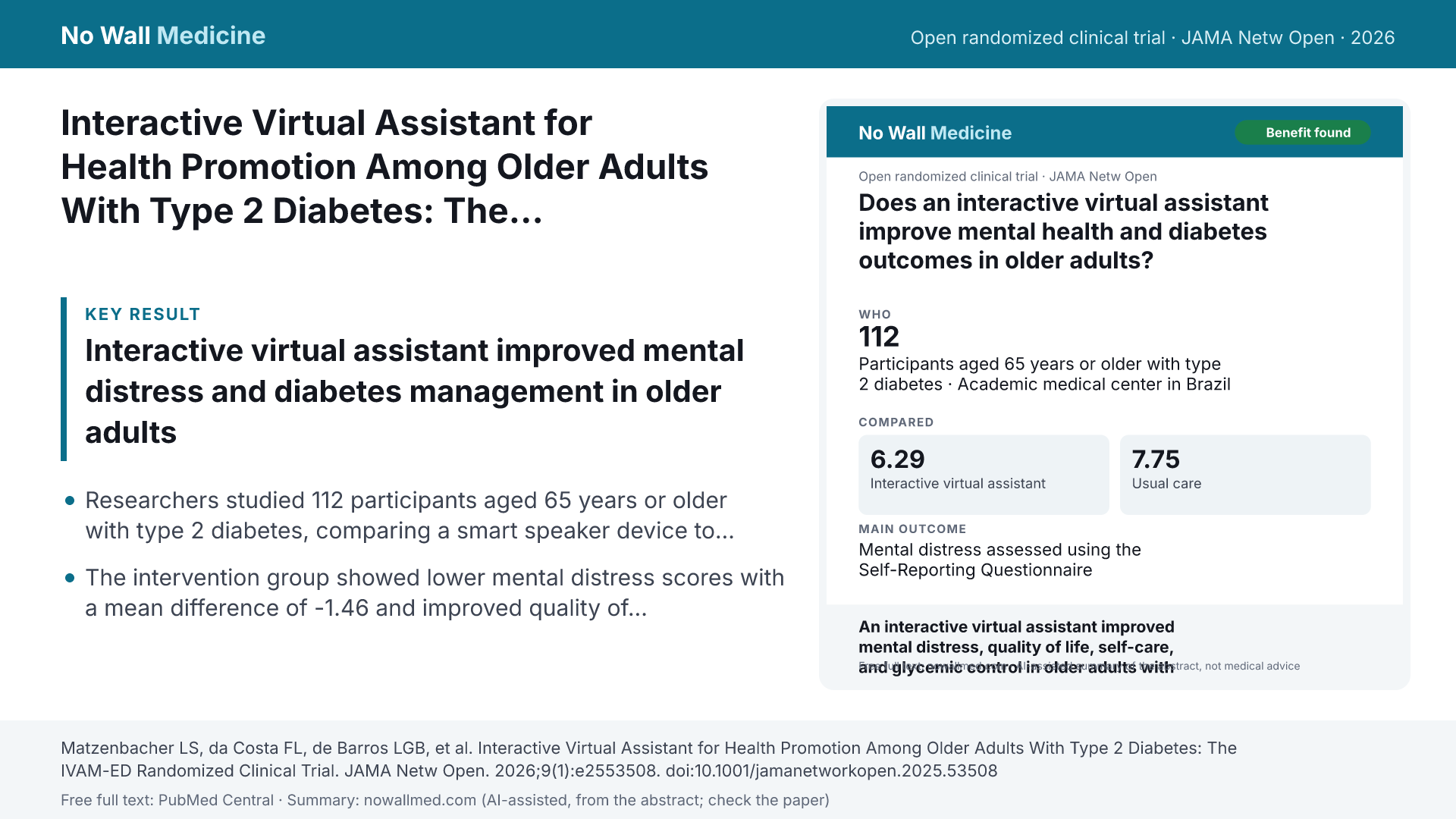
Interactive virtual assistant improved mental distress and diabetes management in older adults
Interactive Virtual Assistant for Health Promotion Among Older Adults With Type 2 Diabetes: The IVAM-ED Randomized Clinical Trial
Open randomized clinical trialBenefit found
Does an interactive virtual assistant improve mental health and diabetes outcomes in older adults?
Who
112
Participants aged 65 years or older with type 2 diabetes · Academic medical center in Brazil
Compared
6.29Interactive virtual assistant (0.44)
7.75Usual care (0.42)
Main outcome
Mental distress assessed using the Self-Reporting Questionnaire
Result: mean difference -1.46 (95% CI, -2.73 to -0.19)
Bottom line: An interactive virtual assistant improved mental distress, quality of life, self-care, and glycemic control in older adults with diabetes.
JAMA Netw Open · 2026-01-02Download image
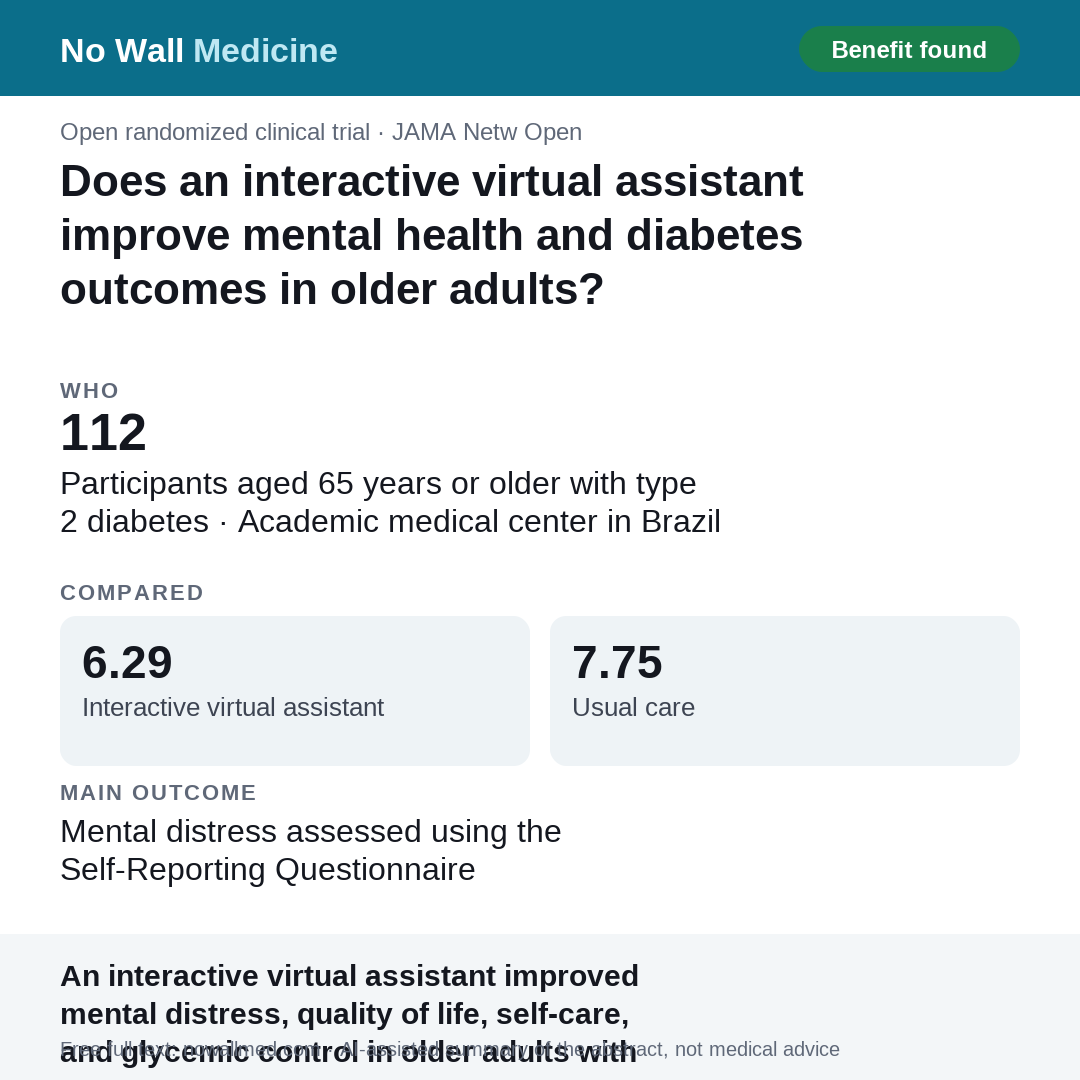
Clinical question: Does an interactive virtual assistant improve mental health and diabetes outcomes in older adults?
Why it matters: Older patients with diabetes often experience high levels of mental distress, which may complicate diabetes management and negatively impact health outcomes.
Key points
- Researchers studied 112 participants aged 65 years or older with type 2 diabetes, comparing a smart speaker device to usual care over 12 weeks.
- The intervention group showed lower mental distress scores with a mean difference of -1.46 and improved quality of life, self-care, and hemoglobin A1c levels.
- No significant difference was observed between the groups regarding perceived stress levels.
Headline and key points written with AI from the paper’s abstract, with every number checked against it. Read the paper before relying on them.
Was this summary helpful?
Subject terms
Cite this article
Matzenbacher LS, da Costa FL, de Barros LGB, et al. Interactive Virtual Assistant for Health Promotion Among Older Adults With Type 2 Diabetes: The IVAM-ED Randomized Clinical Trial. JAMA Netw Open. 2026. doi:10.1001/jamanetworkopen.2025.53508
Spotted a mistake? Suggest a correction