Interatrial shunt implantation showed no difference in primary effectiveness for heart failure patients
Interatrial Shunt Treatment for Heart Failure: The Randomized RELIEVE-HF Trial
Randomized trialNo clear difference
Does interatrial shunt implantation improve outcomes in symptomatic heart failure patients?
Who
508
Patients with symptomatic heart failure and any left ventricular ejection fraction · 94 sites in 11 countries
Compared
Interatrial shunt treatment
Placebo procedure
Main outcome
Hierarchical composite of death, transplantation, device implantation, hospitalization, worsening events, and quality of life
Result: win ratio 0.86 (95% CI 0.61-1.22)
Bottom line: Interatrial shunt implantation was safe but did not improve the primary effectiveness outcome in heart failure patients.
Limitation: The results from stratified groups were from prespecified exploratory analyses.
Circulation · 2024-09-23Download image
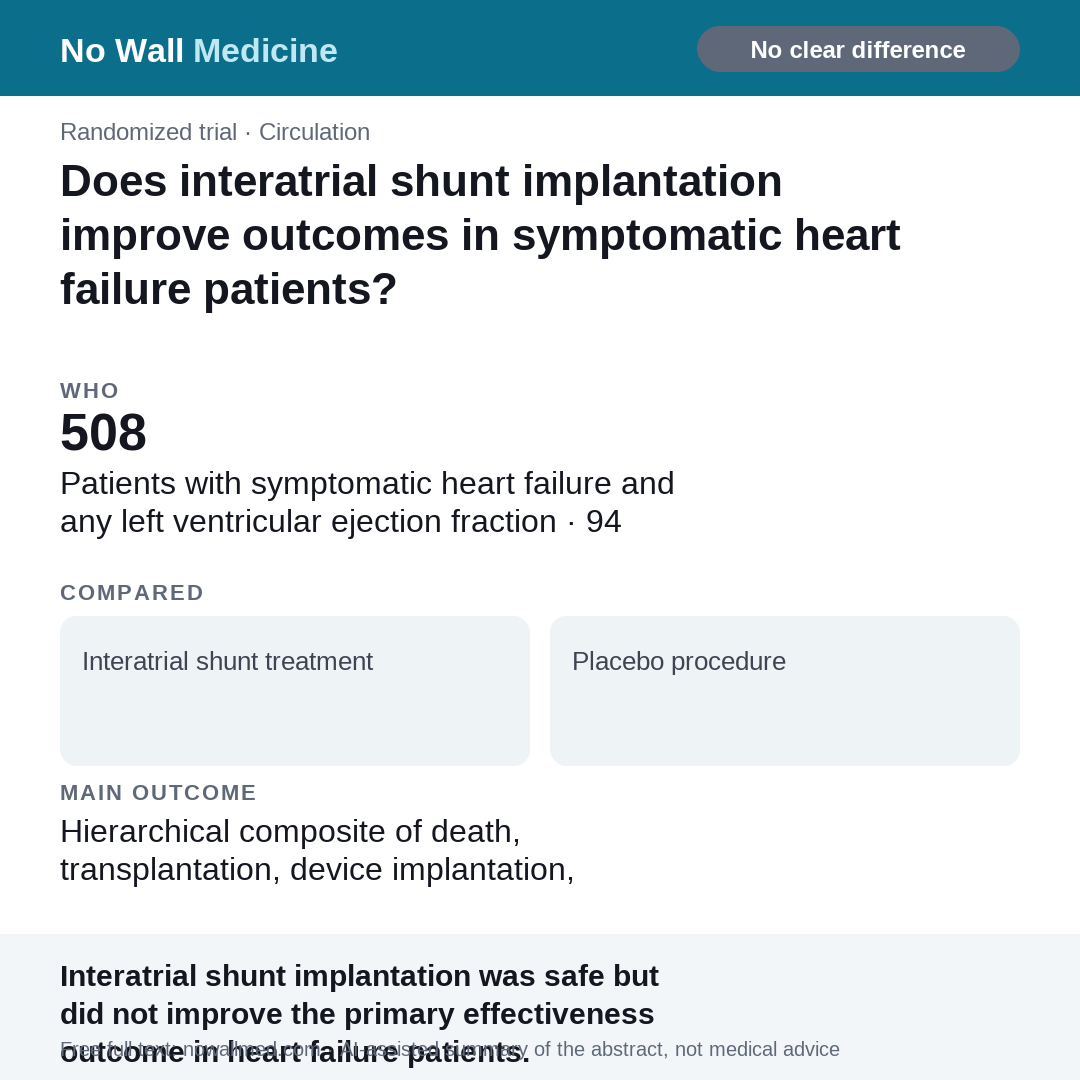
Clinical question: Does interatrial shunt implantation improve outcomes in symptomatic heart failure patients?
Why it matters: It was unknown if an interatrial shunt could improve symptoms and prognosis by decreasing left atrial pressure in patients with heart failure.
Key points
- Researchers randomized 508 patients with symptomatic heart failure to receive either an interatrial shunt implantation or a placebo procedure.
- The primary effectiveness outcome showed no difference between the shunt and placebo groups with a win ratio of 0.86 (95% CI, 0.61-1.22; P=0.20).
- In exploratory analyses, patients with reduced left ventricular ejection fraction had fewer adverse cardiovascular events, while those with preserved ejection fraction had more.
Headline and key points written with AI from the paper’s abstract, with every number checked against it. Read the paper before relying on them.
Was this summary helpful?
Subject terms
Cite this article
Stone GW, Lindenfeld J, Rodés-Cabau J, Anker SD, Zile MR, Kar S. Interatrial Shunt Treatment for Heart Failure: The Randomized RELIEVE-HF Trial. Circulation. 2024. doi:10.1161/CIRCULATIONAHA.124.070870
Spotted a mistake? Suggest a correction
Top studies every Monday
The week’s key trials and guidelines in your specialties, plus any topics you follow. By email, free.
Get the weekly digest