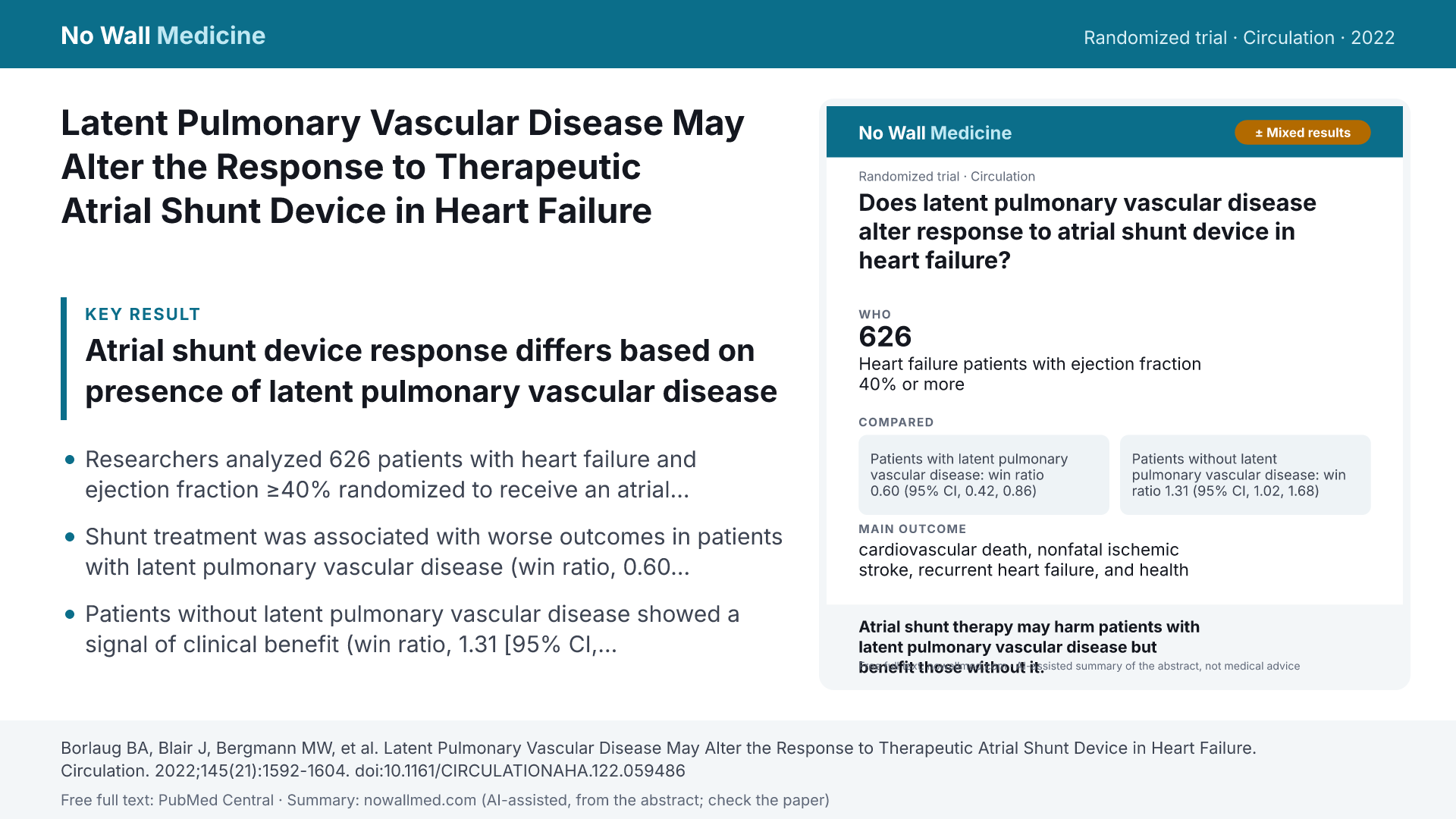
Atrial shunt device response differs based on presence of latent pulmonary vascular disease
Latent Pulmonary Vascular Disease May Alter the Response to Therapeutic Atrial Shunt Device in Heart Failure
Randomized trialMixed results
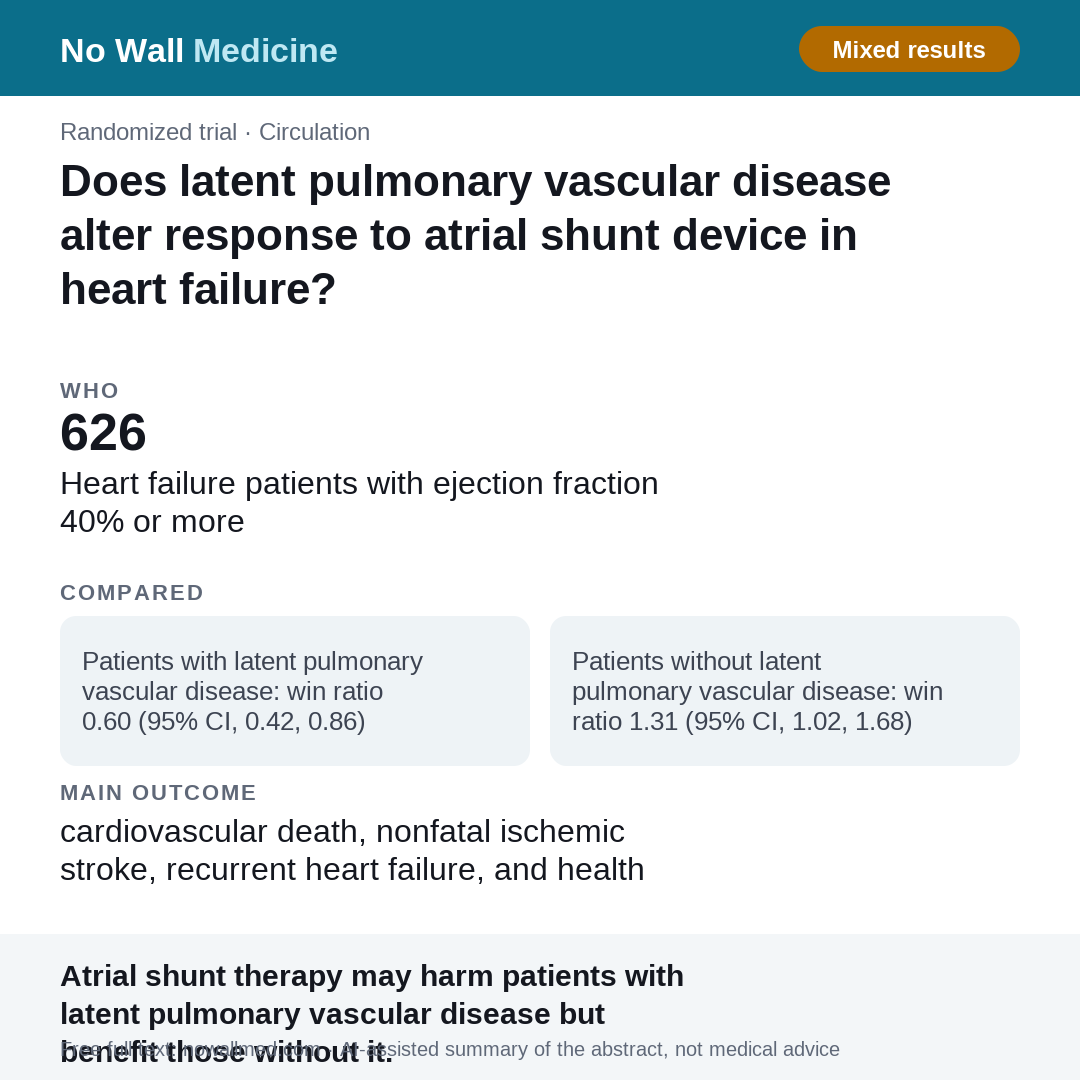
Does latent pulmonary vascular disease alter response to atrial shunt device in heart failure?
Who
626
Heart failure patients with ejection fraction 40% or more
Compared
Patients with latent pulmonary vascular disease: win ratio 0.60 (95% CI, 0.42, 0.86)
Patients without latent pulmonary vascular disease: win ratio 1.31 (95% CI, 1.02, 1.68)
Main outcome
cardiovascular death, nonfatal ischemic stroke, recurrent heart failure, and health status
Result: win ratio 0.60 (95% CI, 0.42, 0.86) for PVD; 1.31 (95% CI, 1.02, 1.68) for no PVD
Bottom line: Atrial shunt therapy may harm patients with latent pulmonary vascular disease but benefit those without it.
Circulation · 2022-03-31Download image
Clinical question: Does latent pulmonary vascular disease alter response to atrial shunt device in heart failure?
Why it matters: It was unknown if latent pulmonary vascular disease, defined as elevated resistance in the lung vessels during exercise, affects how patients respond to atrial shunt devices.
Key points
- Researchers analyzed 626 patients with heart failure and ejection fraction ≥40% randomized to receive an atrial shunt device or a sham control.
- Shunt treatment was associated with worse outcomes in patients with latent pulmonary vascular disease (win ratio, 0.60 [95% CI, 0.42, 0.86]; P=0.005).
- Patients without latent pulmonary vascular disease showed a signal of clinical benefit (win ratio, 1.31 [95% CI, 1.02, 1.68]; P=0.038).
Headline and key points written with AI from the paper’s abstract, with every number checked against it. Read the paper before relying on them.
Was this summary helpful?
Subject terms
Cite this article
Borlaug BA, Blair J, Bergmann MW, et al. Latent Pulmonary Vascular Disease May Alter the Response to Therapeutic Atrial Shunt Device in Heart Failure. Circulation. 2022. doi:10.1161/CIRCULATIONAHA.122.059486
Spotted a mistake? Suggest a correction