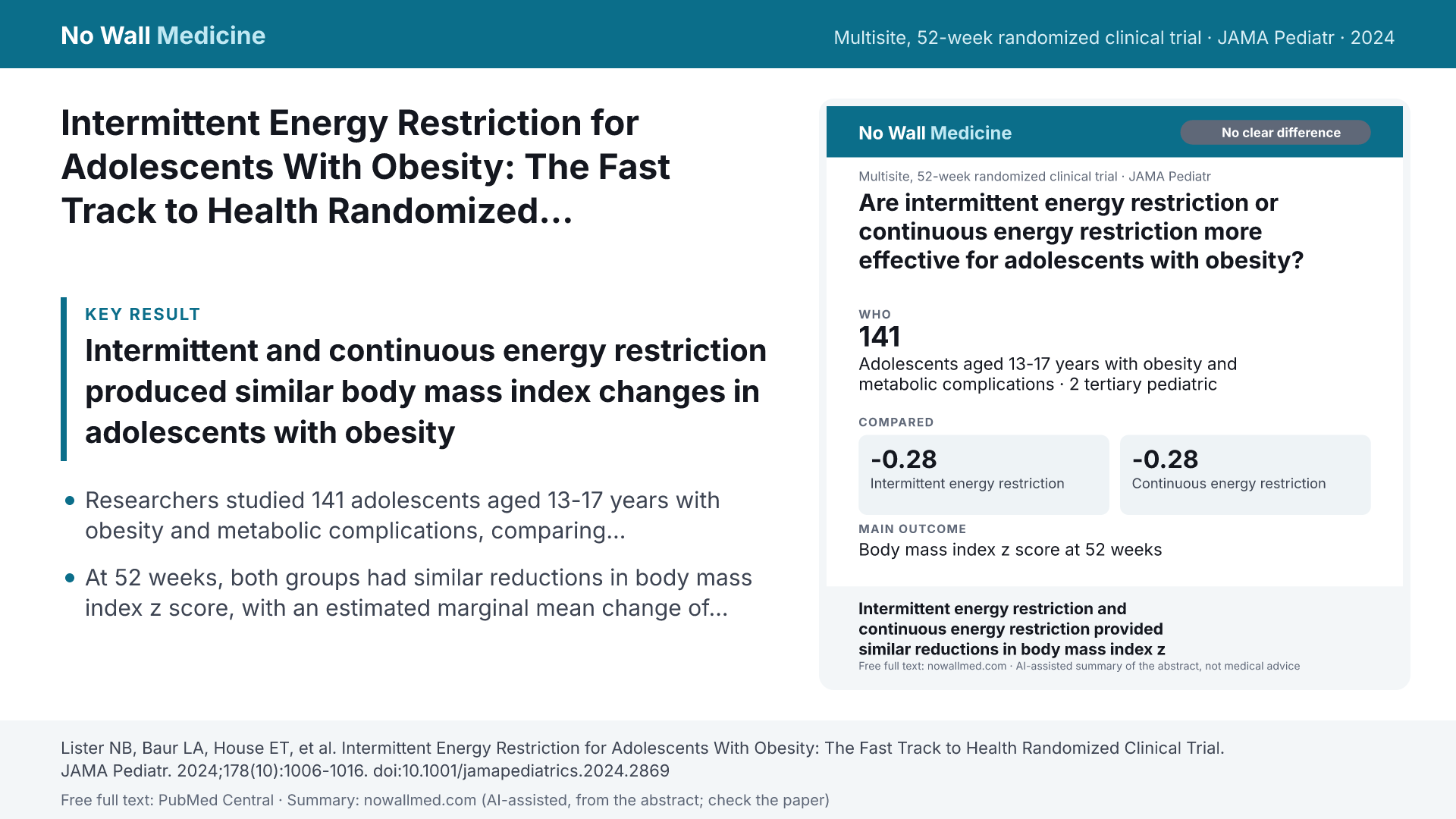
Intermittent and continuous energy restriction produced similar body mass index changes in adolescents with obesity
Intermittent Energy Restriction for Adolescents With Obesity: The Fast Track to Health Randomized Clinical Trial
Multisite, 52-week randomized clinical trialNo clear difference
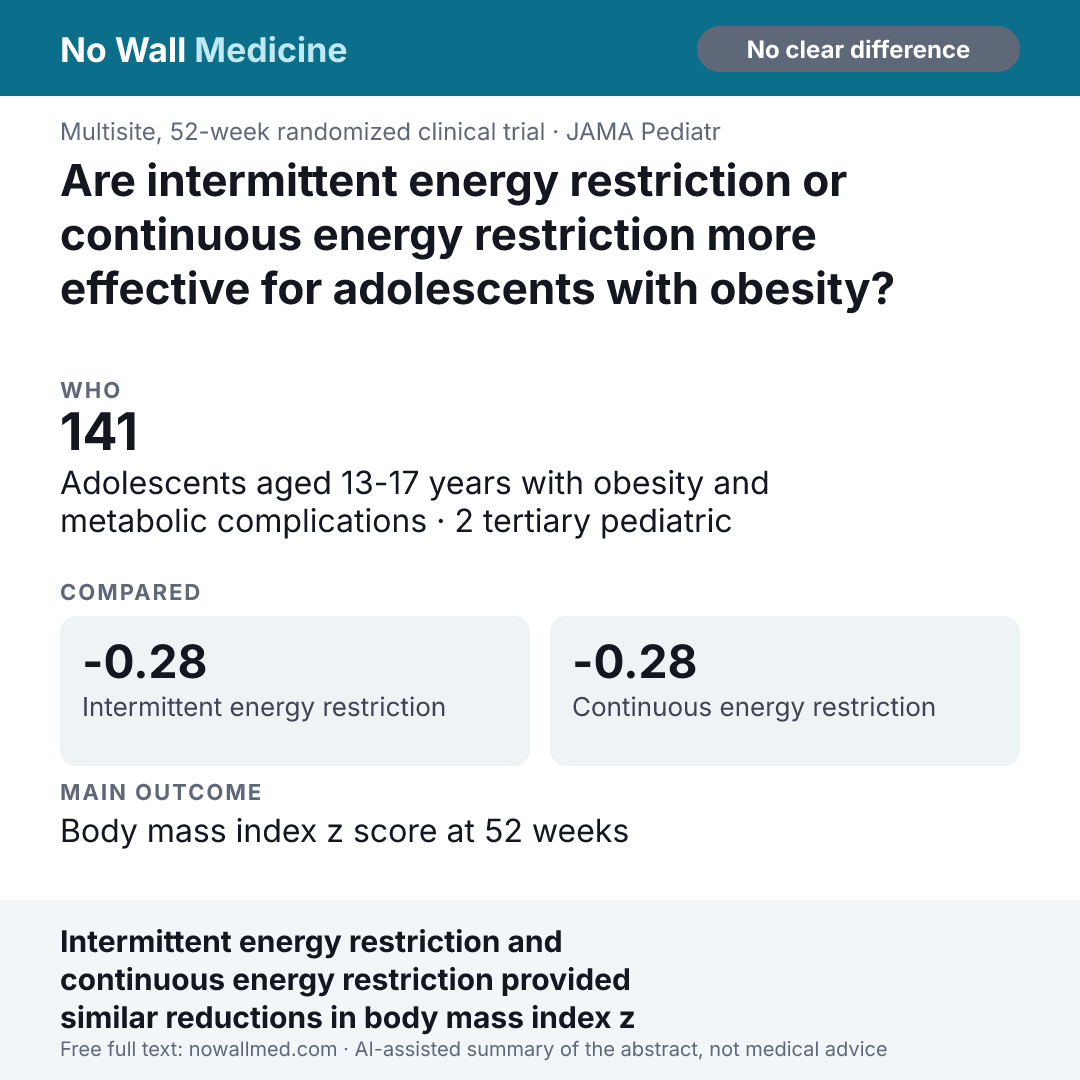
Are intermittent energy restriction or continuous energy restriction more effective for adolescents with obesity?
Who
141
Adolescents aged 13-17 years with obesity and metabolic complications · 2 tertiary pediatric centers in Australia
Compared
-0.28Intermittent energy restriction (95% CI, -0.37 to -0.20)
-0.28Continuous energy restriction (95% CI, -0.36 to -0.20)
Main outcome
Body mass index z score at 52 weeks
Result: no difference in BMI z score change between groups
Bottom line: Intermittent energy restriction and continuous energy restriction provided similar reductions in body mass index z score in adolescents.
JAMA Pediatr · 2024-08-26 · Save PNG
Same trial (ACTRN12617001630303)
Papers we list that report this registered trial, oldest first. Read a secondary analysis alongside the main results.
- Main results No clear difference
This paper JAMA Pediatr 2024-08 - Related analysis No clear difference
Dietary interventions showed no difference in depression or eating disorder symptoms among adolescents with obesity JAMA Pediatr 2024-08
Clinical question: Are intermittent energy restriction or continuous energy restriction more effective for adolescents with obesity?
Key points
- Researchers studied 141 adolescents aged 13-17 years with obesity and metabolic complications, comparing intermittent energy restriction to continuous energy restriction over 52 weeks.
- At 52 weeks, both groups had similar reductions in body mass index z score, with an estimated marginal mean change of -0.28 for both groups.
- No differences were found between the two diet groups regarding body composition, dyslipidemia, or hepatic function outcomes.
Headline and key points written with AI from the paper’s abstract, with every number checked against it. Read the paper before relying on them.
Was this summary helpful?
Subject terms
Headline, design, result, key points, caveat and citation as plain text.
Cite this article
Lister NB, Baur LA, House ET, et al. Intermittent Energy Restriction for Adolescents With Obesity: The Fast Track to Health Randomized Clinical Trial. JAMA Pediatr. 2024;178(10):1006-1016. doi:10.1001/jamapediatrics.2024.2869
Spotted a mistake? Suggest a correction