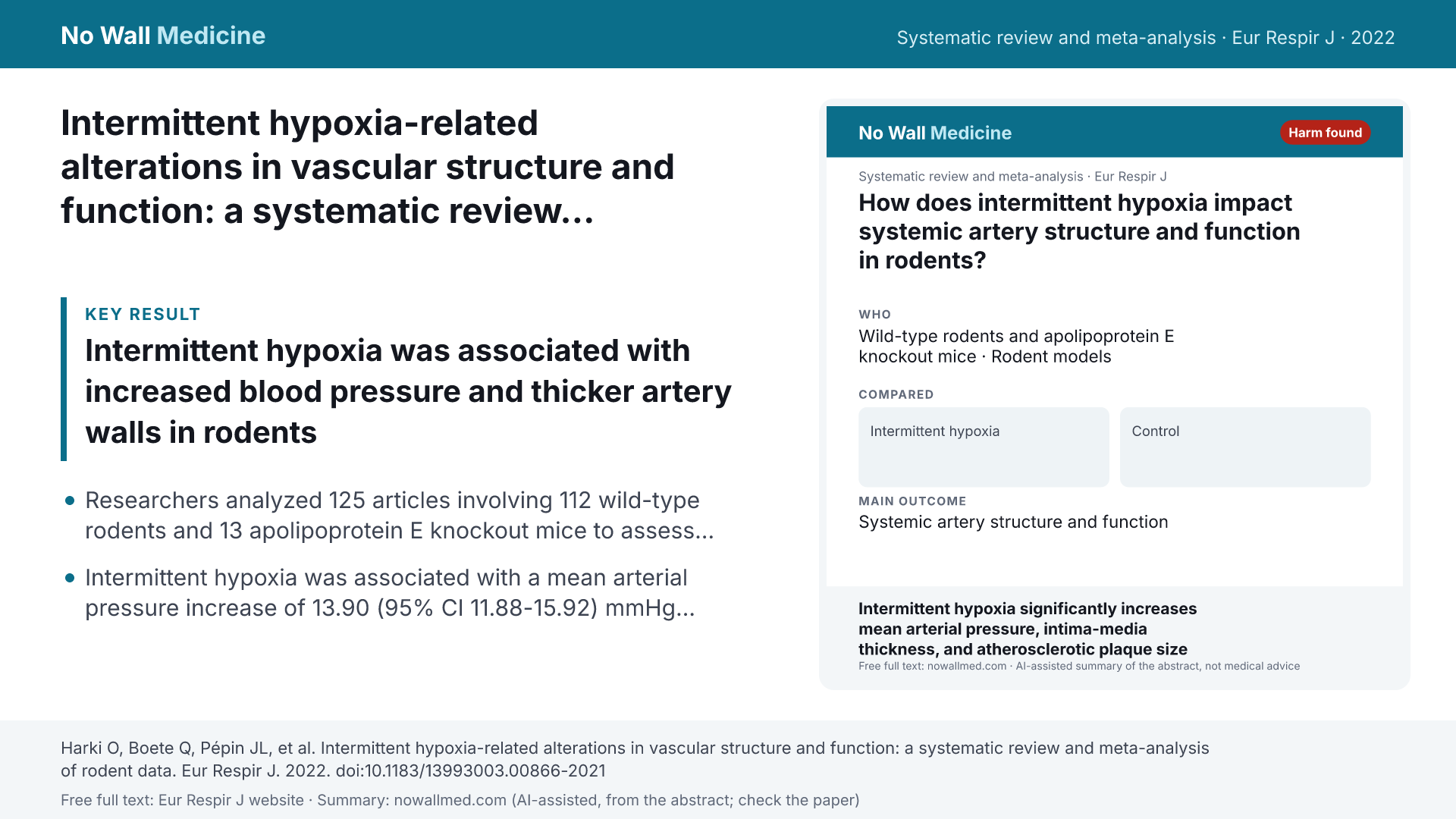
Intermittent hypoxia was associated with increased blood pressure and thicker artery walls in rodents
Intermittent hypoxia-related alterations in vascular structure and function: a systematic review and meta-analysis of rodent data
Systematic review and meta-analysisHarm found
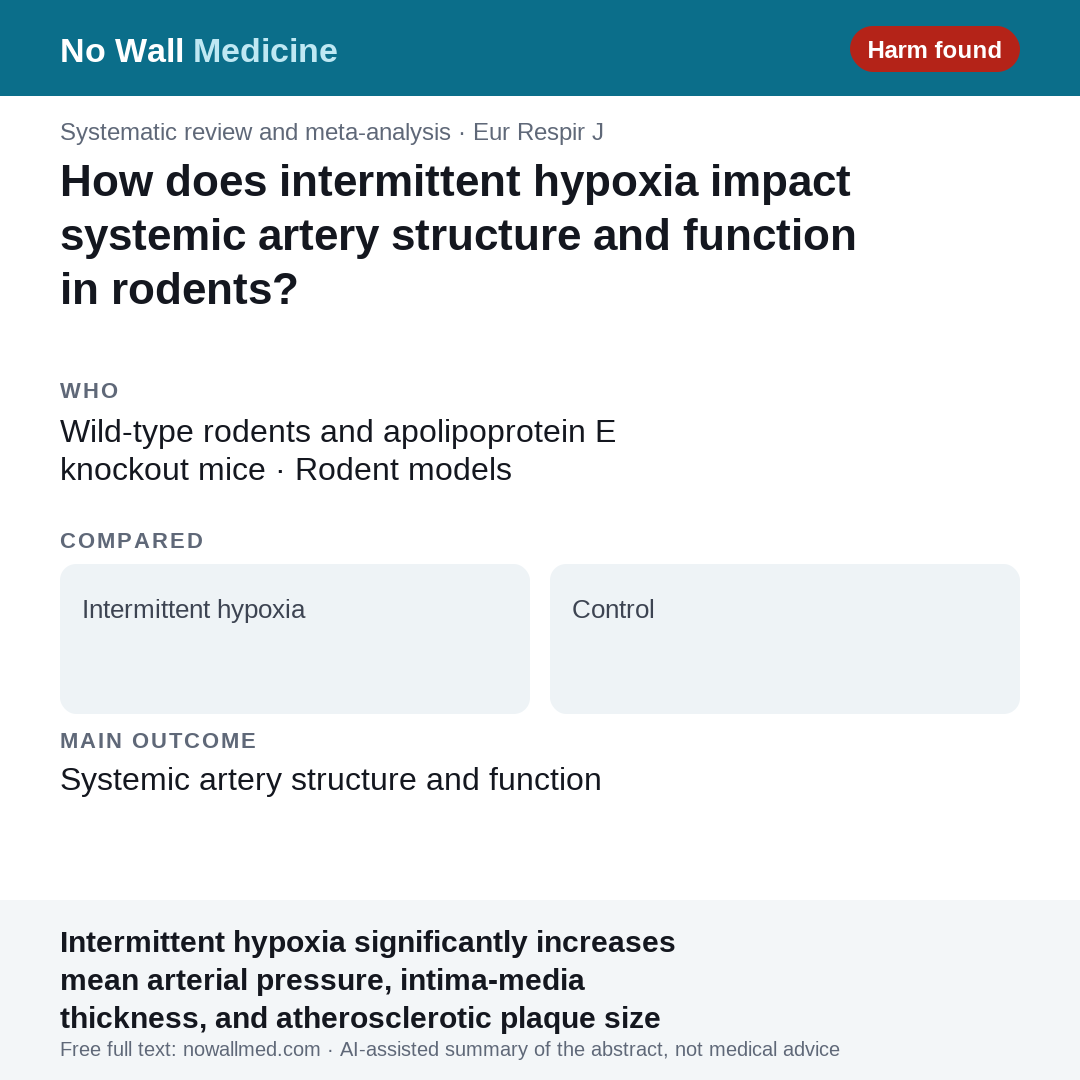
How does intermittent hypoxia impact systemic artery structure and function in rodents?
Who
Wild-type rodents and apolipoprotein E knockout mice · Rodent models
Compared
Intermittent hypoxia
Control
Main outcome
Systemic artery structure and function
Bottom line: Intermittent hypoxia significantly increases mean arterial pressure, intima-media thickness, and atherosclerotic plaque size in rodents.
Limitation: Heterogeneity in rodent species, severity, and duration of intermittent hypoxia exposure.
Eur Respir J · 2022-03-17Download image
Clinical question: How does intermittent hypoxia impact systemic artery structure and function in rodents?
Why it matters: The overall impact of intermittent hypoxia on systemic artery structure and function is difficult to interpret due to differences in rodent species and exposure severity.
Key points
- Researchers analyzed 125 articles involving 112 wild-type rodents and 13 apolipoprotein E knockout mice to assess the impact of intermittent hypoxia on vascular health.
- Intermittent hypoxia was associated with a mean arterial pressure increase of 13.90 (95% CI 11.88-15.92) mmHg and increased intima-media thickness, which is the thickness of the inner layers of an artery.
- Intermittent hypoxia was associated with increased atherosclerotic plaque size in apolipoprotein E knockout mice with a standardized mean difference of 1.08 (95% CI 0.80-1.37).
Headline and key points written with AI from the paper’s abstract, with every number checked against it. Read the paper before relying on them.
Was this summary helpful?
Subject terms
Cite this article
Harki O, Boete Q, Pépin JL, Arnaud C, Belaidi E, Faury G. Intermittent hypoxia-related alterations in vascular structure and function: a systematic review and meta-analysis of rodent data. Eur Respir J. 2022. doi:10.1183/13993003.00866-2021
Spotted a mistake? Suggest a correction
Top studies every Monday
The week’s key trials and guidelines in your specialties, plus any topics you follow. By email, free.
Get the weekly digest