Intermittent hypoxia-related alterations in vascular structure and function: a systematic review and meta-analysis of rodent data
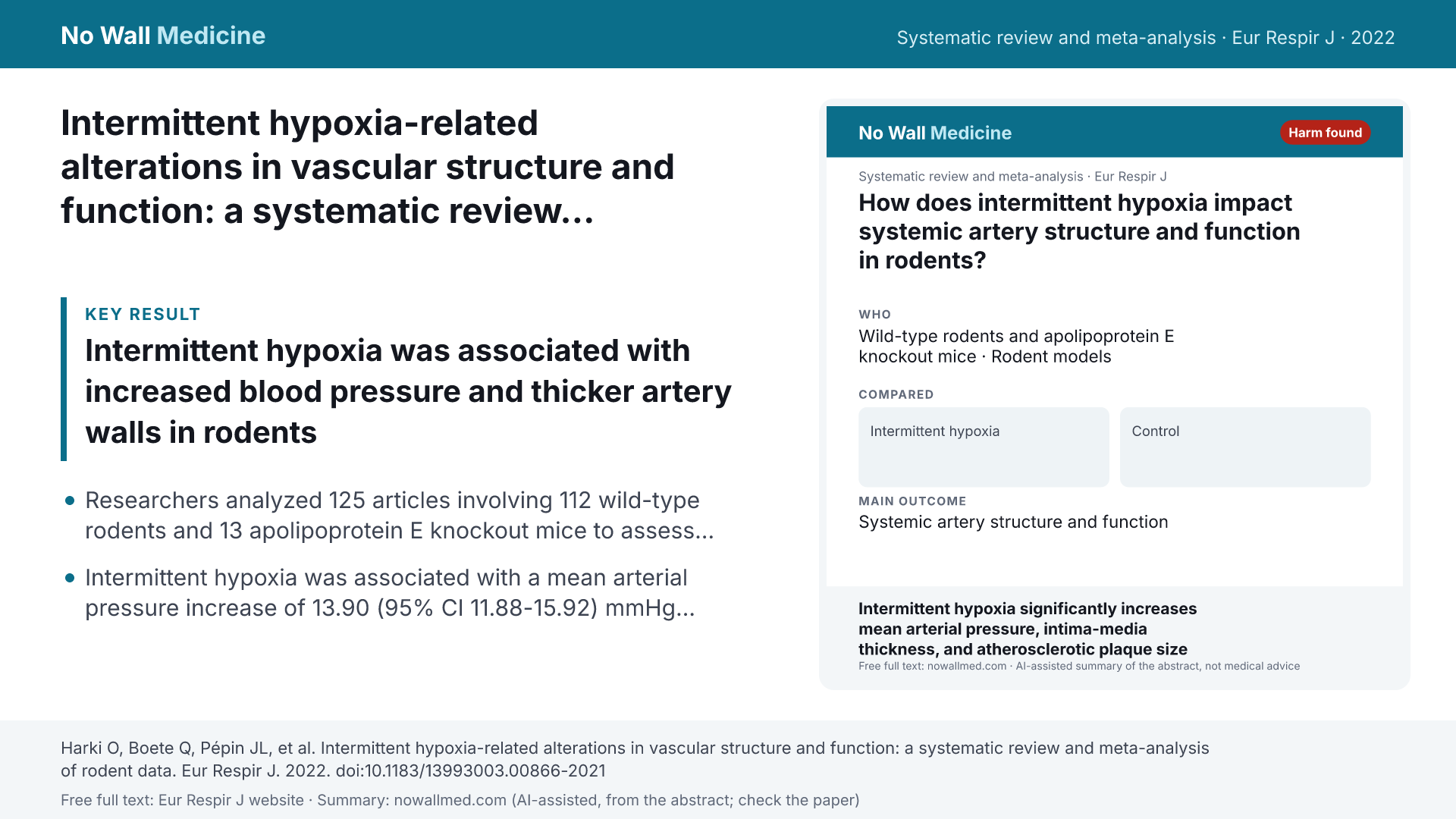
Key result: Intermittent hypoxia was associated with increased blood pressure and thicker artery walls in rodents
Key points
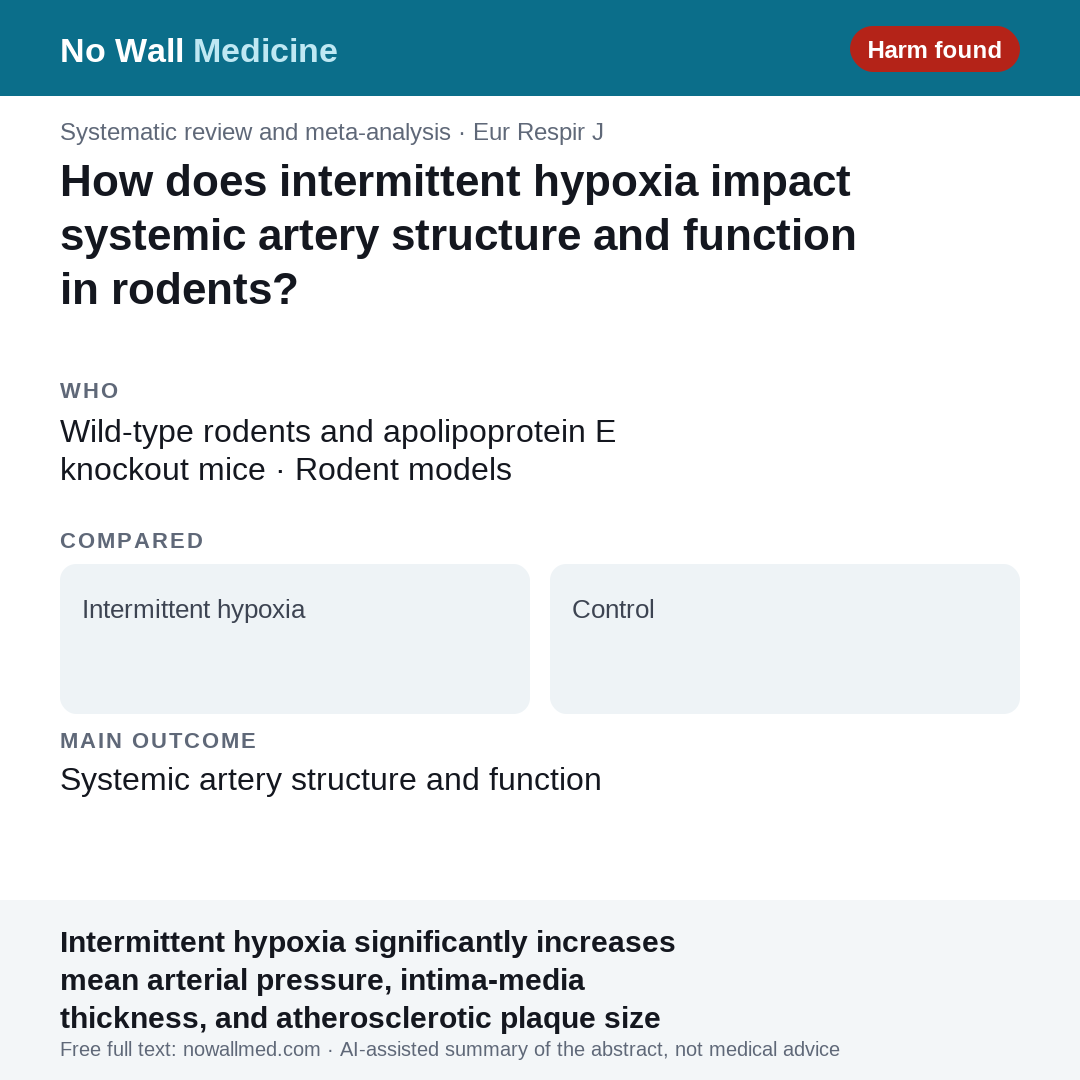
- Researchers analyzed 125 articles involving 112 wild-type rodents and 13 apolipoprotein E knockout mice to assess the impact of intermittent hypoxia on vascular health.
- Intermittent hypoxia was associated with a mean arterial pressure increase of 13.90 (95% CI 11.88-15.92) mmHg and increased intima-media thickness, which is the thickness of the inner layers of an artery.
- Intermittent hypoxia was associated with increased atherosclerotic plaque size in apolipoprotein E knockout mice with a standardized mean difference of 1.08 (95% CI 0.80-1.37).
Why it matters: The overall impact of intermittent hypoxia on systemic artery structure and function is difficult to interpret due to differences in rodent species and exposure severity.
Discussion prompts
- Would these patients look like yours? Who was left out?
- Is the main outcome one that matters to patients?
- Is the difference large enough to change what you do?
Cite: Harki O, Boete Q, Pépin JL, Arnaud C, Belaidi E, Faury G. Intermittent hypoxia-related alterations in vascular structure and function: a systematic review and meta-analysis of rodent data. Eur Respir J. 2022. doi:10.1183/13993003.00866-2021
Free full text: Eur Respir J website · Summary and visual abstract: nowallmed.com/a/intermittent-hypoxia-related-alterations-in-vascular-structure-and-1m683og/ (AI-assisted from the abstract; check the paper before relying on it).