Intermittent intravenous paracetamol used as primary analgesic reduced morphine consumption in infants after cardiac surgery
Intermittent intravenous paracetamol versus continuous morphine in infants undergoing cardiothoracic surgery: a multi-center randomized controlled trial
Randomized, double-blinded trialBenefit found
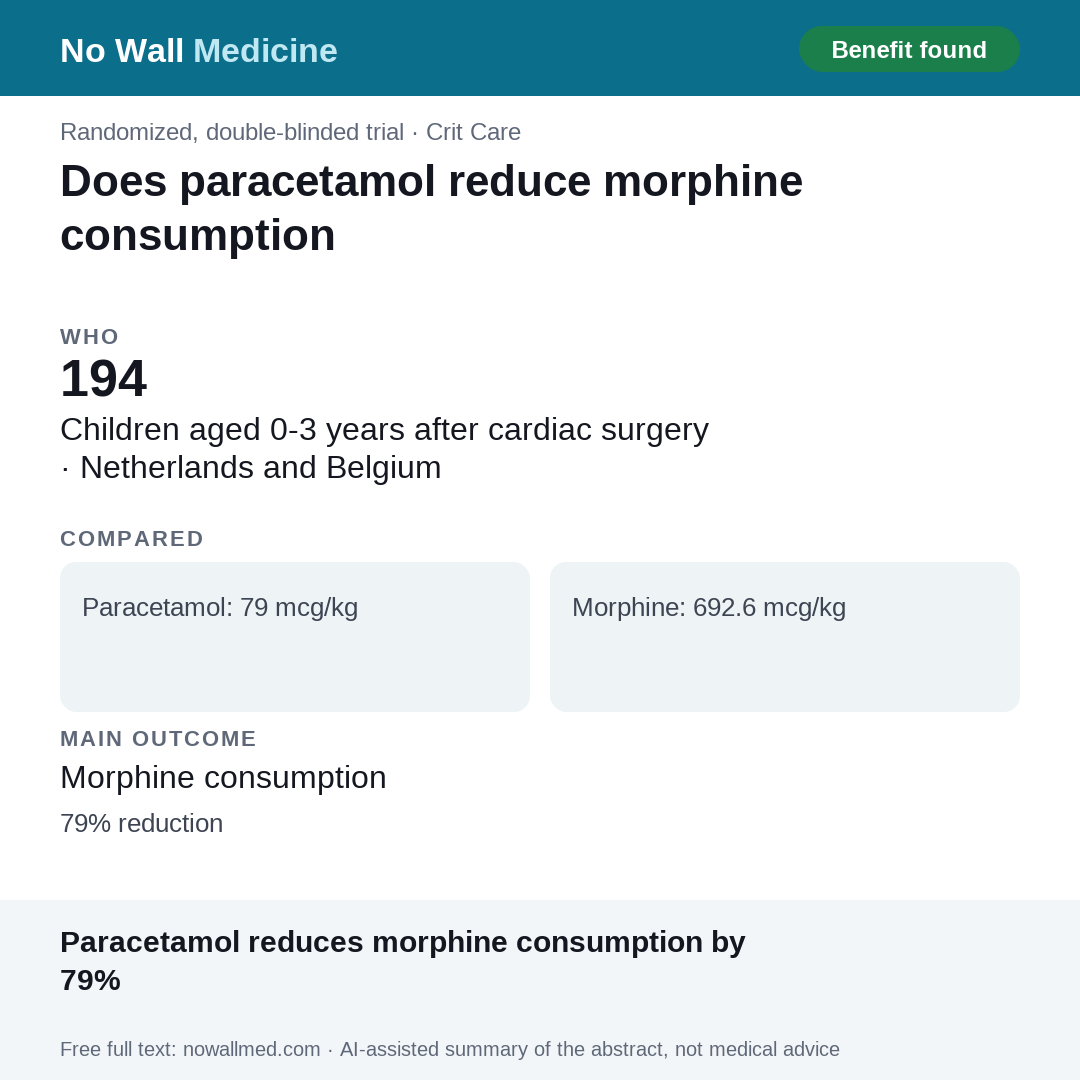
Does paracetamol reduce morphine consumption
Who
194
Children aged 0-3 years after cardiac surgery · Netherlands and Belgium
Compared
Paracetamol: 79 mcg/kg
Morphine: 692.6 mcg/kg
Main outcome
Morphine consumption
Result: 79% reduction
Bottom line: Paracetamol reduces morphine consumption by 79%
Crit Care · 2024-04-30Download image
Why it matters: It was unknown if intermittent intravenous paracetamol could serve as a primary analgesic to reduce morphine requirements in infants following cardiac surgery.
Key points
- Researchers studied 194 infants aged 0-3 years undergoing heart surgery with cardiopulmonary bypass, comparing intermittent intravenous paracetamol to continuous morphine.
- The median weight-adjusted cumulative morphine dose in the paracetamol group was 79% lower than the morphine group during the first 48 hours postoperative (79 mcg/kg vs 692.6 mcg/kg).
- There was no significant difference in rescue morphine consumption between the two groups and pain scores were similar.
Headline and key points written with AI from the paper’s abstract, with every number checked against it. Read the paper before relying on them.
Was this summary helpful?
Subject terms
Cite this article
Zeilmaker-Roest G, de Vries-Rink C, van Rosmalen J, van Dijk M, de Wildt SN, Knibbe CAJ. Intermittent intravenous paracetamol versus continuous morphine in infants undergoing cardiothoracic surgery: a multi-center randomized controlled trial. Crit Care. 2024. doi:10.1186/s13054-024-04905-3
Spotted a mistake? Suggest a correction
Top studies every Monday
The week’s key trials and guidelines in your specialties, plus any topics you follow. By email, free.
Get the weekly digest