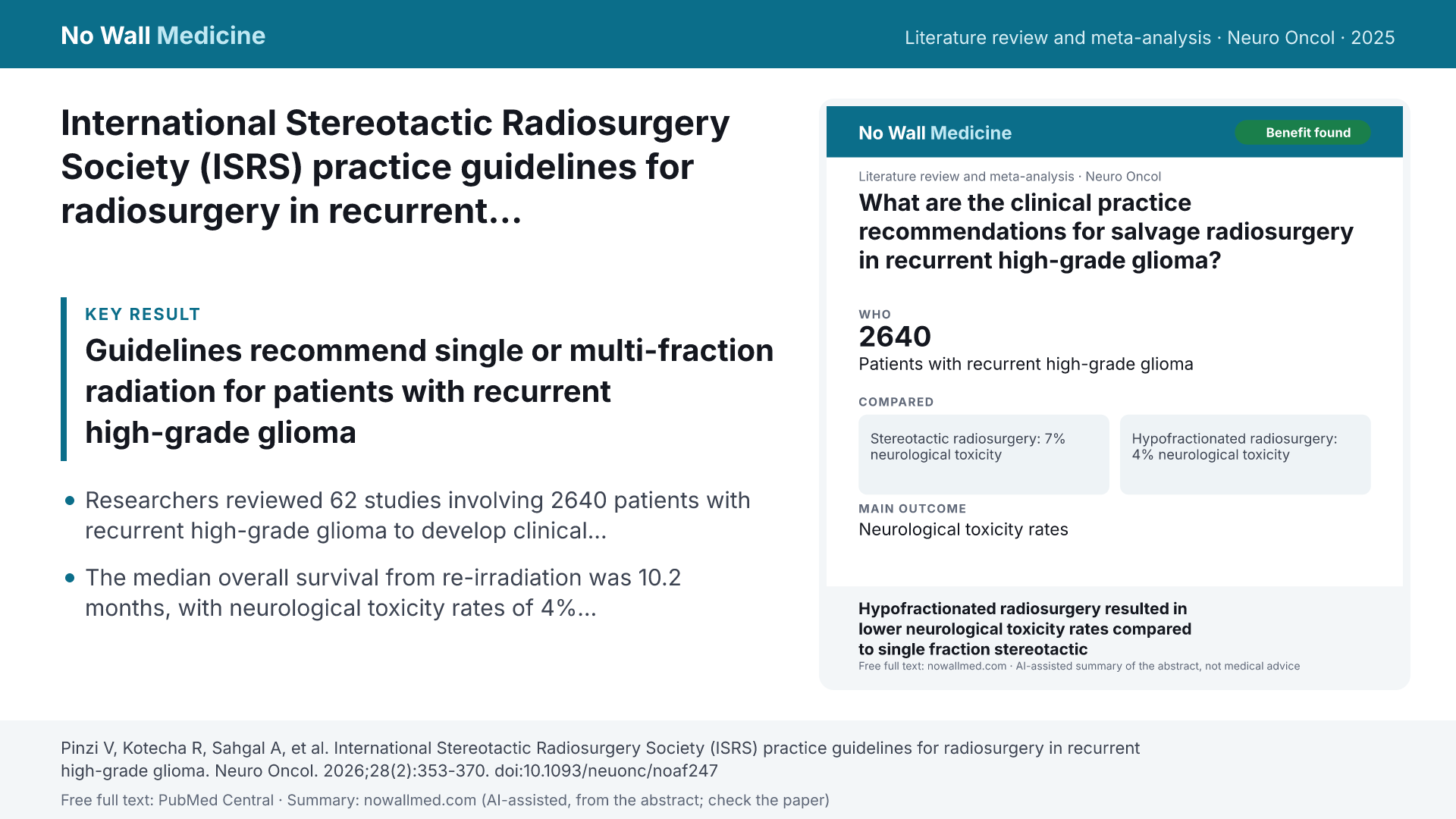
Guidelines recommend single or multi-fraction radiation for patients with recurrent high-grade glioma
International Stereotactic Radiosurgery Society (ISRS) practice guidelines for radiosurgery in recurrent high-grade glioma
Literature review and meta-analysisBenefit found
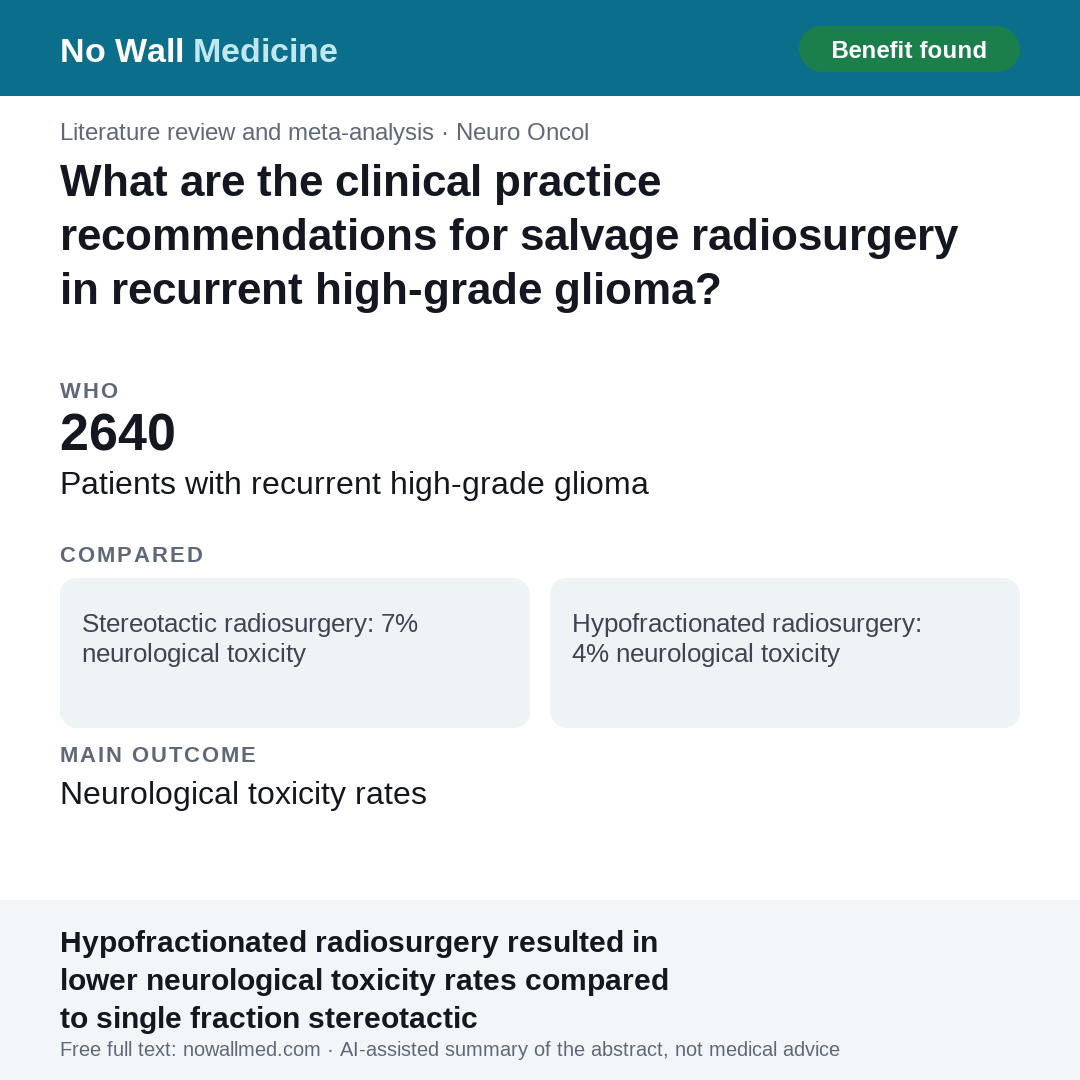
What are the clinical practice recommendations for salvage radiosurgery in recurrent high-grade glioma?
Who
2640
Patients with recurrent high-grade glioma
Compared
Stereotactic radiosurgery: 7% neurological toxicity
Hypofractionated radiosurgery: 4% neurological toxicity
Main outcome
Neurological toxicity rates
Bottom line: Hypofractionated radiosurgery resulted in lower neurological toxicity rates compared to single fraction stereotactic radiosurgery.
Limitation: Limited prospective data
Neuro Oncol · 2025-10-27Download image
Clinical question: What are the clinical practice recommendations for salvage radiosurgery in recurrent high-grade glioma?
Why it matters: There is currently no standard-of-care salvage treatment approach for patients whose high-grade glioma has returned after initial therapy.
Key points
- Researchers reviewed 62 studies involving 2640 patients with recurrent high-grade glioma to develop clinical practice recommendations.
- The median overall survival from re-irradiation was 10.2 months, with neurological toxicity rates of 4% for hypofractionated radiosurgery versus 7% for single-fraction stereotactic radiosurgery.
- A cumulative equivalent dose in two fractions (EQD2) greater than 120-130 Gy was associated with a higher risk of radiation necrosis.
Limitation the authors note: The authors state that no definitive conclusions can be drawn due to limited prospective data.
Headline and key points written with AI from the paper’s abstract, with every number checked against it. Read the paper before relying on them.
Was this summary helpful?
Subject terms
Cite this article
Pinzi V, Kotecha R, Sahgal A, Gorgulho A, Lim-Fat MJ, Levivier M. International Stereotactic Radiosurgery Society (ISRS) practice guidelines for radiosurgery in recurrent high-grade glioma. Neuro Oncol. 2025. doi:10.1093/neuonc/noaf247
Spotted a mistake? Suggest a correction