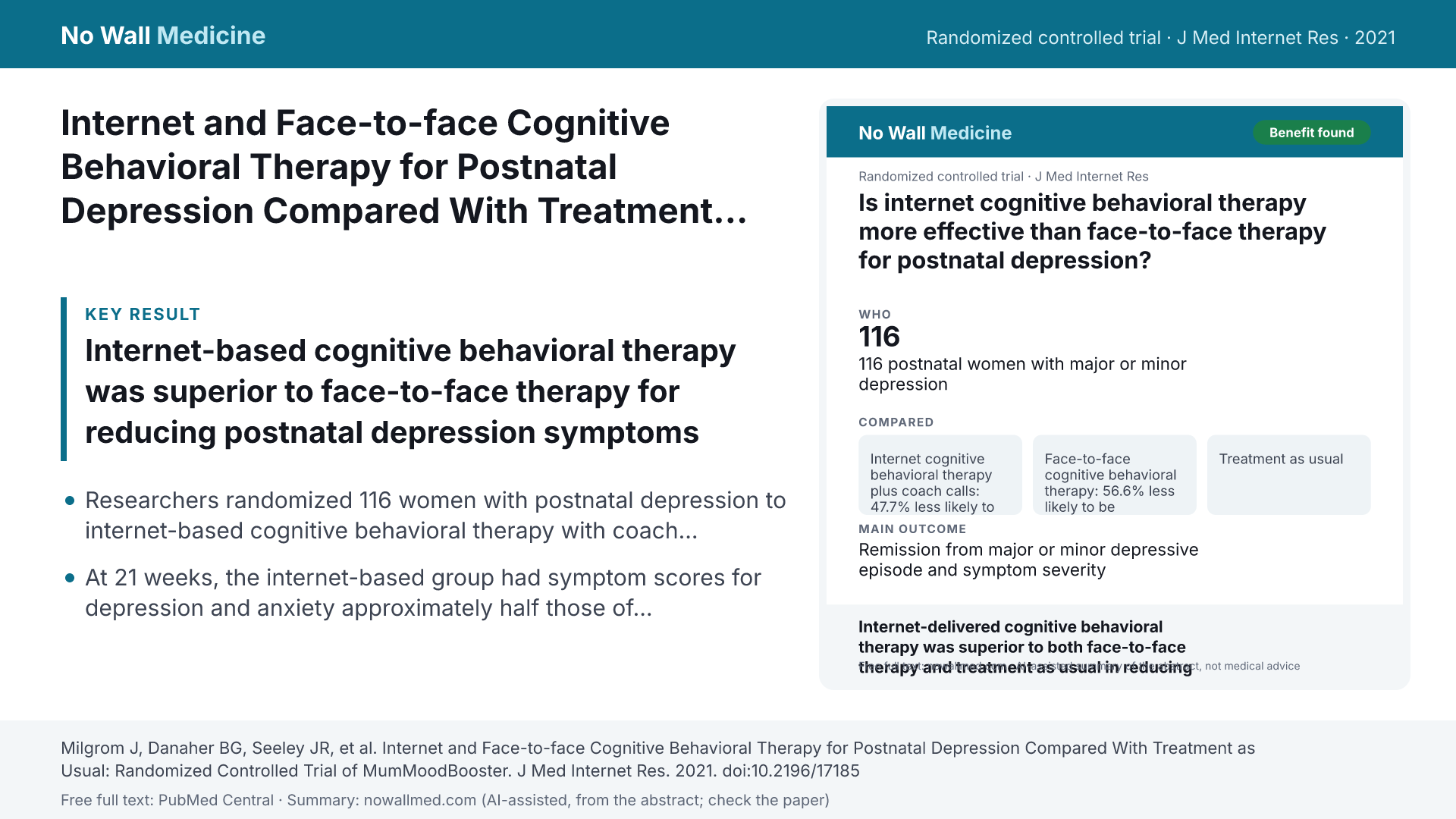
Internet-based cognitive behavioral therapy was superior to face-to-face therapy for reducing postnatal depression symptoms
Internet and Face-to-face Cognitive Behavioral Therapy for Postnatal Depression Compared With Treatment as Usual: Randomized Controlled Trial of MumMoodBooster
Randomized controlled trialBenefit found
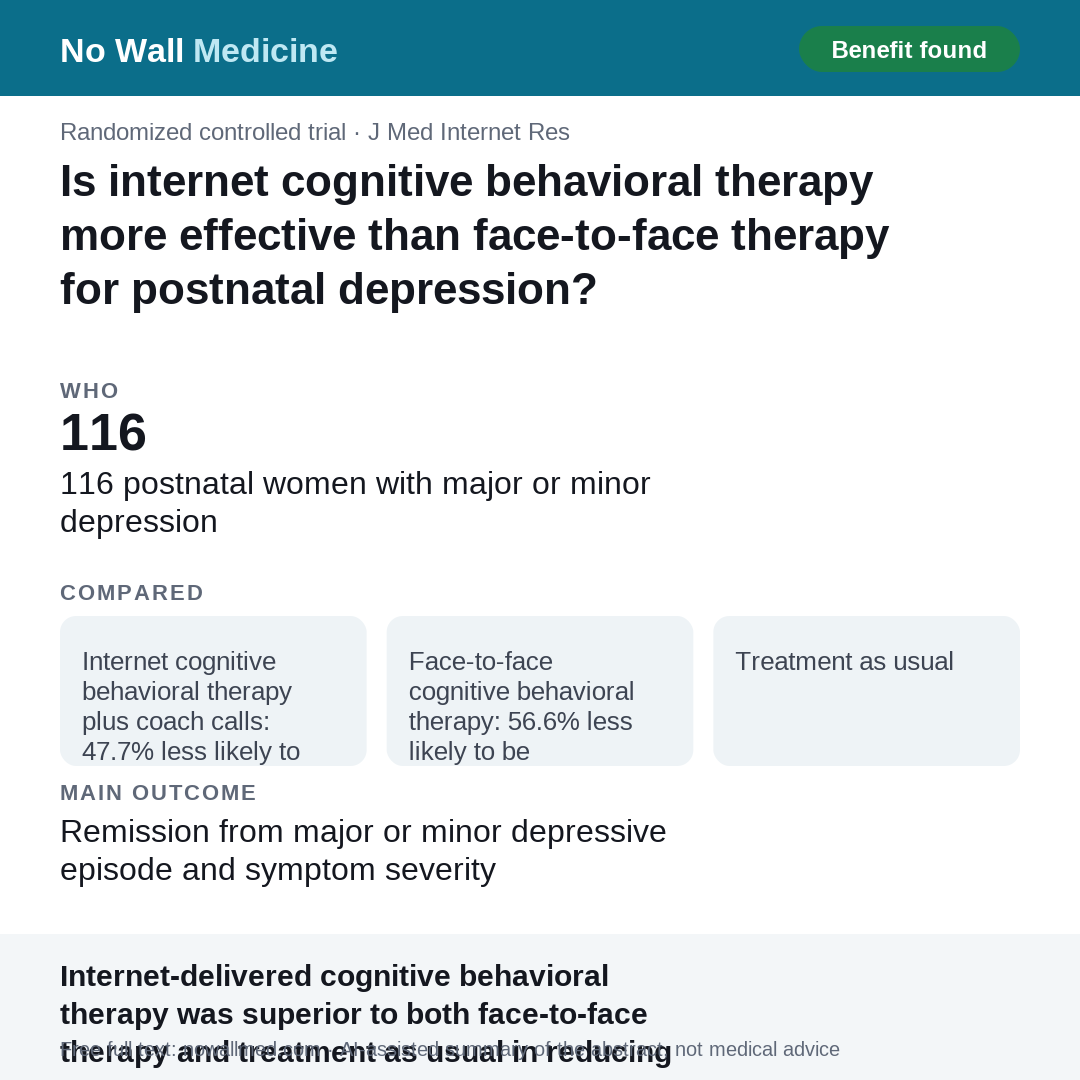
Is internet cognitive behavioral therapy more effective than face-to-face therapy for postnatal depression?
Who
116
116 postnatal women with major or minor depression
Compared
Internet cognitive behavioral therapy plus coach calls: 47.7% less likely to be depressed
Face-to-face cognitive behavioral therapy: 56.6% less likely to be depressed
Treatment as usual
Main outcome
Remission from major or minor depressive episode and symptom severity
Bottom line: Internet-delivered cognitive behavioral therapy was superior to both face-to-face therapy and treatment as usual in reducing symptom severity.
Limitation: Results may not generalize as participants were willing to undertake either treatment modality.
J Med Internet Res · 2021-12-08Download image
Clinical question: Is internet cognitive behavioral therapy more effective than face-to-face therapy for postnatal depression?
Why it matters: It was unknown whether internet-delivered cognitive behavioral therapy is as effective as face-to-face treatment for women clinically diagnosed with postnatal depression.
Key points
- Researchers randomized 116 women with postnatal depression to internet-based cognitive behavioral therapy with coach calls, face-to-face cognitive behavioral therapy, or treatment as usual.
- At 21 weeks, the internet-based group had symptom scores for depression and anxiety approximately half those of the face-to-face or treatment as usual groups.
- While both face-to-face and internet-based therapies showed higher remission rates than treatment as usual, they were not significantly different from each other in achieving remission.
Limitation the authors note: The results may not be generalizable because randomized trials comparing internet and face-to-face treatments involve a subset of people willing to use either method.
Headline and key points written with AI from the paper’s abstract, with every number checked against it. Read the paper before relying on them.
Was this summary helpful?
Subject terms
Cite this article
Milgrom J, Danaher BG, Seeley JR, et al. Internet and Face-to-face Cognitive Behavioral Therapy for Postnatal Depression Compared With Treatment as Usual: Randomized Controlled Trial of MumMoodBooster. J Med Internet Res. 2021. doi:10.2196/17185
Spotted a mistake? Suggest a correction