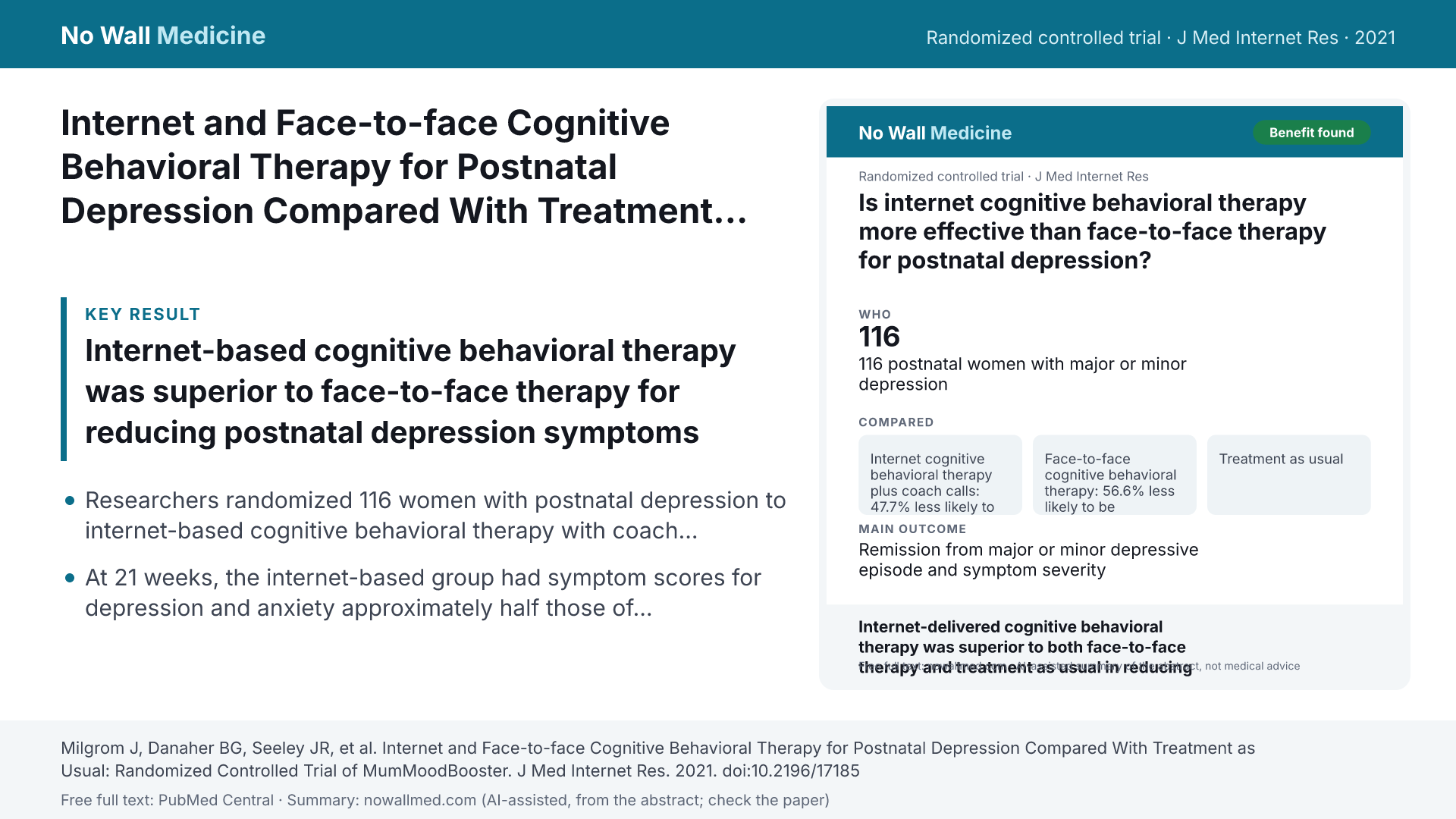
Internet and Face-to-face Cognitive Behavioral Therapy for Postnatal Depression Compared With Treatment as Usual: Randomized Controlled Trial of MumMoodBooster
Key result: Internet-based cognitive behavioral therapy was superior to face-to-face therapy for reducing postnatal depression symptoms
Key points
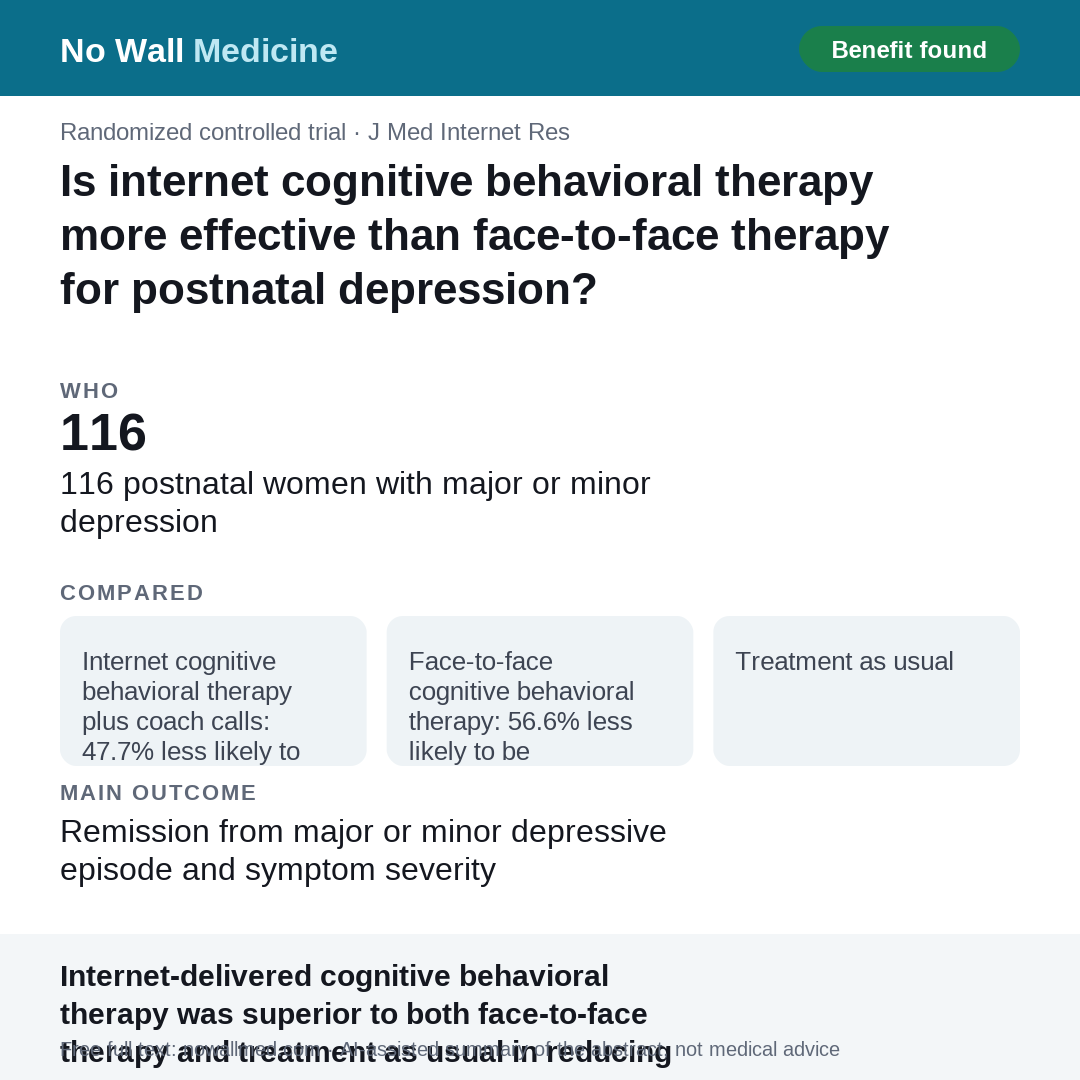
- Researchers randomized 116 women with postnatal depression to internet-based cognitive behavioral therapy with coach calls, face-to-face cognitive behavioral therapy, or treatment as usual.
- At 21 weeks, the internet-based group had symptom scores for depression and anxiety approximately half those of the face-to-face or treatment as usual groups.
- While both face-to-face and internet-based therapies showed higher remission rates than treatment as usual, they were not significantly different from each other in achieving remission.
Why it matters: It was unknown whether internet-delivered cognitive behavioral therapy is as effective as face-to-face treatment for women clinically diagnosed with postnatal depression.
Limitation the authors note: The results may not be generalizable because randomized trials comparing internet and face-to-face treatments involve a subset of people willing to use either method.
Discussion prompts
- Would these patients look like yours? Who was left out?
- Is the main outcome one that matters to patients?
- Is the difference large enough to change what you do?
Cite: Milgrom J, Danaher BG, Seeley JR, et al. Internet and Face-to-face Cognitive Behavioral Therapy for Postnatal Depression Compared With Treatment as Usual: Randomized Controlled Trial of MumMoodBooster. J Med Internet Res. 2021. doi:10.2196/17185
Free full text: PubMed Central · Summary and visual abstract: nowallmed.com/a/internet-and-face-to-face-cognitive-behavioral-therapy-for-postnatal-ob10f7/ (AI-assisted from the abstract; check the paper before relying on it).