Internet-based therapy did not reduce anxiety or depression symptoms at 1 year
Internet-Based Cognitive Behavioral Therapy for Patients Reporting Symptoms of Anxiety and Depression After Myocardial Infarction: U-CARE Heart Randomized Controlled Trial Twelve-Month Follow-up
Randomized controlled trialNo clear difference
Does internet-based cognitive behavioral therapy reduce anxiety and depression symptoms 12 months after myocardial infarction?
Who
239
Patients reporting mild-to-moderate anxiety or depression after myocardial infarction
Compared
Internet-based cognitive behavioral therapy
Treatment as usual
Main outcome
Hospital Anxiety and Depression Scale total score at 1 year
Result: β=-1.14, 95% CI -2.73 to 0.45
Bottom line: Internet-based cognitive behavioral therapy did not significantly reduce anxiety or depression symptoms 1 year after myocardial infarction.
J Med Internet Res · 2021-05-24Download image
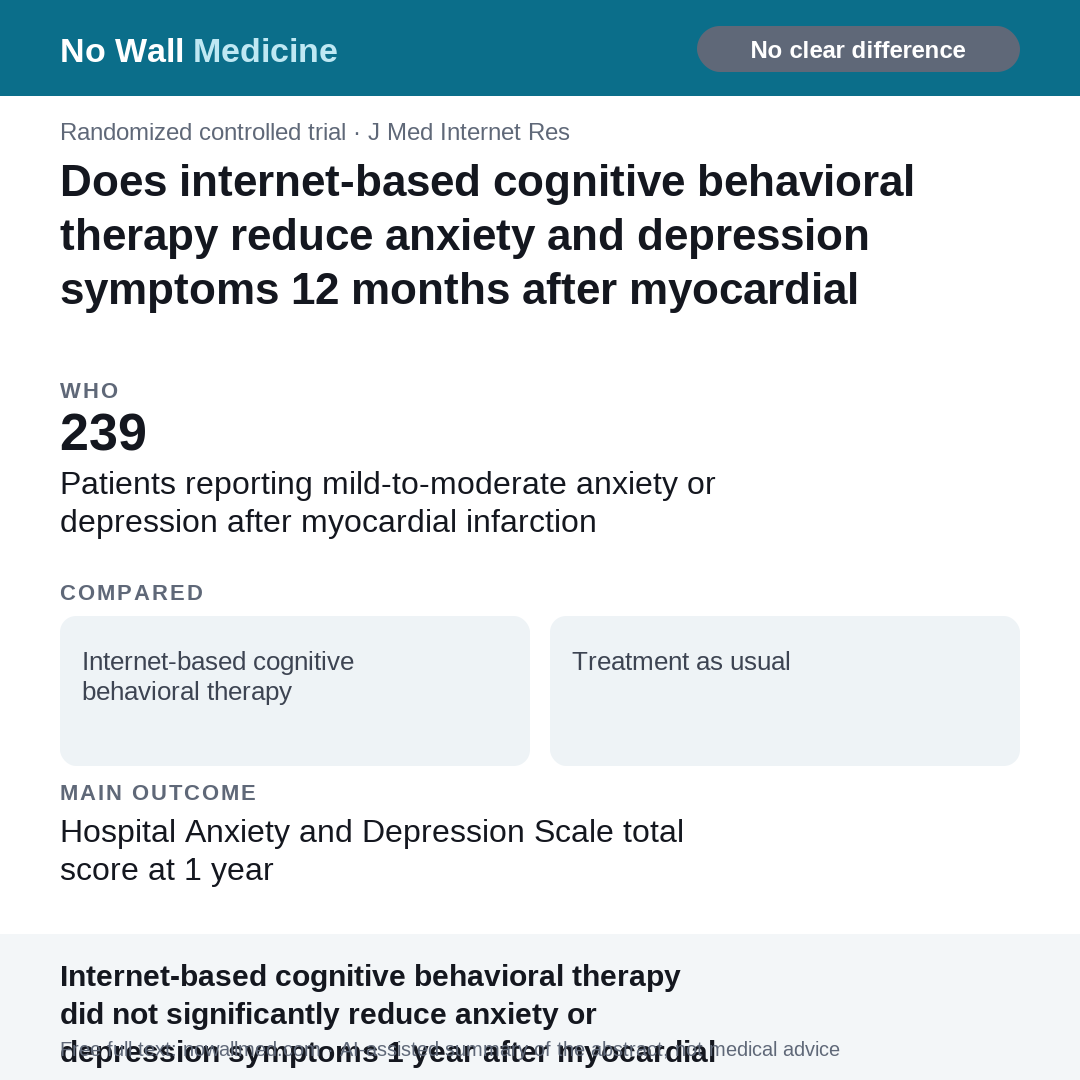
Clinical question: Does internet-based cognitive behavioral therapy reduce anxiety and depression symptoms 12 months after myocardial infarction?
Why it matters: Effectiveness of internet-based cognitive behavioral therapy on long-term anxiety and depression symptoms after heart attack was unknown
Key points
- 239 patients with recent heart attack and mild-to-moderate anxiety or depression symptoms were randomized to internet-based cognitive behavioral therapy or treatment as usual.
- HADS total scores were not significantly different between groups at 1 year.
- Cardiac-related anxiety was reduced, but not significantly after adjusting for multiple comparisons.
Limitation the authors note: Low treatment adherence might have affected treatment engagement and outcomes
Headline and key points written with AI from the paper’s abstract, with every number checked against it. Read the paper before relying on them.
Was this summary helpful?
Subject terms
Cite this article
Humphries SM, Wallert J, Norlund F, Wallin E, Burell G, von Essen L. Internet-Based Cognitive Behavioral Therapy for Patients Reporting Symptoms of Anxiety and Depression After Myocardial Infarction: U-CARE Heart Randomized Controlled Trial Twelve-Month Follow-up. J Med Internet Res. 2021. doi:10.2196/25465
Spotted a mistake? Suggest a correction
Top studies every Monday
The week’s key trials and guidelines in your specialties, plus any topics you follow. By email, free.
Get the weekly digest