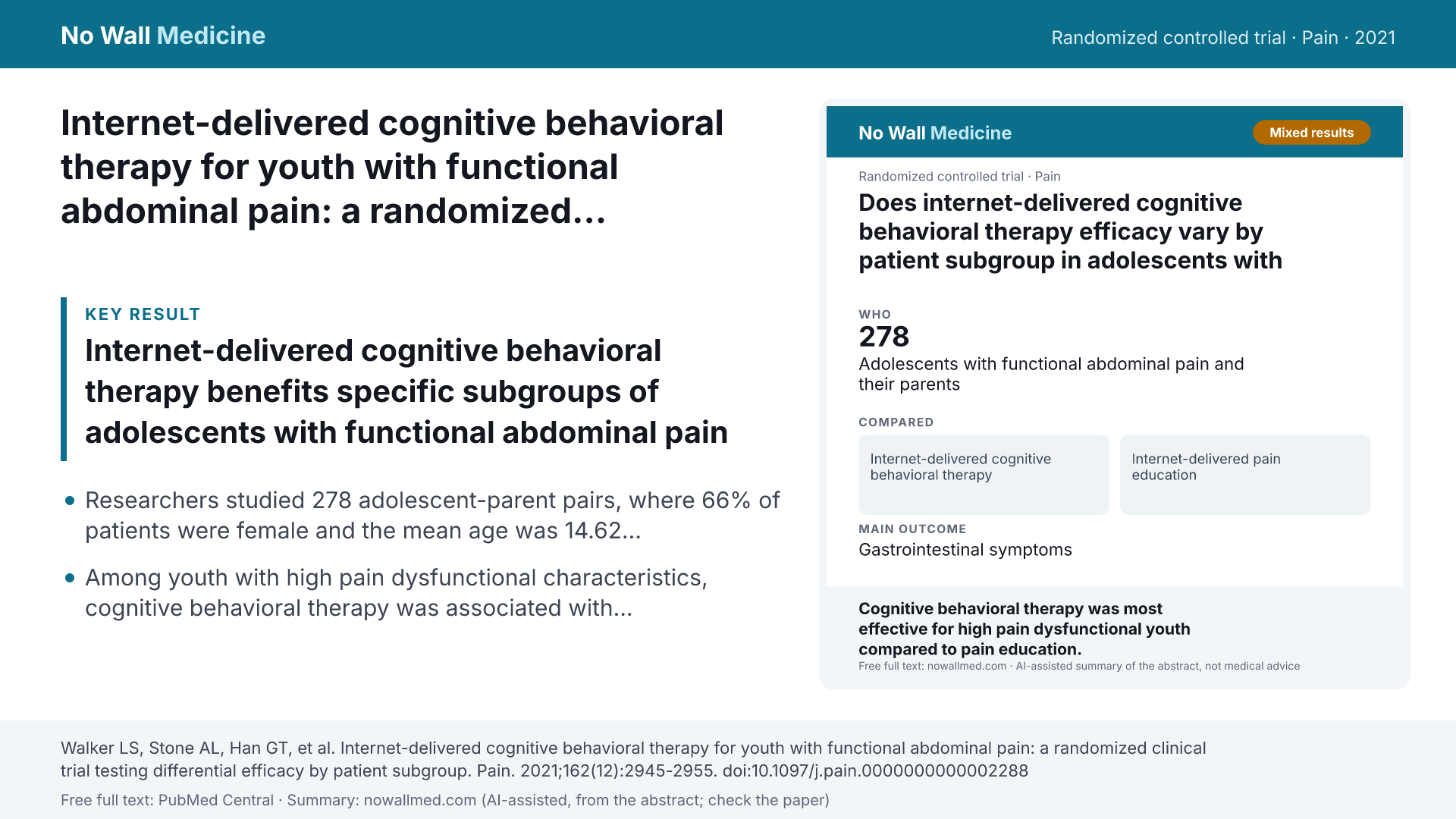
Internet-delivered cognitive behavioral therapy for youth with functional abdominal pain: a randomized clinical trial testing differential efficacy by patient subgroup
Key result: Internet-delivered cognitive behavioral therapy benefits specific subgroups of adolescents with functional abdominal pain
Key points
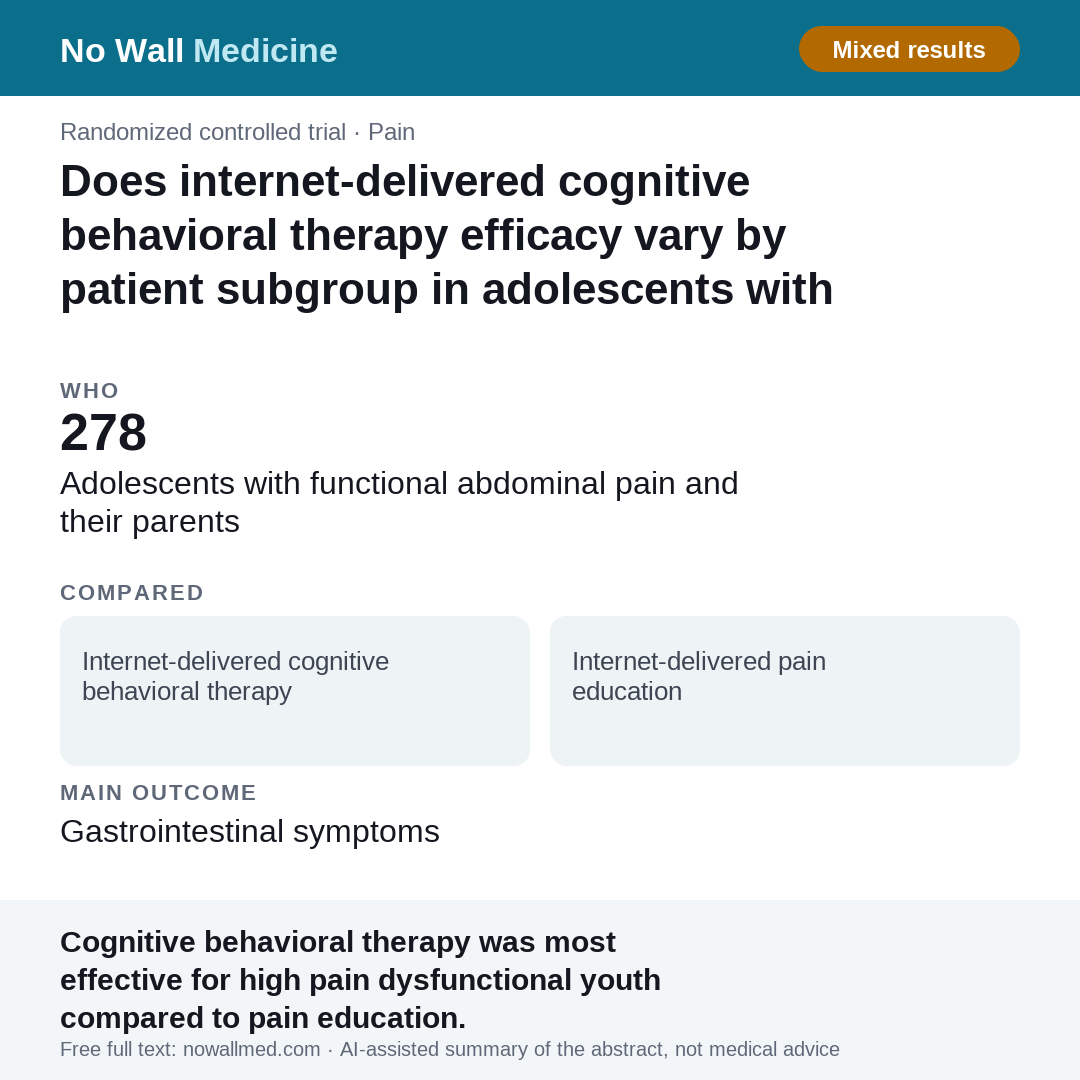
- Researchers studied 278 adolescent-parent pairs, where 66% of patients were female and the mean age was 14.62 years, comparing internet-delivered cognitive behavioral therapy to internet-delivered pain education.
- Among youth with high pain dysfunctional characteristics, cognitive behavioral therapy was associated with significantly greater gastrointestinal symptom reduction compared to pain education through posttreatment.
- For youth with high pain adaptive or low pain adaptive characteristics, gastrointestinal symptom improvement did not differ between the two treatment conditions.
Why it matters: It is unknown if different psychological characteristics among patients with functional abdominal pain influence how well they respond to cognitive behavioral therapy.
Discussion prompts
- Would these patients look like yours? Who was left out?
- Is the main outcome one that matters to patients?
- Is the difference large enough to change what you do?
Cite: Walker LS, Stone AL, Han GT, et al. Internet-delivered cognitive behavioral therapy for youth with functional abdominal pain: a randomized clinical trial testing differential efficacy by patient subgroup. Pain. 2021. doi:10.1097/j.pain.0000000000002288
Free full text: PubMed Central · Summary and visual abstract: nowallmed.com/a/internet-delivered-cognitive-behavioral-therapy-for-youth-with-ir5zuu/ (AI-assisted from the abstract; check the paper before relying on it).