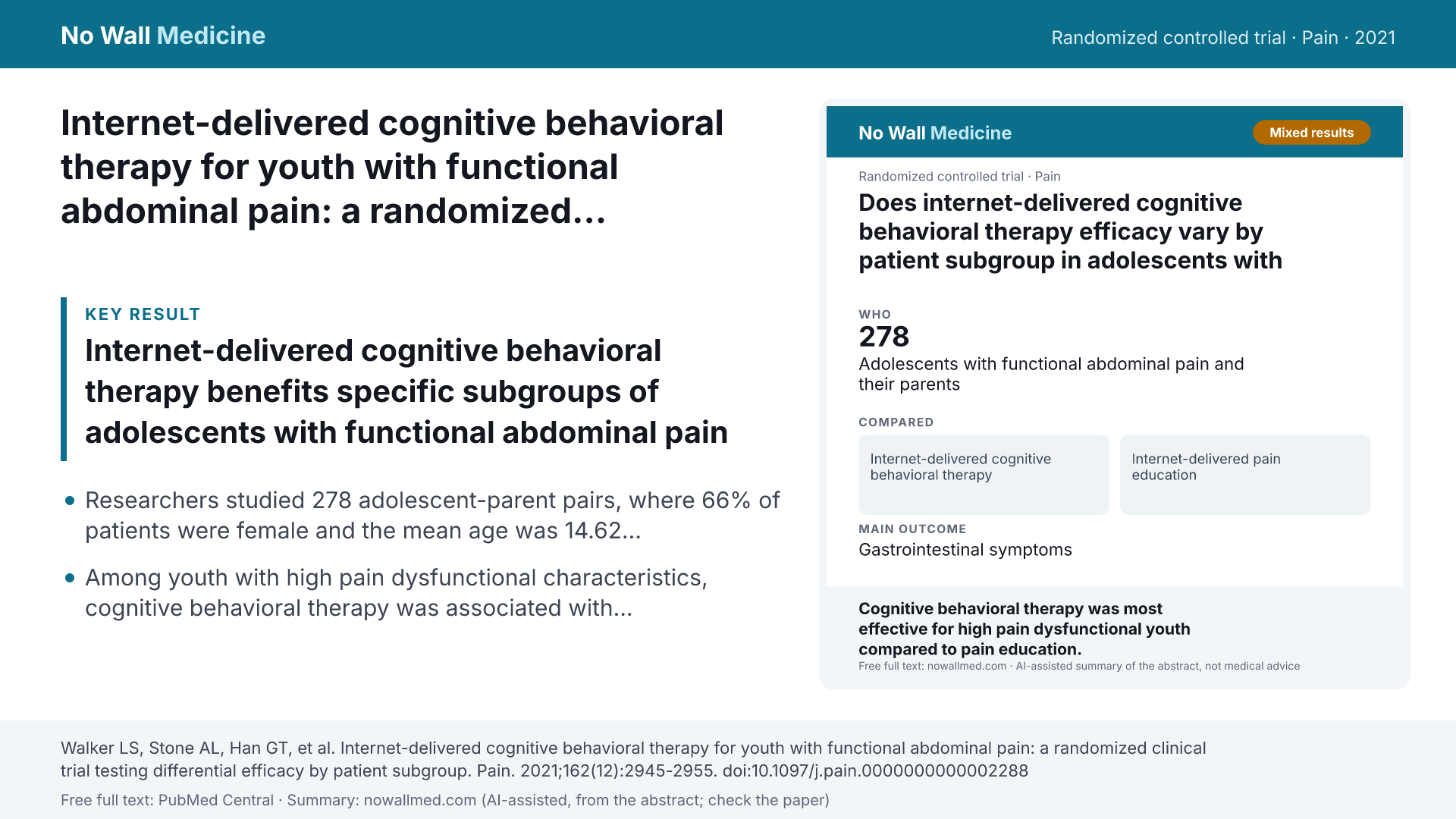
Internet-delivered cognitive behavioral therapy benefits specific subgroups of adolescents with functional abdominal pain
Internet-delivered cognitive behavioral therapy for youth with functional abdominal pain: a randomized clinical trial testing differential efficacy by patient subgroup
Randomized controlled trialMixed results
Does internet-delivered cognitive behavioral therapy efficacy vary by patient subgroup in adolescents with functional abdominal pain?
Who
278
Adolescents with functional abdominal pain and their parents
Compared
Internet-delivered cognitive behavioral therapy
Internet-delivered pain education
Main outcome
Gastrointestinal symptoms
Bottom line: Cognitive behavioral therapy was most effective for high pain dysfunctional youth compared to pain education.
Pain · 2021-11-19Download image
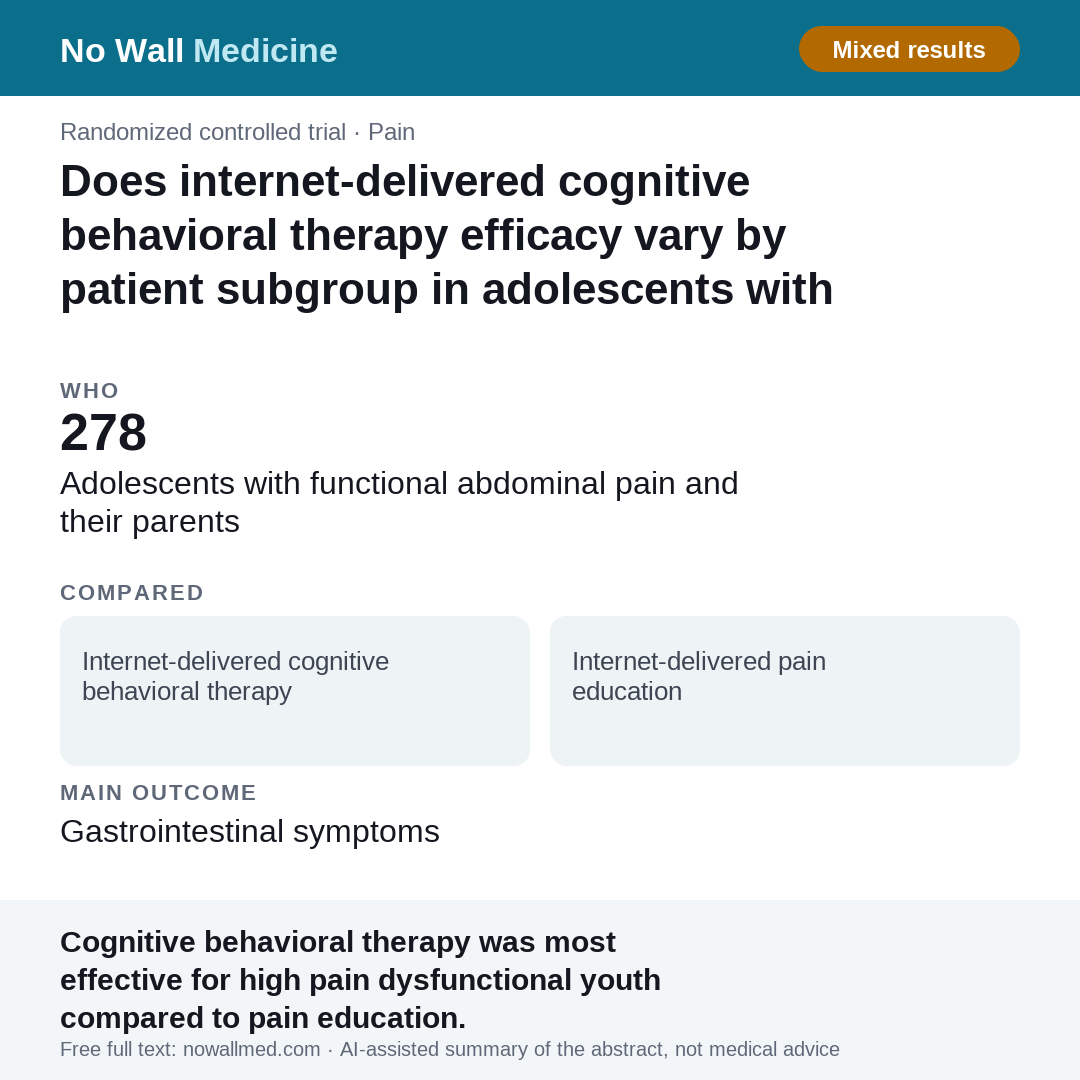
Clinical question: Does internet-delivered cognitive behavioral therapy efficacy vary by patient subgroup in adolescents with functional abdominal pain?
Why it matters: It is unknown if different psychological characteristics among patients with functional abdominal pain influence how well they respond to cognitive behavioral therapy.
Key points
- Researchers studied 278 adolescent-parent pairs, where 66% of patients were female and the mean age was 14.62 years, comparing internet-delivered cognitive behavioral therapy to internet-delivered pain education.
- Among youth with high pain dysfunctional characteristics, cognitive behavioral therapy was associated with significantly greater gastrointestinal symptom reduction compared to pain education through posttreatment.
- For youth with high pain adaptive or low pain adaptive characteristics, gastrointestinal symptom improvement did not differ between the two treatment conditions.
Headline and key points written with AI from the paper’s abstract, with every number checked against it. Read the paper before relying on them.
Was this summary helpful?
Subject terms
Cite this article
Walker LS, Stone AL, Han GT, et al. Internet-delivered cognitive behavioral therapy for youth with functional abdominal pain: a randomized clinical trial testing differential efficacy by patient subgroup. Pain. 2021. doi:10.1097/j.pain.0000000000002288
Spotted a mistake? Suggest a correction