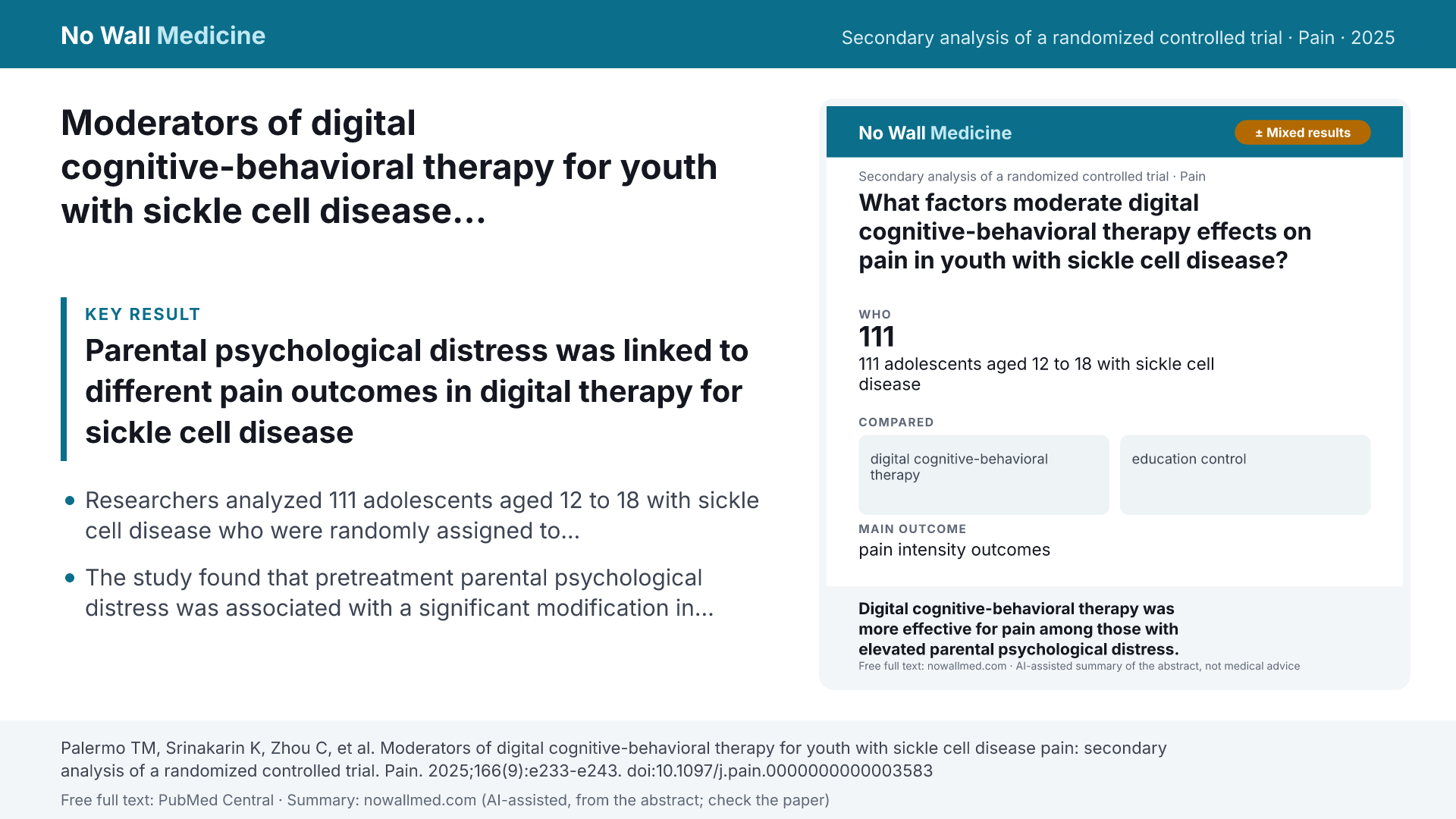
Parental psychological distress was linked to different pain outcomes in digital therapy for sickle cell disease
Moderators of digital cognitive-behavioral therapy for youth with sickle cell disease pain: secondary analysis of a randomized controlled trial
Secondary analysis of a randomized controlled trialMixed results
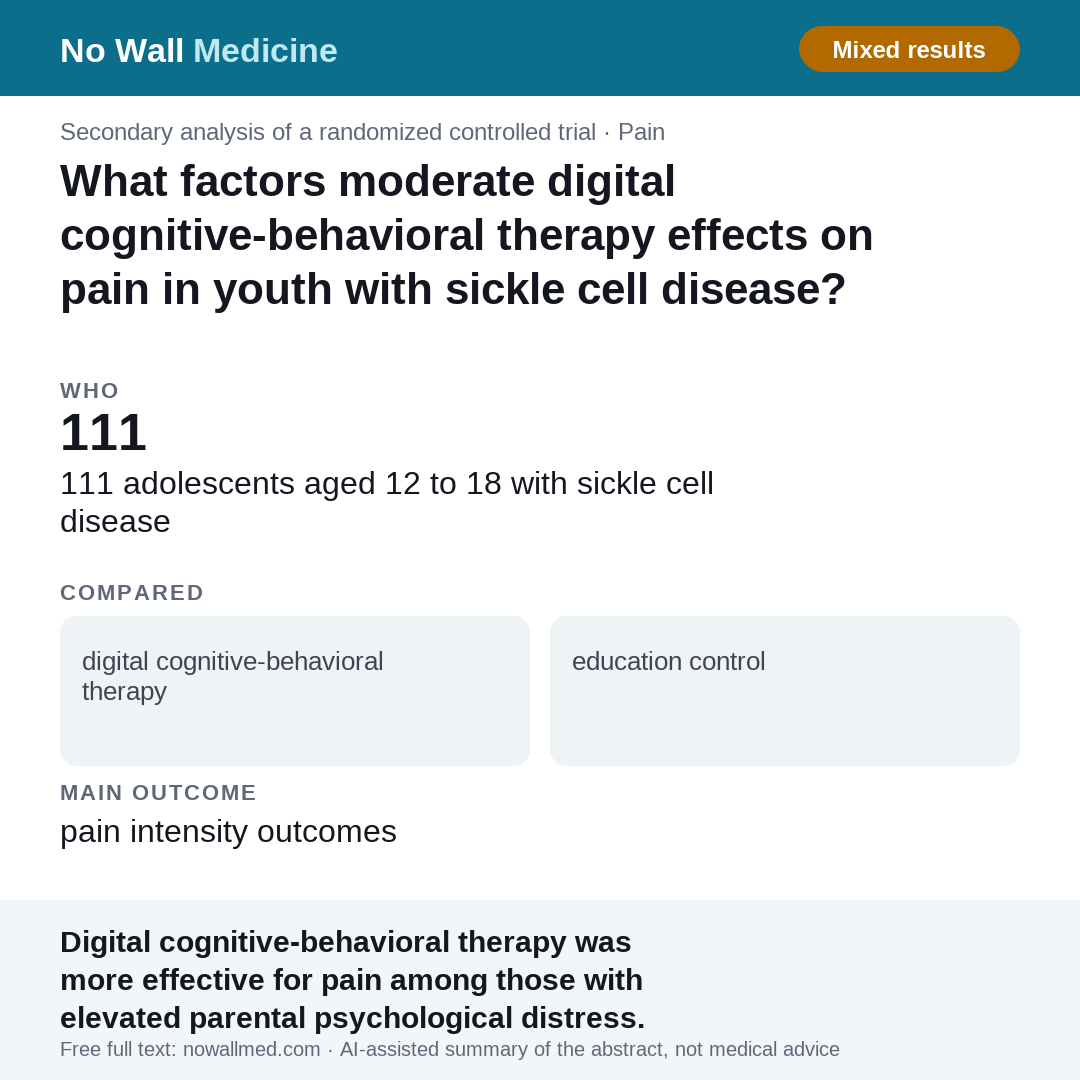
What factors moderate digital cognitive-behavioral therapy effects on pain in youth with sickle cell disease?
Who
111
111 adolescents aged 12 to 18 with sickle cell disease
Compared
digital cognitive-behavioral therapy
education control
Main outcome
pain intensity outcomes
Result: P = 0.012 for pretreatment parent psychological distress
Bottom line: Digital cognitive-behavioral therapy was more effective for pain among those with elevated parental psychological distress.
Pain · 2025-03-13Download image
Clinical question: What factors moderate digital cognitive-behavioral therapy effects on pain in youth with sickle cell disease?
Why it matters: It was unknown which adolescent or family characteristics influence how well digital cognitive-behavioral therapy works for managing pain in youth with sickle cell disease.
Key points
- Researchers analyzed 111 adolescents aged 12 to 18 with sickle cell disease who were randomly assigned to digital cognitive-behavioral therapy or an education control.
- The study found that pretreatment parental psychological distress was associated with a significant modification in pain intensity outcomes (P = 0.012).
- Digital cognitive-behavioral therapy appeared more effective for pain among those with elevated parental distress, though most other moderator differences were not statistically significant.
Headline and key points written with AI from the paper’s abstract, with every number checked against it. Read the paper before relying on them.
Was this summary helpful?
Subject terms
Cite this article
Palermo TM, Srinakarin K, Zhou C, Lalloo C, Dampier C, Zempsky WT. Moderators of digital cognitive-behavioral therapy for youth with sickle cell disease pain: secondary analysis of a randomized controlled trial. Pain. 2025. doi:10.1097/j.pain.0000000000003583
Spotted a mistake? Suggest a correction