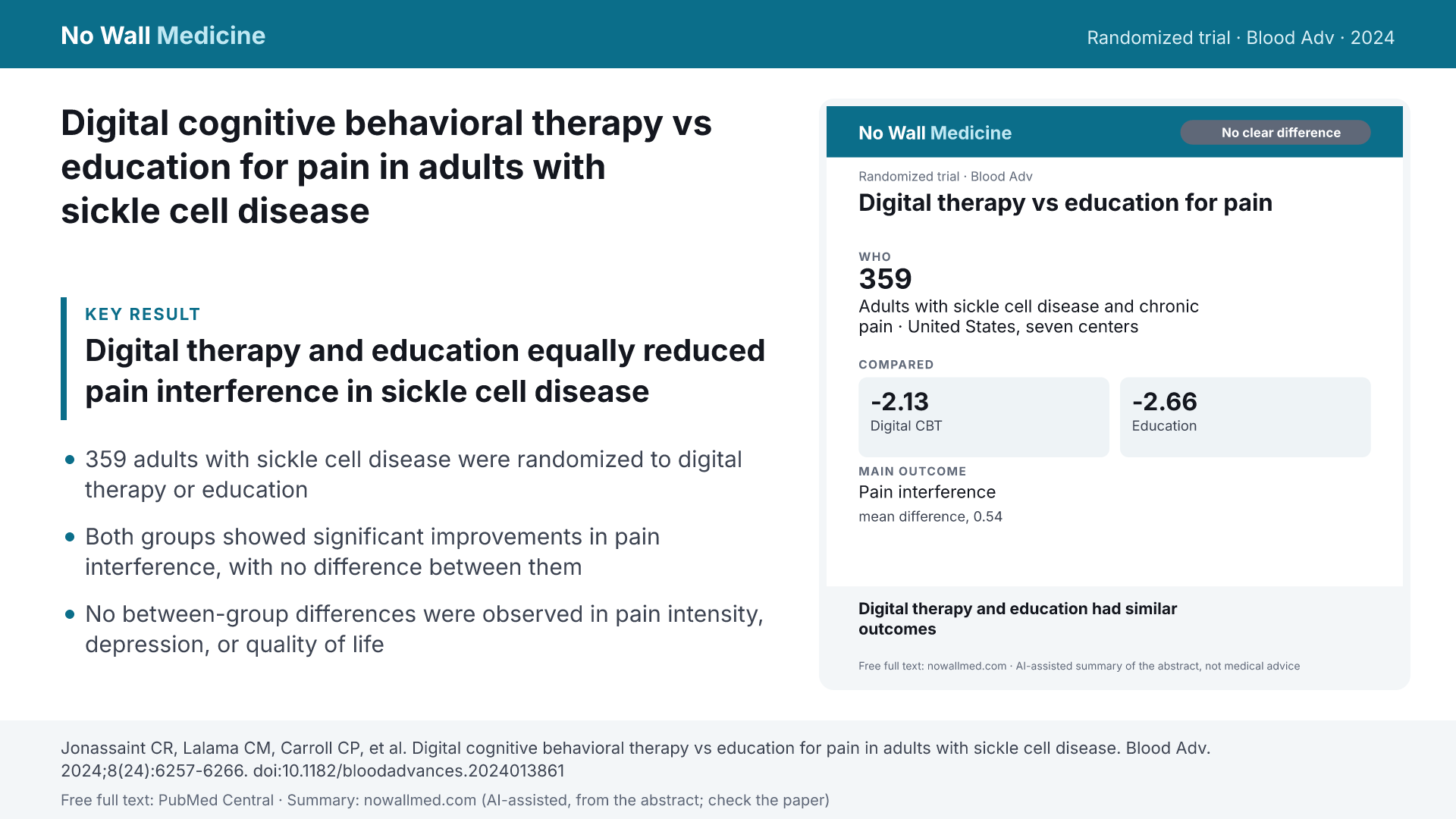
Digital therapy and education equally reduced pain interference in sickle cell disease
Digital cognitive behavioral therapy vs education for pain in adults with sickle cell disease
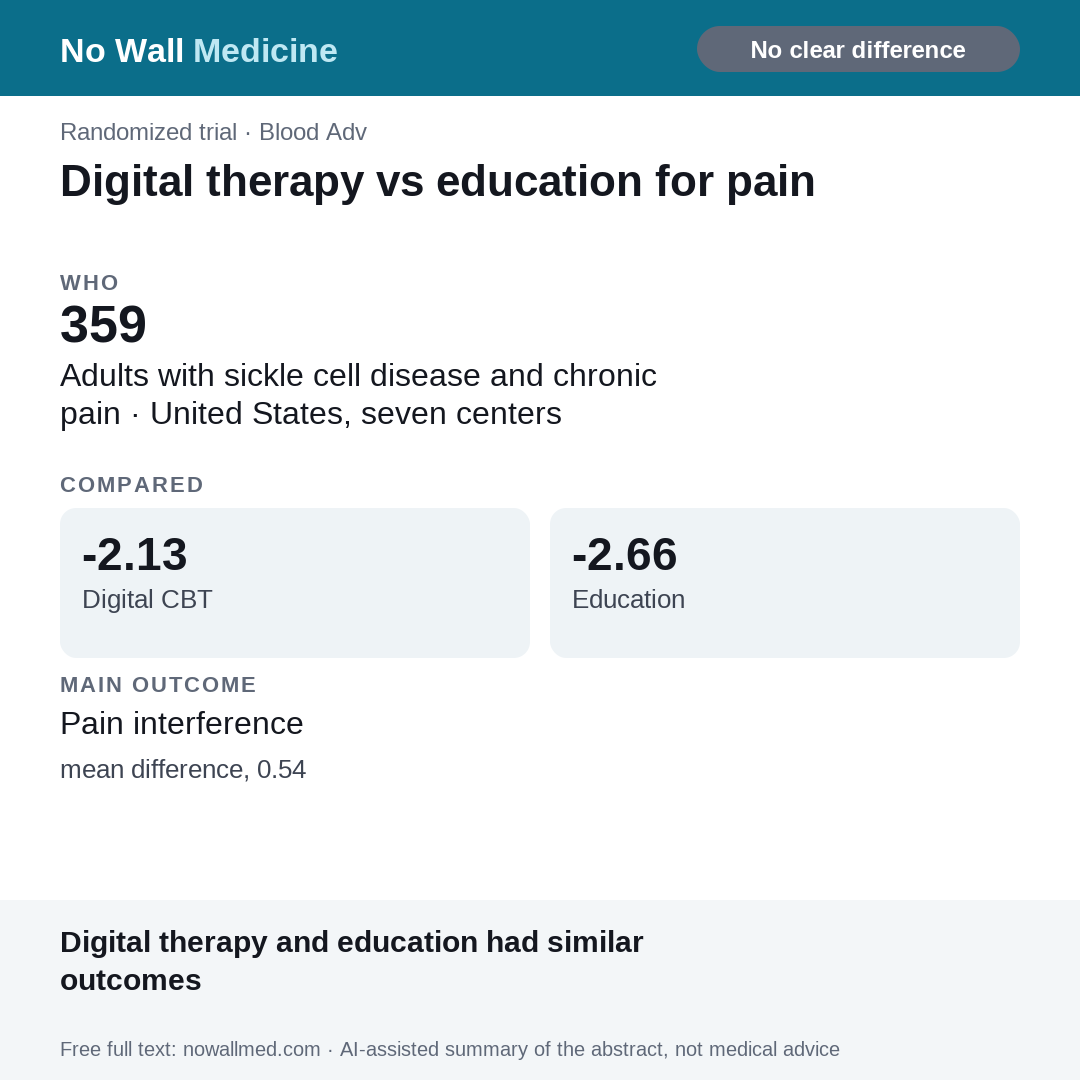
Randomized trialNo clear difference
Digital therapy vs education for pain
Who
359
Adults with sickle cell disease and chronic pain · United States, seven centers
Compared
-2.13Digital CBT
-2.66Education
Main outcome
Pain interference
Result: mean difference, 0.54
Bottom line: Digital therapy and education had similar outcomes
Limitation: variable engagement with digital components
Blood Adv · 2024-10-08Download image
Why it matters: Nonpharmacological approaches for chronic pain in sickle cell disease remain limited
Key points
- 359 adults with sickle cell disease were randomized to digital therapy or education.
- Both groups showed significant improvements in pain interference, with no difference between them.
- No between-group differences were observed in pain intensity, depression, or quality of life.
Limitation the authors note: Variable engagement with digital components may have affected the results
Headline and key points written with AI from the paper’s abstract, with every number checked against it. Read the paper before relying on them.
Was this summary helpful?
Abstract
Despite the burden of chronic pain in sickle cell disease (SCD), nonpharmacological approaches remain limited. This multisite, randomized trial compared digital cognitive behavioral therapy (CBT) with a digital pain/SCD education program ("Education") for managing pain and related symptoms. Participants were recruited virtually from seven SCD centers and community organizations in the United States. Adults (aged ≥18 years) with SCD-related chronic pain and/or daily opioid use were assigned to receive either CBT or Education for 12 weeks. Both groups used an app with interactive chatbot lessons and received personalized health coach support. The primary outcome was the change in pain interference at six months, with secondary outcomes including pain intensity, depression, anxiety, quality of life, and self-efficacy. Of 453 screened participants, 359 (79%) were randomized to CBT (n = 181) or Education (n = 178); 92% were Black African American, and 66.3% were female. At six months, 250 participants (70%) completed follow-up assessments, with 16 (4%) withdrawals. Engagement with the chatbot varied, with 76% connecting and 48% completing at least one lesson, but 80% of participants completed at least one health coach session. Both groups showed significant within-group improvements in pain interference (CBT: -2.13; Education: -2.66), but no significant difference was observed between them (mean difference, 0.54; P = .57). There were no between-group differences in pain intensity, depression, anxiety, or quality of life. High engagement with health coaching and variable engagement with digital components may explain the similar outcomes between interventions in this diverse, hard-to-reach population.
Abstract reproduced under the article’s CC BY NC ND licence.
Subject terms
Cite this article
Jonassaint CR, Lalama CM, Carroll CP, Badawy SM, Hamm ME, Stinson JN. Digital cognitive behavioral therapy vs education for pain in adults with sickle cell disease. Blood Adv. 2024. doi:10.1182/bloodadvances.2024013861
Spotted a mistake? Suggest a correction