Digital cognitive-behavioral therapy reduced pain intensity and pain days in adolescents with sickle cell disease
A cognitive-behavioral digital health intervention for sickle cell disease pain in adolescents: a randomized, controlled, multicenter trial
Multisite, randomized, controlled trialBenefit found
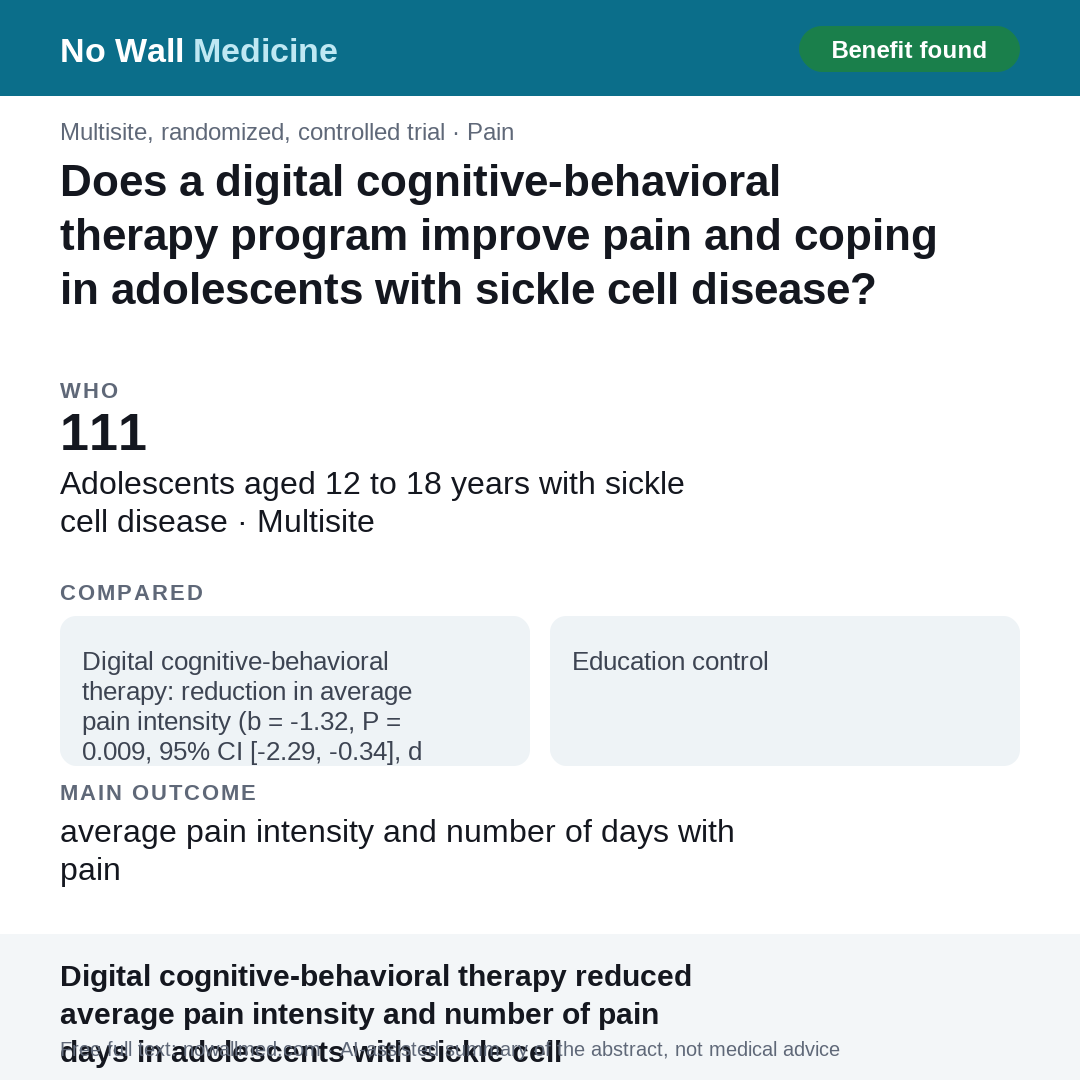
Does a digital cognitive-behavioral therapy program improve pain and coping in adolescents with sickle cell disease?
Who
111
Adolescents aged 12 to 18 years with sickle cell disease · Multisite
Compared
Digital cognitive-behavioral therapy: reduction in average pain intensity (b = -1.32, P = 0.009, 95% CI [-2.29, -0.34], d = 0.50)
Education control
Main outcome
average pain intensity and number of days with pain
Result: incident rate ratio = 0.63, P = 0.006, 95% CI [0.30, 0.95], d = 0.53
Bottom line: Digital cognitive-behavioral therapy reduced average pain intensity and number of pain days in adolescents with sickle cell disease.
Pain · 2023-09-21Download image
Clinical question: Does a digital cognitive-behavioral therapy program improve pain and coping in adolescents with sickle cell disease?
Why it matters: It was unknown if a digital cognitive-behavioral therapy program could improve pain and coping in adolescents living with sickle cell disease.
Key points
- The study analyzed 111 adolescents aged 12 to 18 years with sickle cell disease who were randomized to either a digital cognitive-behavioral therapy program or an education control.
- At 6-month follow-up, the digital therapy group showed a reduction in average pain intensity (b = -1.32, P = 0.009) and fewer days with pain (incident rate ratio = 0.63, P = 0.006).
- The intervention was also associated with changes in coping attempts, momentary mood, and fatigue, though anxiety, depression, and pain interference did not change.
Headline and key points written with AI from the paper’s abstract, with every number checked against it. Read the paper before relying on them.
Topics
Cite this article
Palermo TM, Lalloo C, Zhou C, Dampier C, Zempsky W, Badawy SM. A cognitive-behavioral digital health intervention for sickle cell disease pain in adolescents: a randomized, controlled, multicenter trial. Pain. 2023. doi:10.1097/j.pain.0000000000003009
Spotted a mistake? Suggest a correction
Top studies every Monday
The week’s key trials and guidelines in your specialties, plus any topics you follow. By email, free.
Get the weekly digest