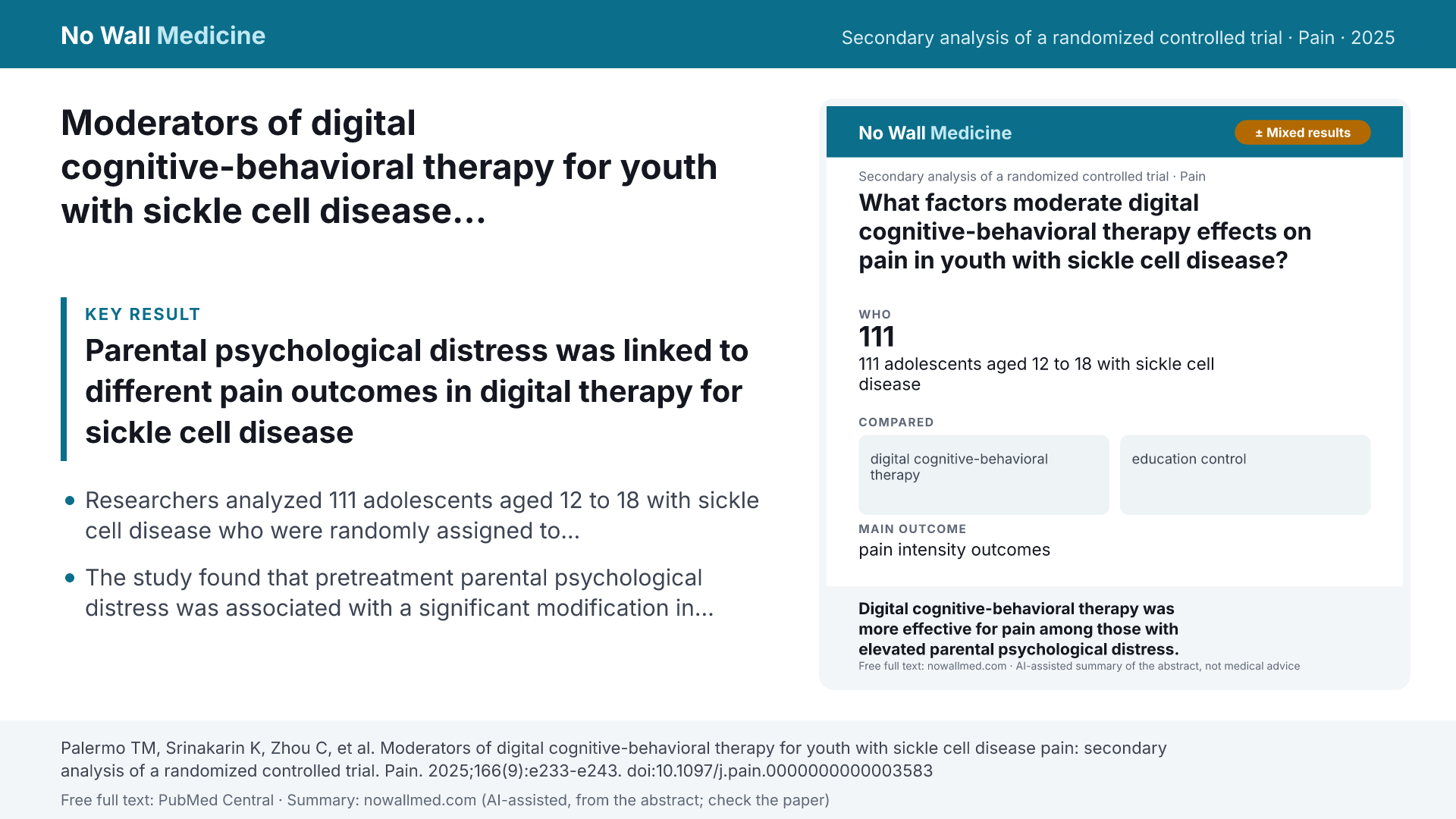
Moderators of digital cognitive-behavioral therapy for youth with sickle cell disease pain: secondary analysis of a randomized controlled trial
Key result: Parental psychological distress was linked to different pain outcomes in digital therapy for sickle cell disease
Secondary analysis of a randomized controlled trialMixed results
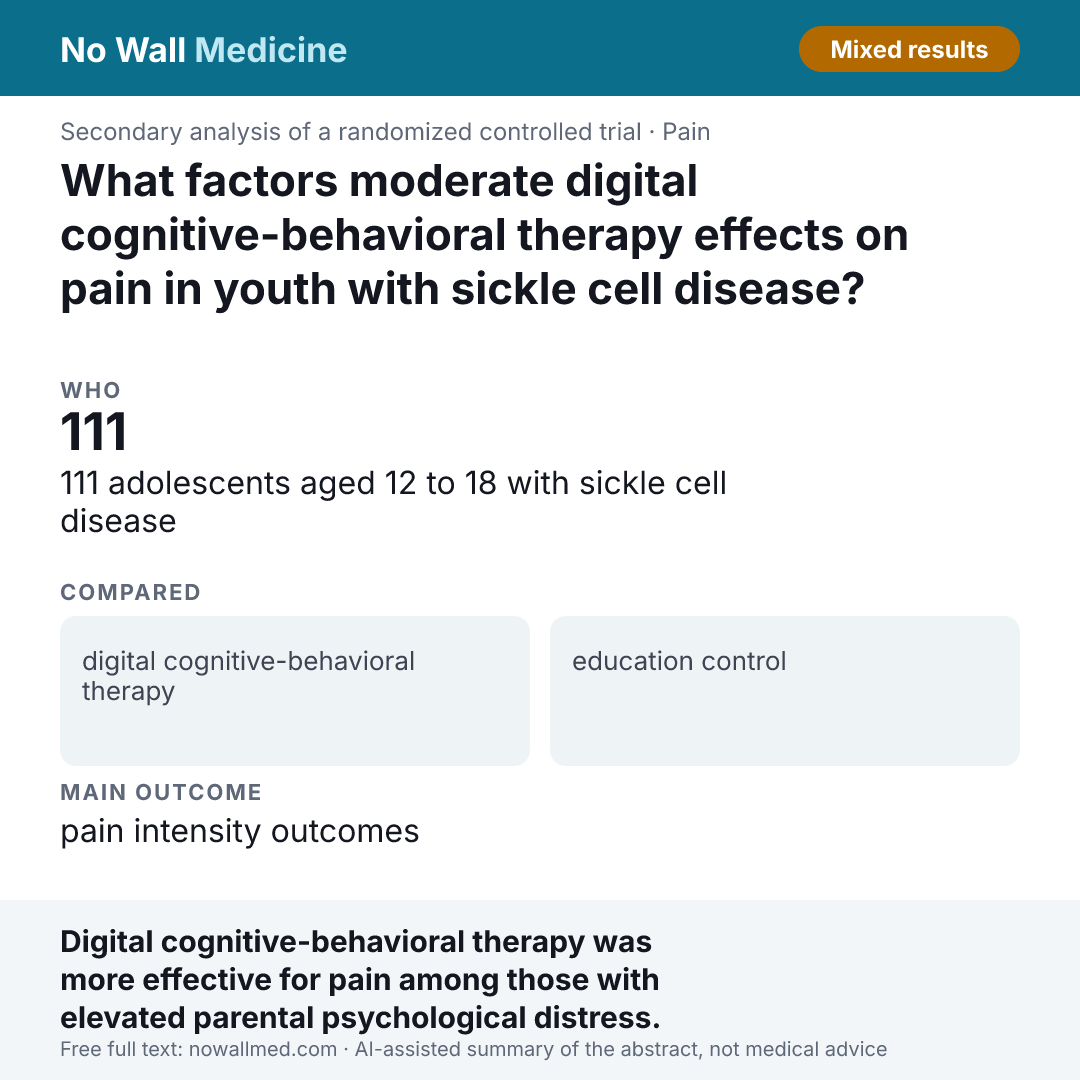
What factors moderate digital cognitive-behavioral therapy effects on pain in youth with sickle cell disease?
Who
111
111 adolescents aged 12 to 18 with sickle cell disease
Compared
digital cognitive-behavioral therapy
education control
Main outcome
pain intensity outcomes
Result: P = 0.012 for pretreatment parent psychological distress
Bottom line: Digital cognitive-behavioral therapy was more effective for pain among those with elevated parental psychological distress.
Pain · 2025-03-13 · Save PNG
Key points
- Researchers analyzed 111 adolescents aged 12 to 18 with sickle cell disease who were randomly assigned to digital cognitive-behavioral therapy or an education control.
- The study found that pretreatment parental psychological distress was associated with a significant modification in pain intensity outcomes (P = 0.012).
- Digital cognitive-behavioral therapy appeared more effective for pain among those with elevated parental distress, though most other moderator differences were not statistically significant.
Discussion prompts
- Would these patients look like yours? Who was left out?
- Is the main outcome one that matters to patients?
- Is the difference large enough to change what you do?
Cite: Palermo TM, Srinakarin K, Zhou C, et al. Moderators of digital cognitive-behavioral therapy for youth with sickle cell disease pain: secondary analysis of a randomized controlled trial. Pain. 2025;166(9):e233-e243. doi:10.1097/j.pain.0000000000003583
Free full text: PubMed Central · Summary and visual abstract: nowallmed.com/a/moderators-of-digital-cognitive-behavioral-therapy-for-youth-with-pl1vl3/ (AI-assisted from the abstract; check the paper before relying on it).